There's going to be an Economics Day tomorrow in the FTC v. Amazon "online superstore" antitrust suit.
Both sides will present economists to the court to explain theories underpinning their case and defense.
I'll be live-tweeting the whole thing but here's what we can expect:
1️⃣Relevant markets. Without a proper antitrust market, this case is dead in the water.
The FTC put forth an "online superstore" market where AMZ's only competitors are eBay, Walmart, and Target. We should expect to hear a lot of back and forth on if such a mkt reflects reality.
AMZ underscores that a properly defined mkt includes all competitors that limit a defendants ability to raise prices or restrict output. There are a number of tools such as the Hypothetical Monopolist Test to determine which competitors belong in a mkt/if a mkt is too narrow.
The FTC's market, AMZ argues, doesn't capture all retailers that consumers would view as reasonable substitutes for AMZ's online store. Retailers like Chewy and Home Depot that sell the same items as AMZ but focus on specific categories are outside of the FTC's relevant mkt.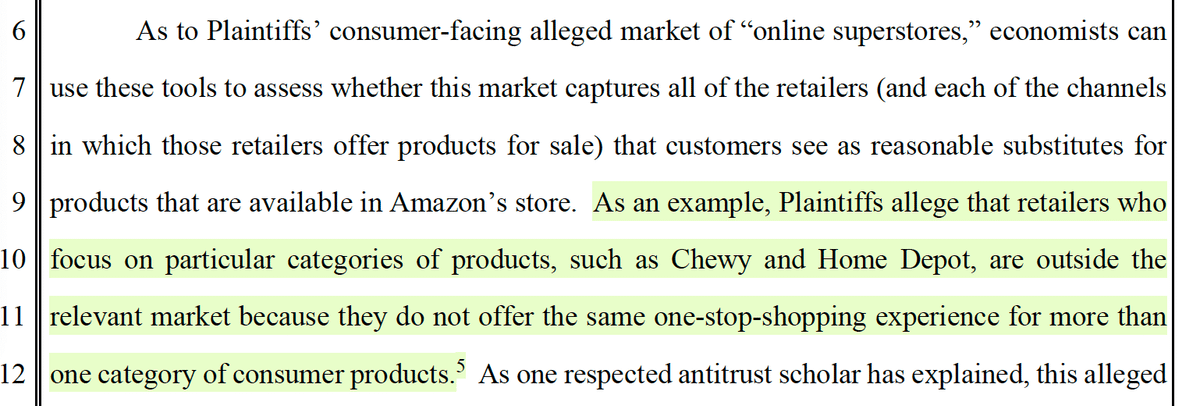
AMZ cites to @Sherman1890 pointing out that such a narrow market "strains common sense" because someone buying kitchen appliances can easily choose between (or choose multiple) AMZ, Target.com, and brick and mortar stores for their needs.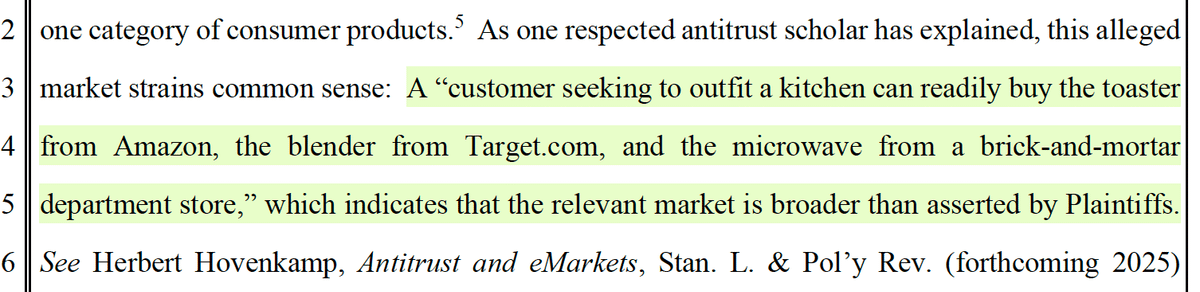
My colleague @KaitlynHarger recently wrote a great piece that highlights 22 companies that that explicitly list Amazon as a competitor in retail markets in their SEC 10-Ks. That is more than 5x the amount of competitors in the FTC's market.
medium.com/chamber-of-progress/the-ftc-says-amazon-has-few-competitors-these-competitors-disagree-95a904a9d0b6
The FTC defends its market definition by pointing out that competition is more intense where retailers have adopted similar strategies, noting that supermarkets compete more intensely with each other than they do with convenience stores, even though there is overlap of products.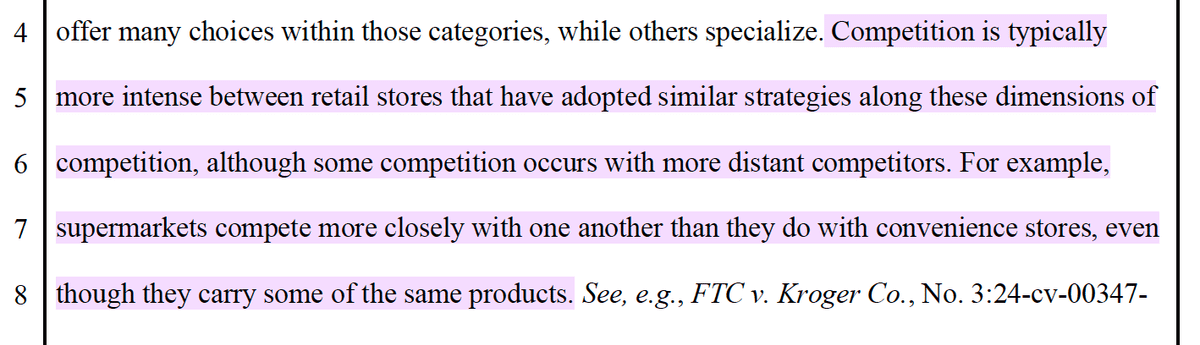
The FTC distinguishes between online and brick and mortar retail, arguing that a key difference is size/scale. Stores have finite shelf space whereas online stores are able to carry a much broader selection.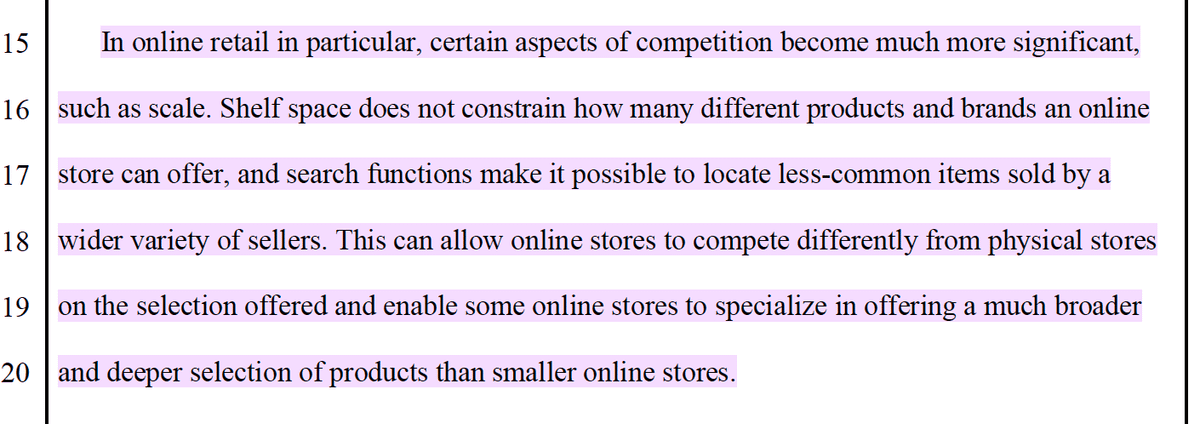
2️⃣ Monopoly Power.
Monopoly power, unlike market power (just a calculation) means a company has the "substantial ability to control prices or exclude competition."
The FTC must prove their mkt exists, AMZ has 70%+ of it, and that there are durable/significant barriers to entry.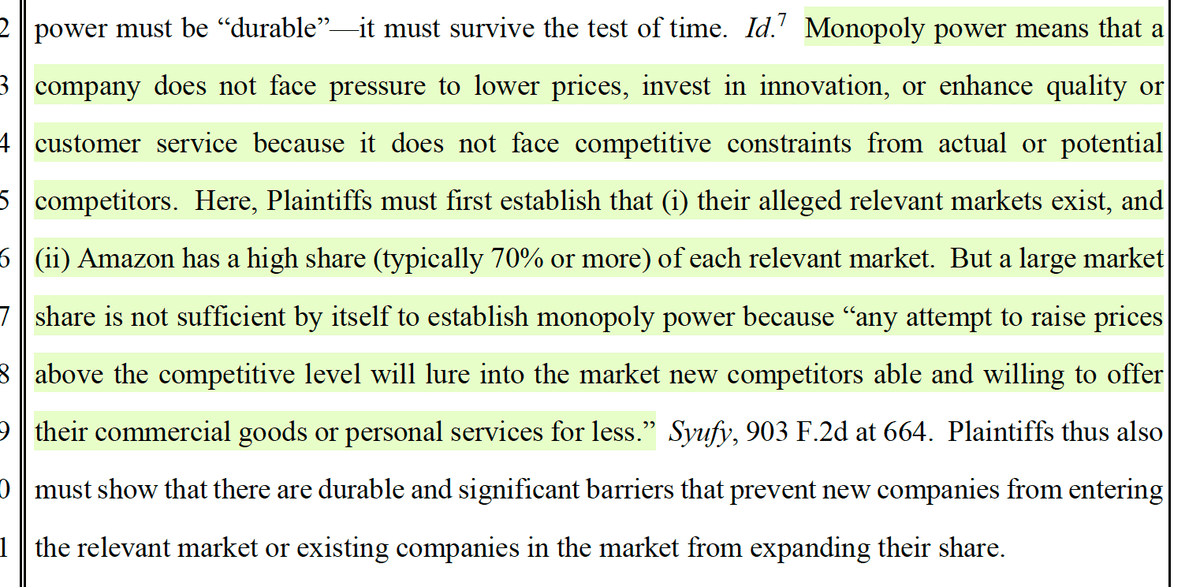
When assessing barriers to entry, economists can look to the entry/expansion of other companies.
AMZ's economists will assess efforts from Walmart, Nordstrom, Macy's, Kohl's, and Krogers in launching online stores that provide opptys to 3rd party sellers.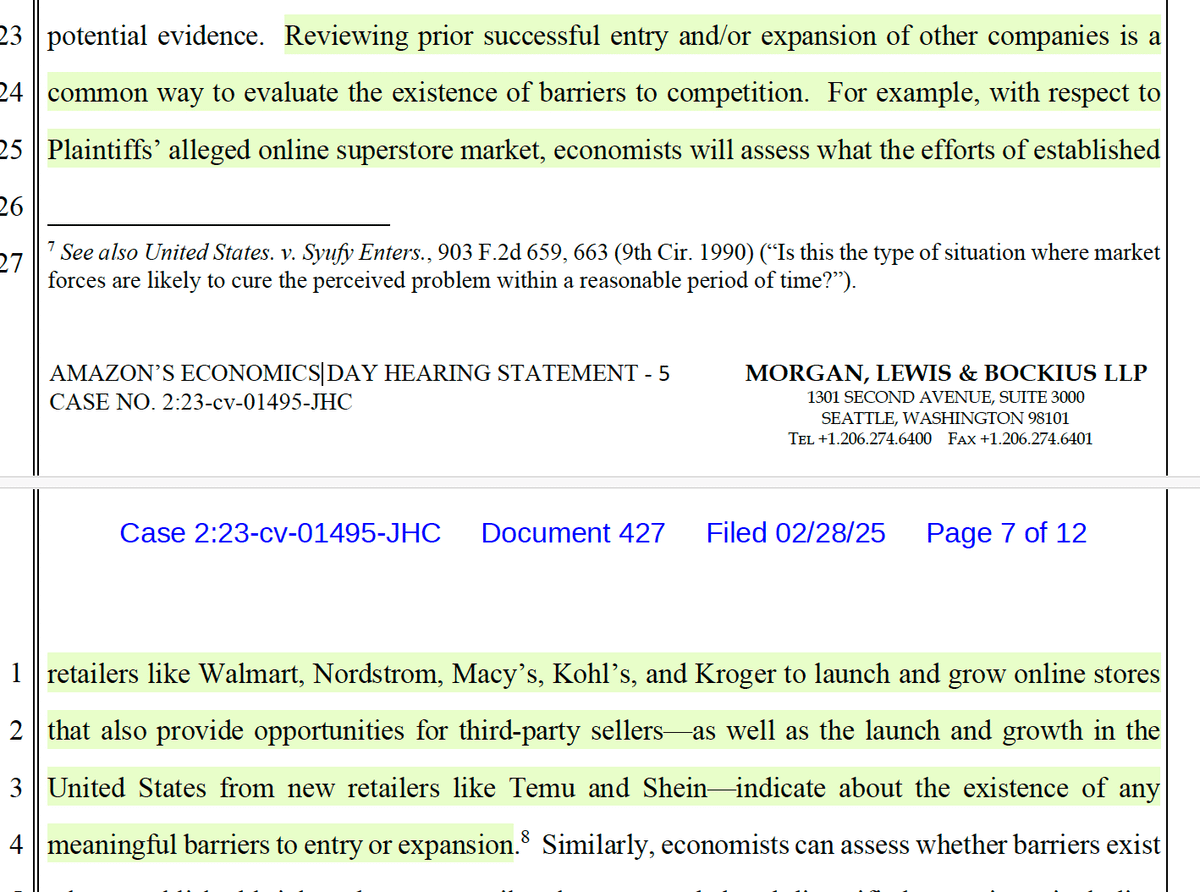
AMZ's economists will also examine the growth of new retailers like Shein and Temu to combat the notion that new competitors face barriers to entry, look at brick and mortar creation/expansion of online stores, and consider the expansion of seller service providers.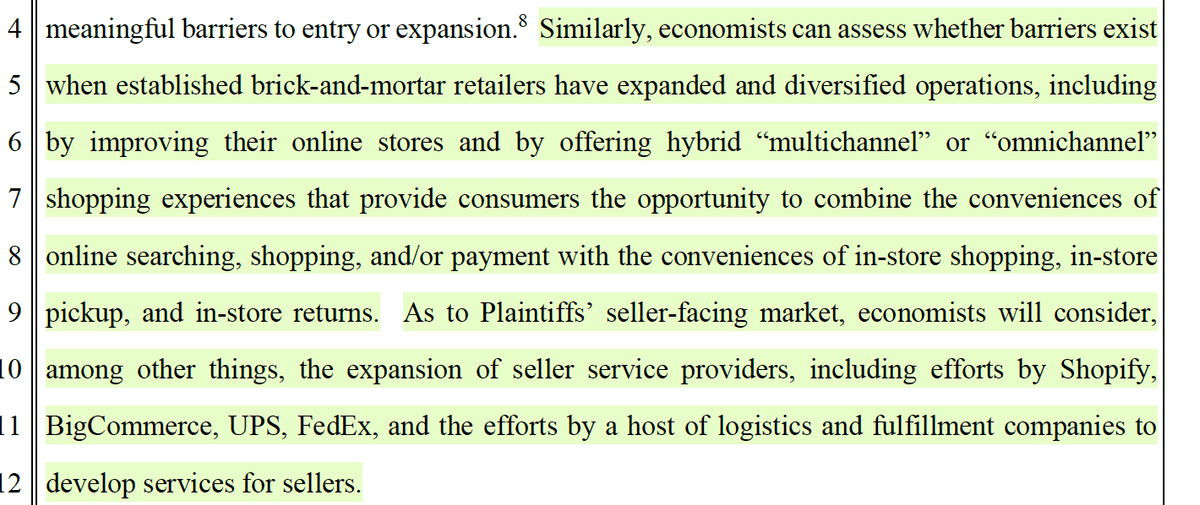
AMZ will argue against the notion that its advertising harms the shopping experience. Its economists will assess whether the practices criticized by the FTC are common among other retailers, indicating they are efficient and pro-competitive.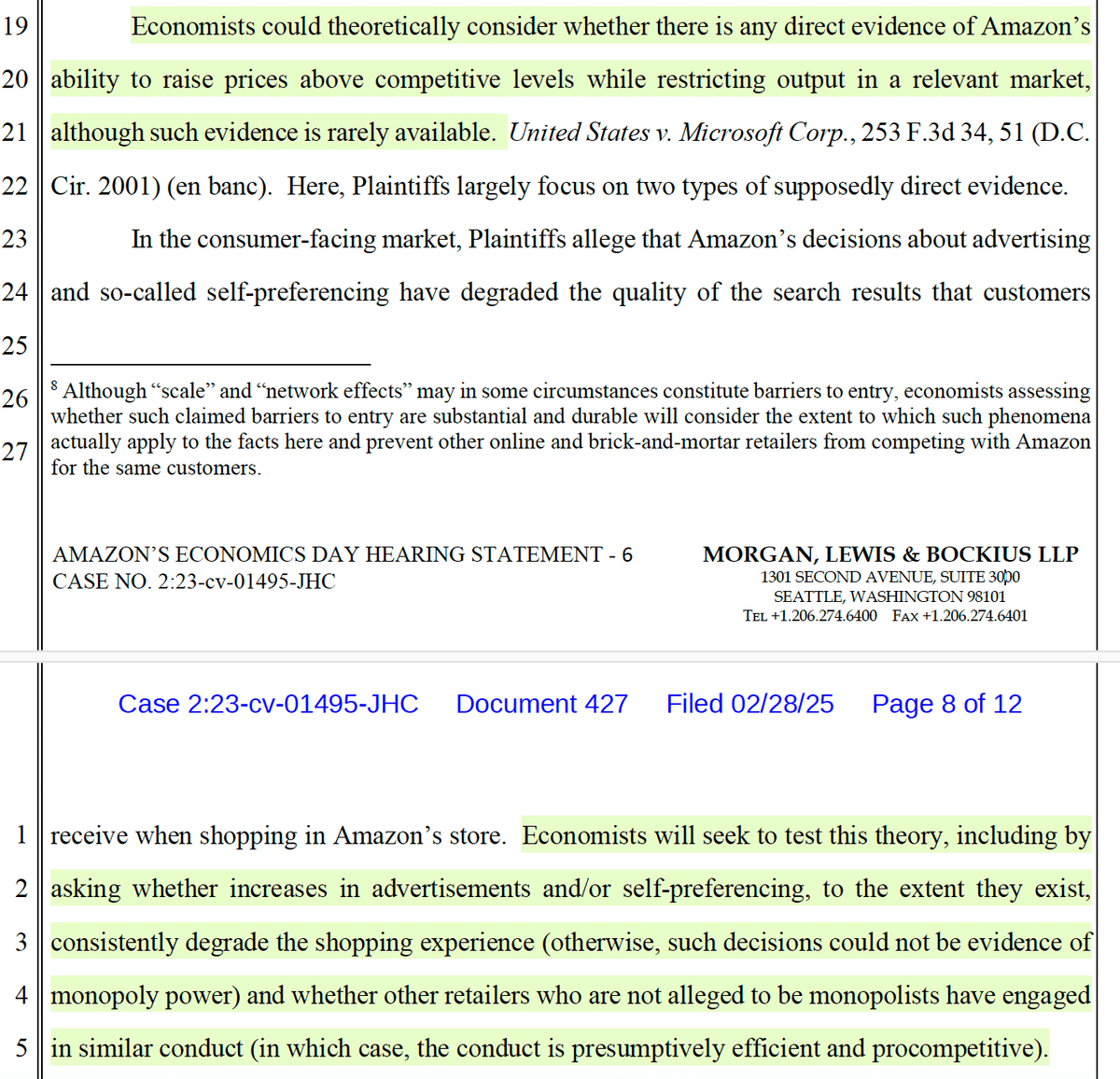
FTC economists will examine indirect evidence to determine substitution patterns and understand why some rivals are considered more distant substitutes.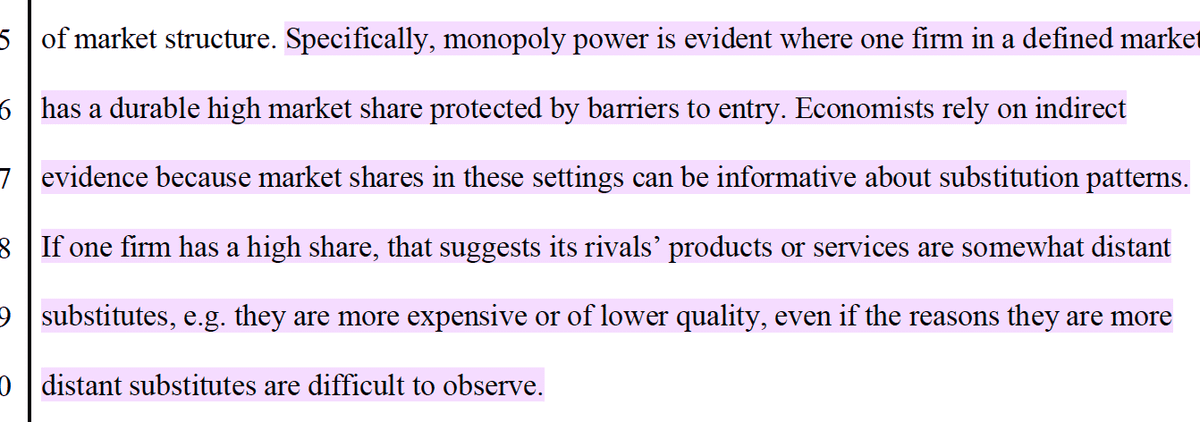
When looking at barriers to entry or expansion, FTC economists will analyze them in terms of practical impediments regardless of it those impediments were created through improper means.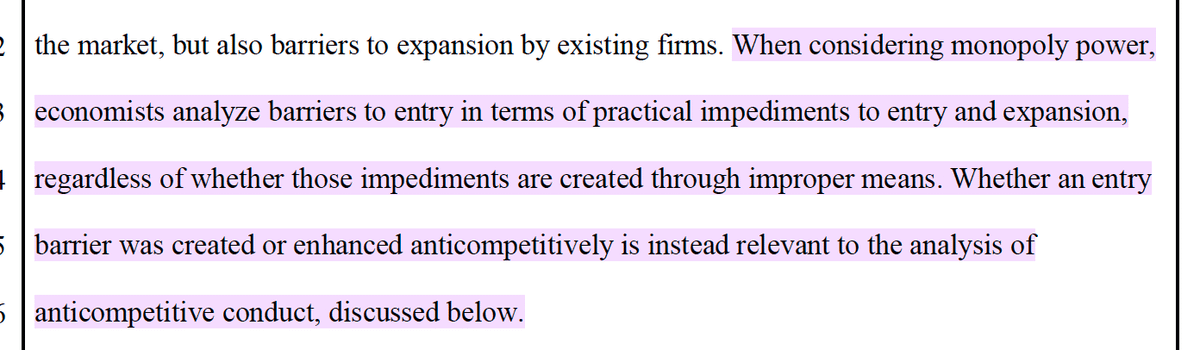
3️⃣ Anticompetitive conduct v. Competition on the merits.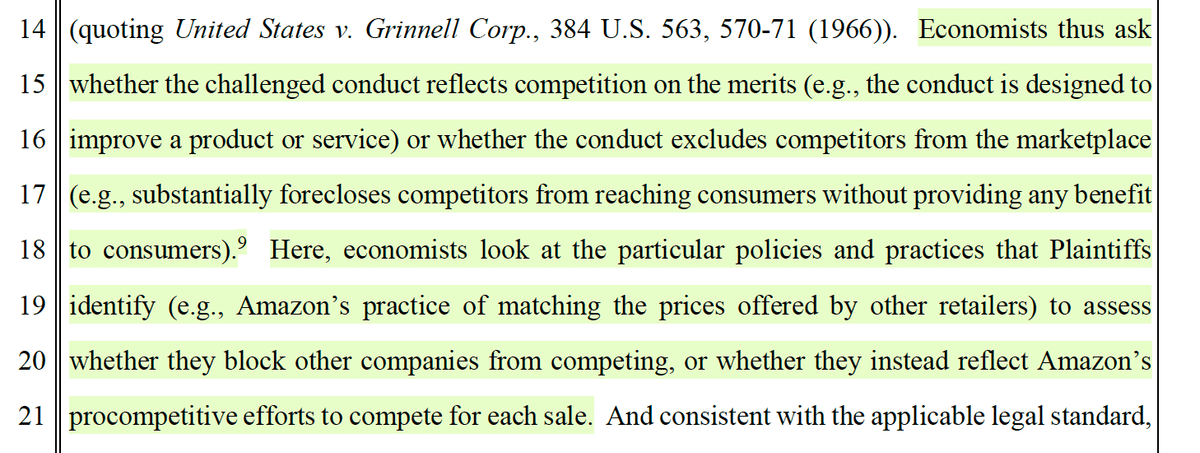
AMZ will explain why some of its conduct is intended to deter/avoid creating a free riding problem, where sellers rely on AMZ's investments and reputation but do not deliver a quality experience or offer competitive prices, resulting in harm to AMZ's reputation.
In order to ensure "sellers in its store live up to Amazon’s reputation for a reliable and high-quality service as well as competitive prices", AMZ implements certain regulations on sellers including determining Prime eligibility.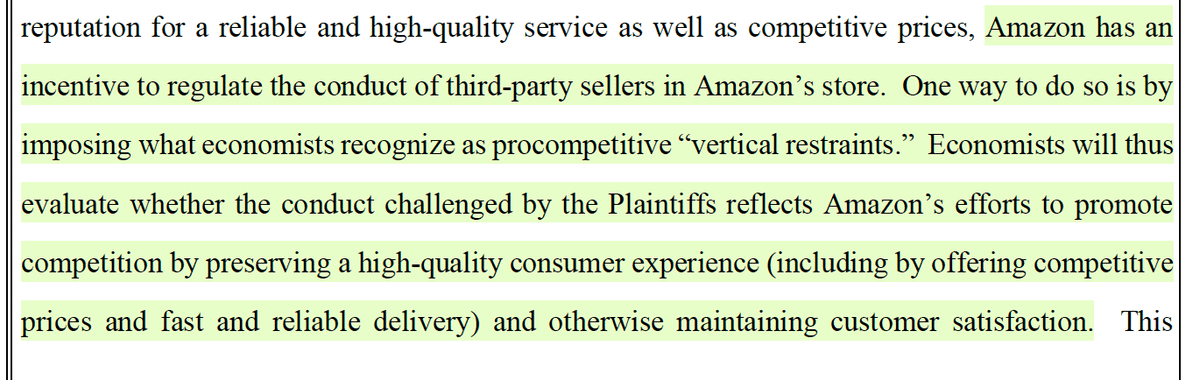
Economists can analyze available data to determine if the challenged conduct leads to sellers raising prices elsewhere as alleged by the FTC, or if it leads them to lower prices on AMZ (which is inconsistent with the FTC's theory).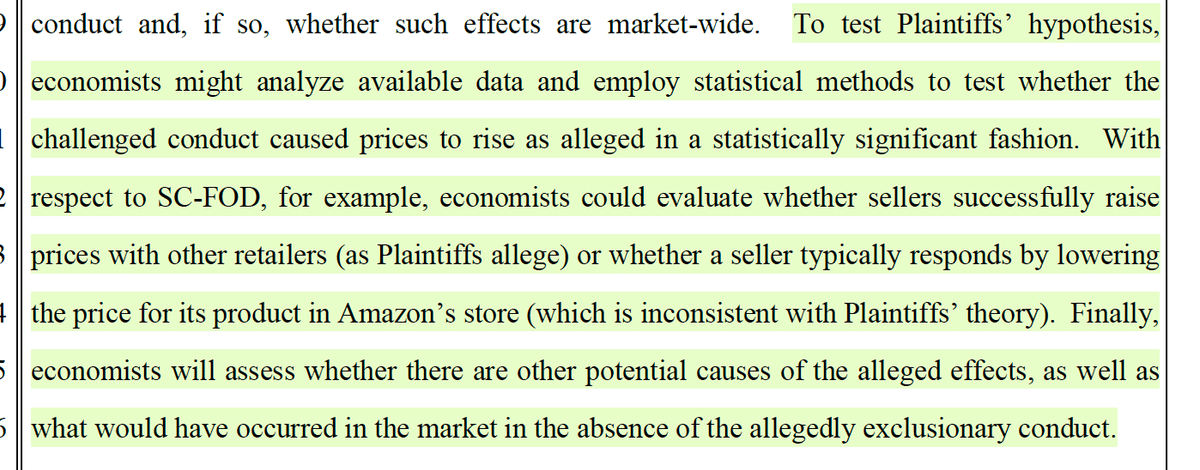
The FTC will assess whether AMZ used game theory in designing its challenged conduct and will look at AMZ's conduct holistically to determine if they artificially restrain competition.
Citing MSFT, FTC argues that when looking at challenged conduct has both positive and negative effects on competition, economists examine if such positive effects could have been achieved without the conduct and if the conduct is inextricably tied to the the negative effects.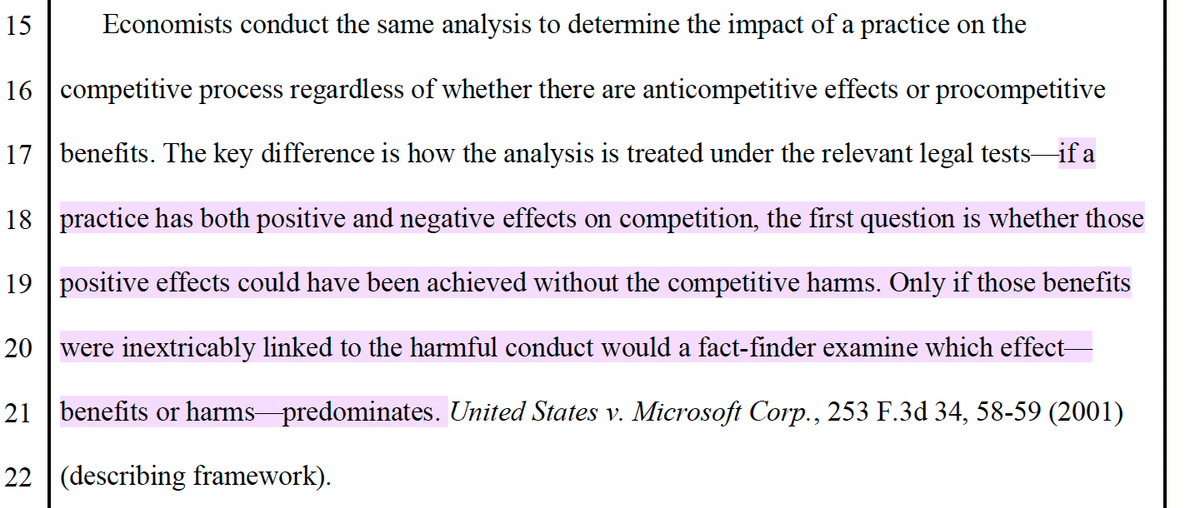
The trial is set for next fall, but uncertainty looms. What began under a Biden-era FTC is now in the hands of the Trump administration, who have openly criticized big tech and the previous FTC's legal tactics.

Vidushi Dyall
@vidushi_law_1
@progresschamber Breaking down key developments in important tech cases you should be following. Tech policy, cybersecurity, competition. Fordham Law alum.