"The World According to Punk 6529" with @RaoulGMI & @punk6529 on @RealVision
I took some notes and put them in a 🧵 👇
(Part 1/2)
[1/x]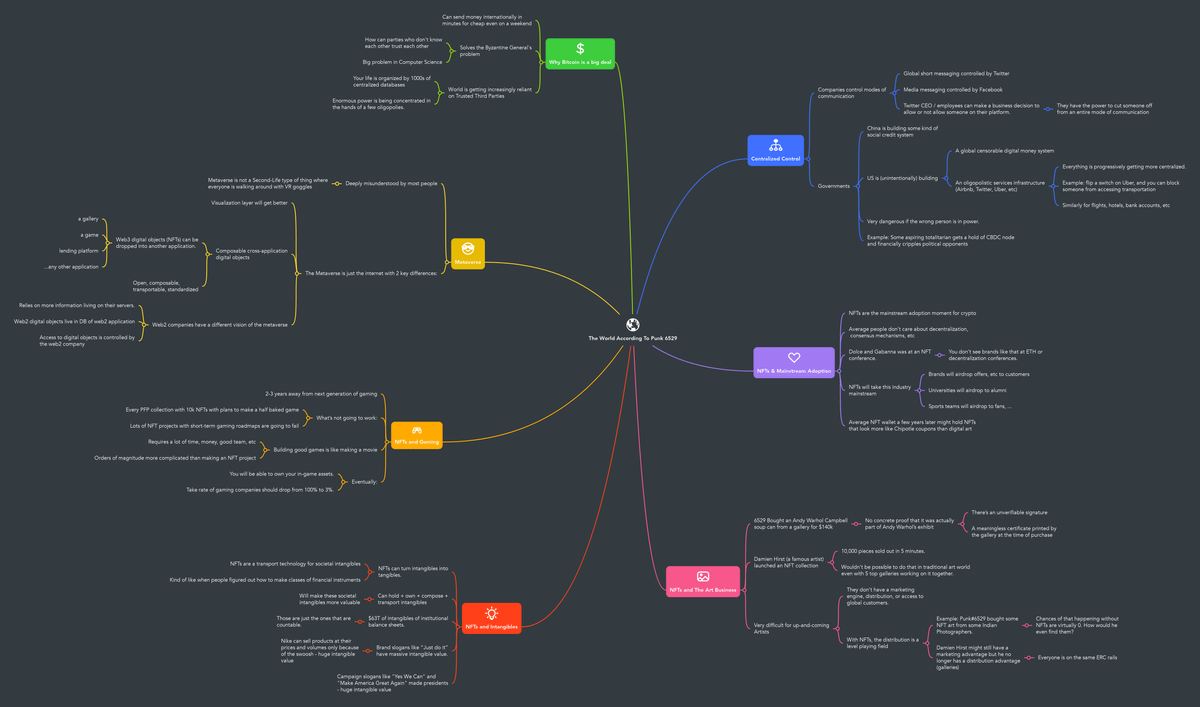
I've only heard a little over half of it so far, but this is probably one of the best crypto / NFT podcasts I've heard in a long time.
Huge shoutout to @RaoulGMI & @RealVision for creating such awesome content for free - adds massive value to the space.
realvision.com/shows/raoul-pal-adventures-in-crypto/videos/the-world-according-to-punk-6529-mXg5?source_collection=b8bd9d62c77143f7a39513e85d310b11
@punk6529 is a giga-🧠 and has spent the last decade thinking about this space.
His depth of knowledge and clarity of thought shows in the way he speaks about it.
I STRONGLY recommend listening to the original podcast.
But in the mean time, some notes 👇
@punk6529's Background & Intro to Crypto
• 6529 first heard of Bitcoin in 2011, but only took it seriously in summer 2013.
• His background is in Software Development + TradFi + Big Corporate.
• He read the Bitcoin whitepaper, and realized it was a very big deal.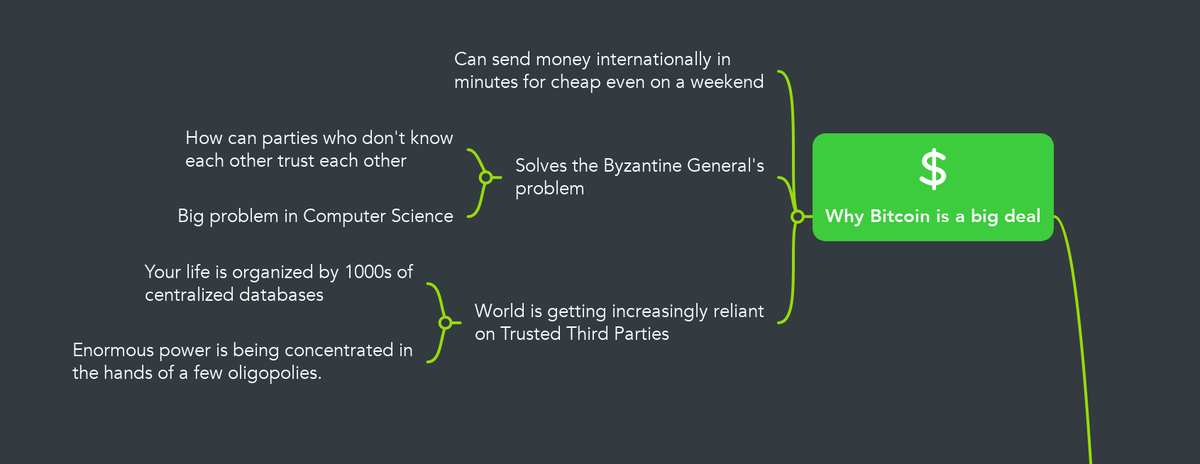
• Solving the Byzantine General’s problem is a huge deal in Computer Science
• Byzantine General’s problem - how can a bunch of people who don’t know each other can trust each other.
• Our life is organized by 1000s of databases - Bank Accounts, Email, Uber, Airbnb, Messages, Twitter, Hotel Bookings, National Identity
• These centralized systems work mostly fine, but we are finding ourselves increasingly reliant on Trusted Third Parties (TTPs )
• Was able to send $20 from NY to a friend in Europe on a Saturday within minutes.
• Wire transfer would have reached on Wednesday, and cost $30 in fees alone.
On NFTs and mainstream adoption:
• NFTs are crypto's mainstream adoption moment.
• Normal people don’t care about decentralization, and consensus mechanisms, but they get NFTs.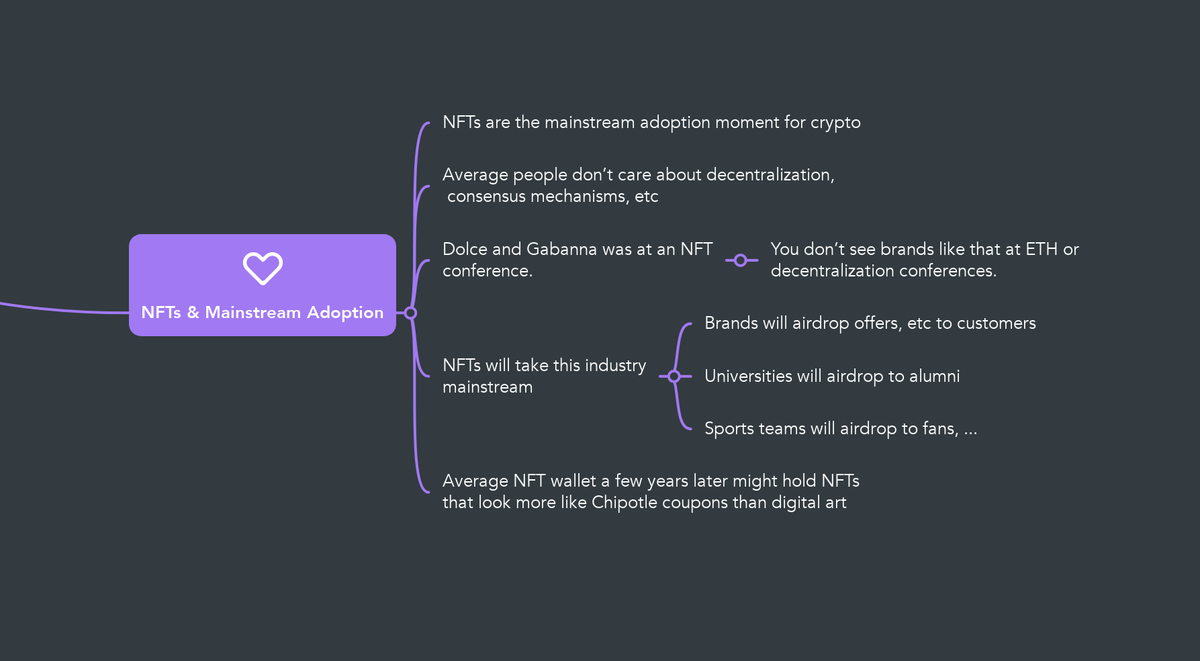
• @punk6529 saw Dolce and Gabanna was at an NFT conference.
• You don’t see brands like that at ETH / decentralization conferences.
• NFTs will take this industry mainstream.
• Brands will airdrop offers to customers, universities will do the same for alumni, sports teams for fans, etc
• Average NFT in your wallet 5-10 years out might be a chipotle coupon card, instead of a digital art piece.
On NFTs and the Art World
• @punk6529 Bought an Andy Warhol Campbell soup can for $140k.
• No proof that it was actually part of Andy Warhol’s exhibit
• There’s an unverifiable signature, and a certificate by the gallery printed in real time.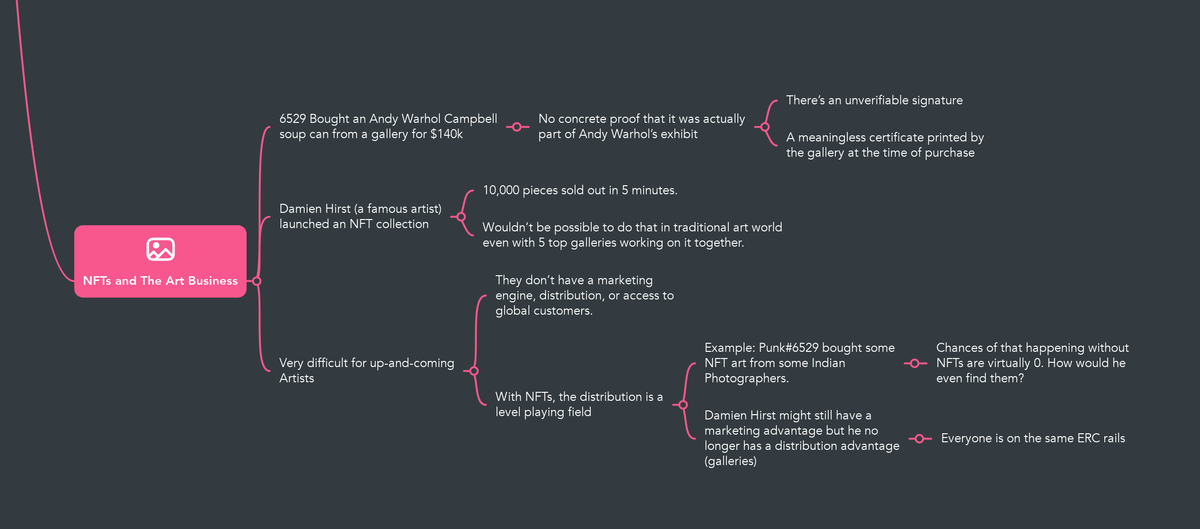
• NFTs are internet native art. This is the internet moment for art.
• Struggling artists are a bug, not a feature. They solve distribution and empower artists.
• Why sell through a retail gallery, which on average has very little traffic on a given day.
• Damien Hirst (@hirst_official) - a famous artist- launched an NFT collection
• 10,000 pieces sold out in 5 minutes.
• Wouldn’t be possible to do that in traditional art world even with 5 top galleries working on it together.
• For up and coming artists, sales are much more difficult.
• They don’t have marketing or distribution engine, and they don’t have access to global customers.
• Example: @punk6529 bought some NFT art from some Indian Photographers.
• Chances of that happening without NFTs are virtually 0. How would he even find them?
• Damien Hirst might have a marketing advantage but he no longer has a distribution advantage
• Distribution advantage was being in the galleries. Now, they're all on the same ERC token distribution rails.
• @punk6529 uses Twitter as a discoverability engine not OpenSea.
On NFTs & Intangibles
• NFTs can turn intangibles into tangibles.
• NFTs are a transport technology for societal intangibles
• Kind of like when people figured out how to make classes of financial instruments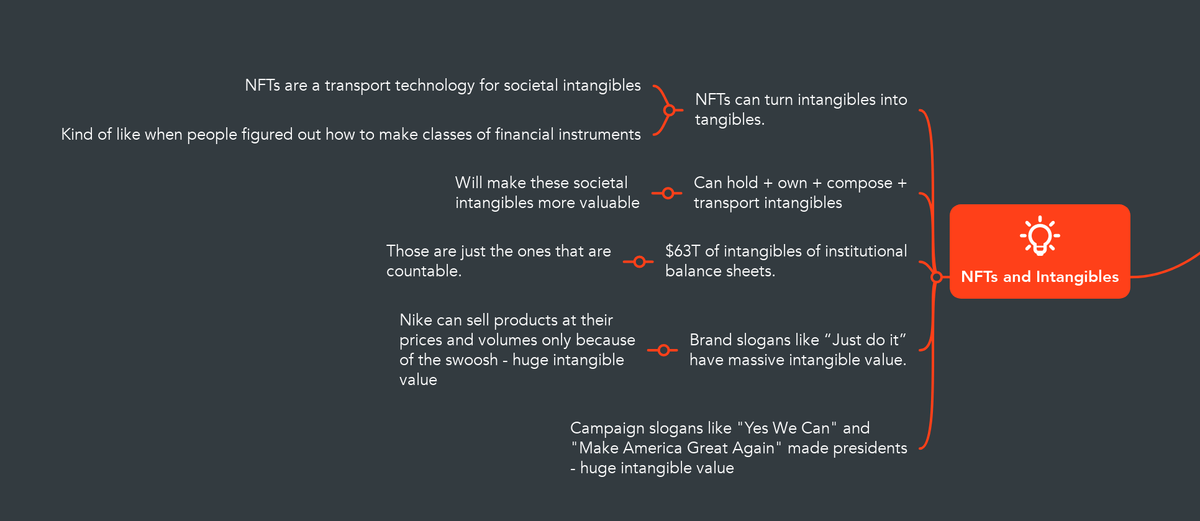
• Can hold + own + compose + transport intangibles = will make these societal intangibles more valuable
• @RaoulGMI adds that there are $63T of intangibles of institutional balance sheets. Those are just the ones that are countable.
• Memes have intangible value as well.
• Brand slogans like “Just do it” have huge intangible value.
• Nike can sell shoes at their prices because of their swoosh. The swoosh has huge intangible value.
• Campaign slogans like “Yes, we can”, and "Make America Great Again" made presidents - huge intangible value.
On NFTs and Gaming
• 2-3 years away from next generation of gaming
• Every PFP collection with 10k NFTs with plans to make a half baked game is not going to work out.
• Most NFT projects with short-term gaming roadmaps are going to fail.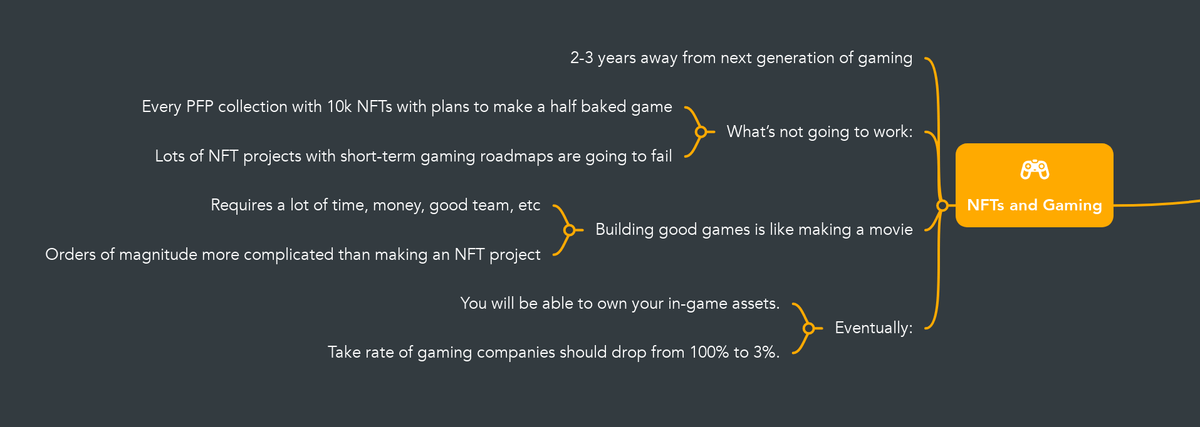
• Building good games is like making a movie.
• Requires a lot of time, money, good team, etc
• Orders of magnitude more complicated than making an NFT project
• Eventually, you will be able to own your in-game assets.
• Take rate of gaming companies should drop from 100% to 3%.
On Metaverse
• Deeply misunderstood by most people
• Metaverse is not a Second-Life type thing where everyone is walking around with VR goggles.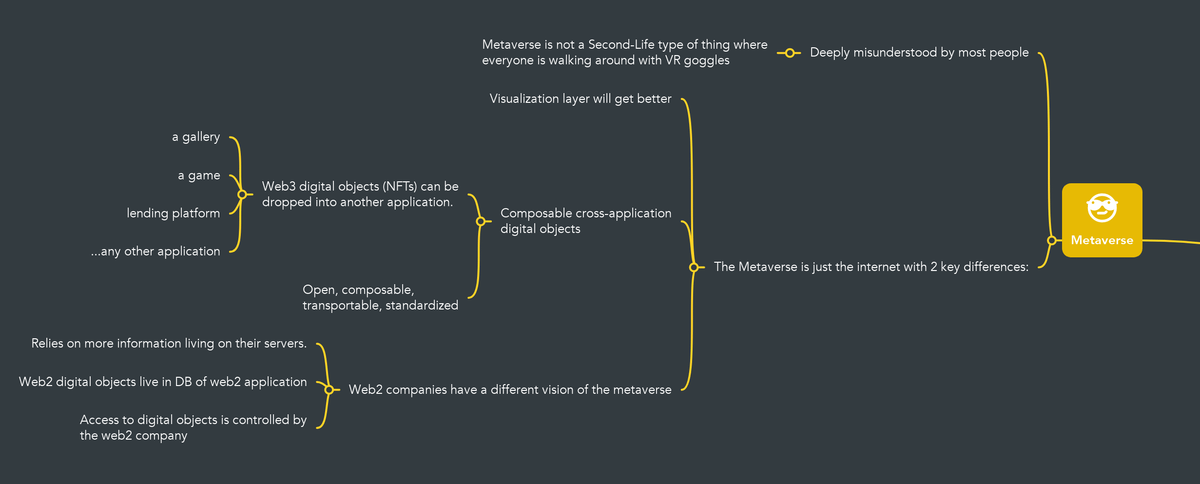
• The Metaverse is just the internet with 2 key differences:
• Visualization layer will get better (as it has been)
• We will now have composable cross-application digital objects
• web2 digital objects (like Twitter status, IG photo, etc) are only in DB of the web2 application.
• To access web2 digital objects elsewhere, you need to get am API key, follow the Terms of Service and write custom code to integrate with another application
• web3 digital objects (NFTs) can be dropped it in a gallery or a game or a lending platform or any of 1000s of applications.
• web2 companies like Meta, Unreal, etc likely have a different vision of the metaverse, which relies on more information living on their servers.
On Centralized Power
• Email is a standardized protocol (SMTP) - can use gmail, or outlook, or anything else
• Global short messaging is controlled by Twitter, media messaging by Facebook
• Twitter employees can make a business decision to ban someone from their platform.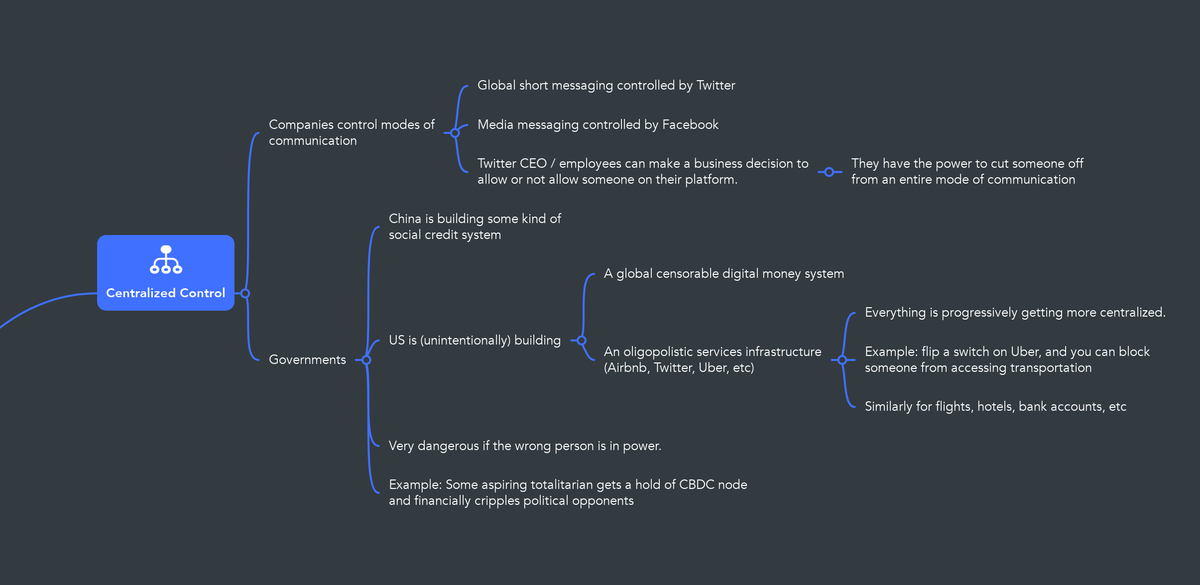
• That’s legally fine because they are a private company, but because of the scale, it means they have the power to cut someone off from an entire mode of communication
• Everything is getting more centralized.
• The US is building a global censorable digital money system + an oligopolistic services infrastructure
• Flip a switch on Uber, and you can block someone from accessing taxi transportation. Similarly for Airbnb, Banks, flights, ...
• China is building some kind of social credit system
• US is building that as well, but by accident.
• Very dangerous if the wrong person is in power.
• Some aspiring totalitarian could get a hold of CBDC node and his / her political opponents won’t be able to buy as much as a tomato.
• Asset seizures by govt. are not uncommon. Canada froze bank accounts of Freedom Convoy truckers; Russian oligarchs assets were seized, …

Shiv
@shivsakhuja
SWE @ Google. I write about #Crypto and #DeFi Threads 🧵, infographics and videos 🎥 explaining projects, strategies and concepts. 👨🌾 🦍 shivsak.com