Let's have a convo on @chainlink CCIP vs @cosmos IBC
I just researched Chainlink & am currently researching Cosmos.
The parallels immediately stood out. Here's what I know so far & where I have questions 🧵
Starting at a high-level, both chainlink CCIP & Cosmos IBC are trying to solve the same problem:
Interoperability & communication between blockchains
Both teams clearly believe in a multi-chain future & are building towards this
The IBC standard is the one being adopted by every chain in the Cosmos ecosystem.
This includes @cosmoshub, @osmosiszone, @bnbchain, @cronos_chain, @JunoNetwork, etc.
Diving into the specifics, this is what is defined by IBC 👇
ibcprotocol.org/
"IBC consists of 2 distinct layers: the TRANSPORT layer which provides the infrastructure to establish secure connections & authenticate data packets between chains & the APPLICATION layer, which defines how these data packets should be packaged & interpreted by the chains"
In simple terms, IBC allows blockchains built on the standard to "talk to each other".
"This means being able to transfer tokens and other data frictionlessly and trustlessly between previously unconnected blockchains"
Hello cross-chain dApps!
twitter.com/cosmos/status/1389258126495555592?s=20&t=sN-5F3brzCS46ea_s_H6eg
Another related feature unlocked by IBC is their concept of "interchain security"
This allows smaller sovereign chains to "rent security from Cosmos Hub".
Conveniently @TheDeFinvestor did a thread on this today:
twitter.com/TheDeFinvestor/status/1565319832869883904?s=20&t=bePA64OFP0CdC2-JXaHHWg
Now shifting to Chainlink CCIP. Chainlink is the CLEAR leader in oracle services, I.e. bringing off-chain data, on-chain in a secure and trustless manner.
With CCIP, they are attempting to leverage their infrastructure to include cross-chain movement of assets & data.
Rather than explaining CCIP myself, I am going to reference this 🐐 thread by @alpha_pls:
twitter.com/alpha_pls/status/1456608344785911812?s=20&t=70Fc60XpHNtIP-8xNPnopw
"Cross-Chain Interoperability Protocol (CCIP) provides a universal, open standard for developers to build secure services and applications that can send messages, transfer tokens, and initiate actions across multiple networks."
Sound familiar? 😉
How does CCIP work?
"A smart contract from source chain invokes Chainlink's Messaging Router, which will leverage Chainlink DONs to securely send the message to the destination chain, where another Messaging Router validates it and sends it to the destination smart contract."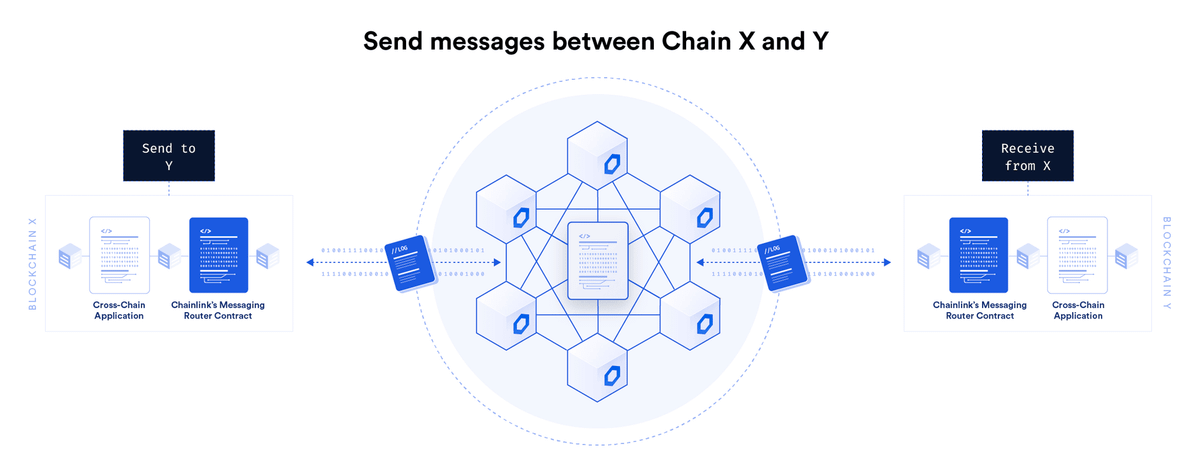
And since we mentioned security on Cosmos, it's worth mentioning how Chainlink does it:
"The Anti-Fraud Network monitors the Chainlink network for nefarious cross-chain activity and automatically pauses its services to protect users when malicious activity is detected."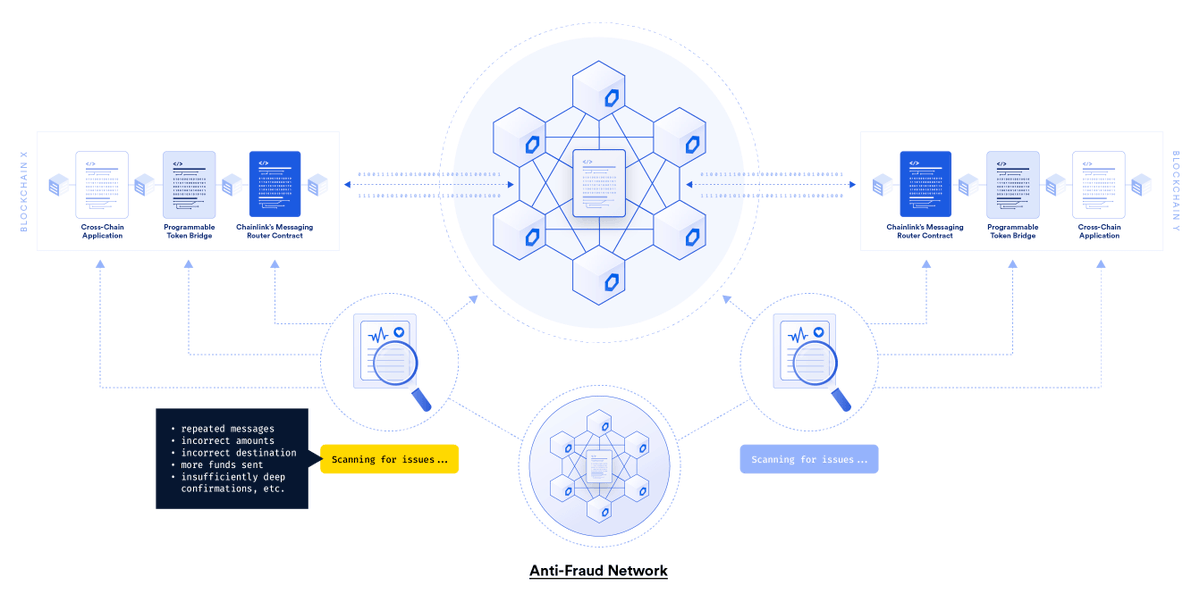
Now that we have a better understanding of CCIP and IBC, let's dive into how they are different.
To be completely honest with you, I still struggle to grok all the intricacies of how they differ.
After some digging I did come across this interesting thread from a year ago:
@AllanJunLi asked how the 2 differ and got responses from both @ChainLinkGod and @zmanian
Here's what they had to say...
twitter.com/AllanJunLi/status/1425243789791166467?s=20&t=gJB8bTpeYo8RAICG-yEPLw
@ChainLinkGod stated:
"IBC requires finality in the supported chain, CCIP is backwards compatible with all blockchains"
@zmanian responded:
"The main advantage of IBC is that connects famous chains & unknown chains permissionlessly
CCIP you need to do biz dev with Chainlink"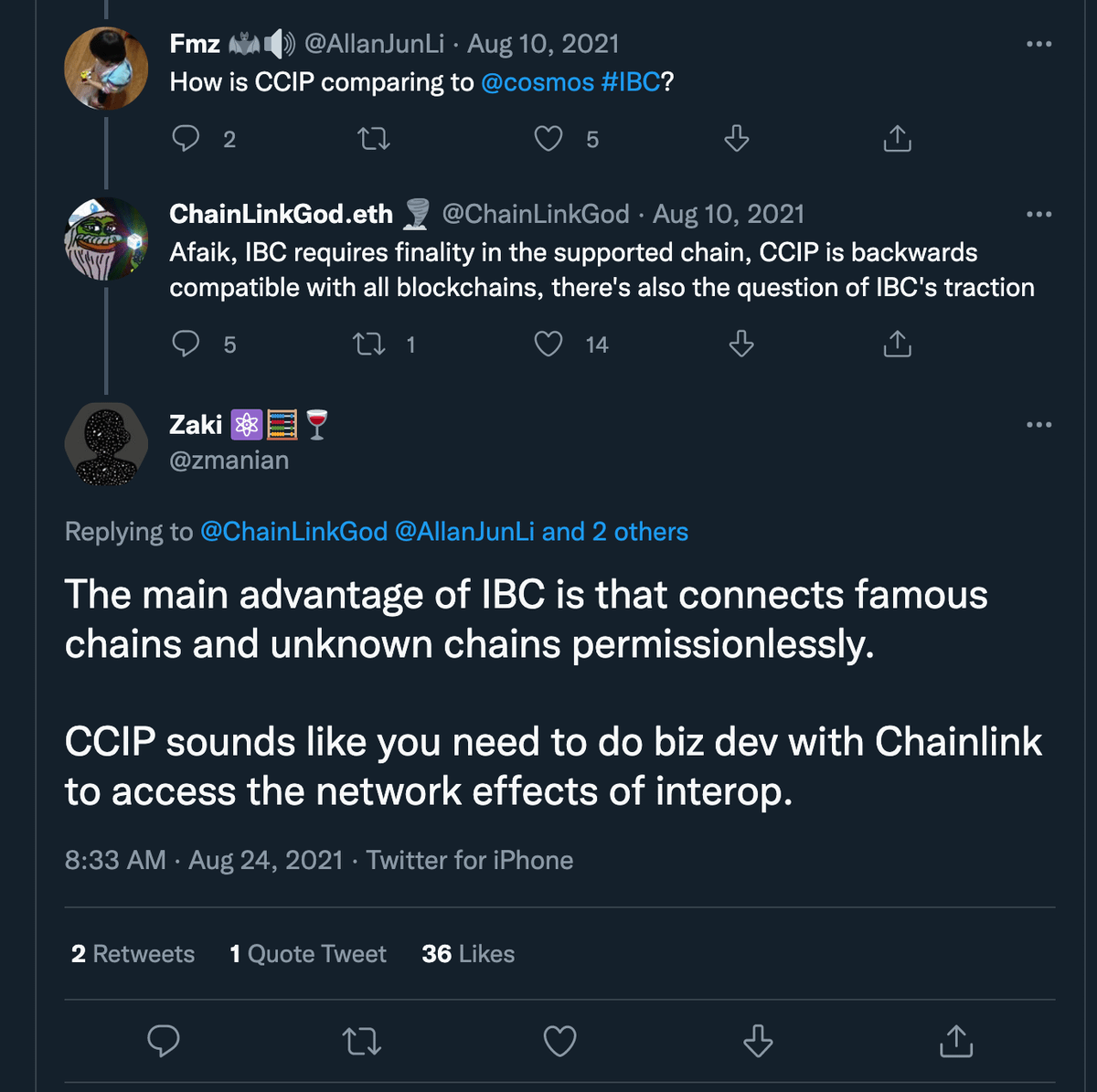
I was also able to find another resource from a 3rd party.
@chasedevens published an article for @messari profiling cross-chain messaging protocols.
Sadly, I don't have enterprise subscription, but here's what I got from his thread version:
messari.io/report/speaking-in-tongues?referrer=category:infrastructure
"IBC is the gold standard for cross-chain security.
Its direct connection b/w chains allows it to inherit the weaker security of the two underlying networks without introducing third-party trust assumptions.
However, the model is expensive and lacks broad compatibility."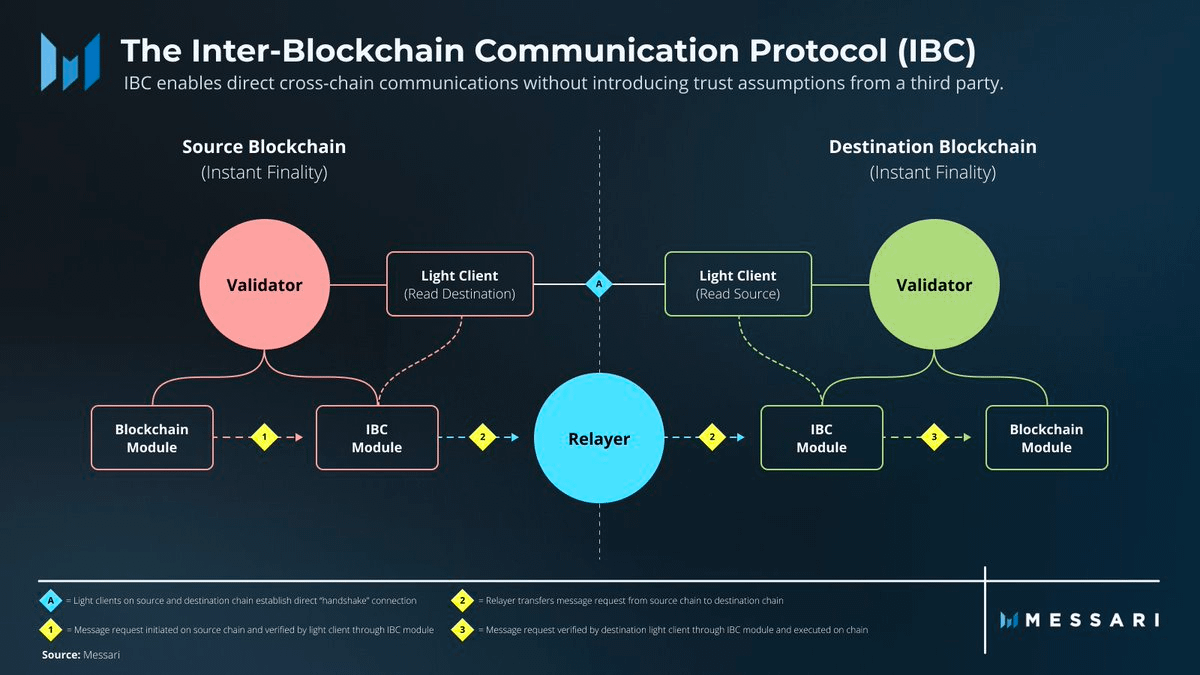
"@layerzero_labs gives developers a framework to declare trust assumptions at the transaction level. However, its recommendation to use Chainlink’s DONs will put it in direct competition with Chainlink’s CCIP.
For this reason, I analyze L0 & CCIP together."
So to summarize, it appears that IBC is a more focused implementation that works for chains built on IBC standard.
Whereas CCIP is a more generalized implementation that works for any smart contract blockchain.
(Note: This is an assumption so please correct me if I'm wrong)
Lastly, a note on implementation/adoption. From an anecdotal standpoint, it feels like IBC is far ahead of CCIP.
I saw IBC in action with @osmosiszone & it was incredibly smooth
In terms of CCIP, @CelsiusNetwork is only one listed on ecosystem page 😬
chainlinkecosystem.com/products/cross-chain-bridging-ccip
Overall, I still have many questions and will need to research this deeper. Also, this is far too complex for a thread (Twitter space anyone?)
I wanted to publish this to source feedback from the 2 communities and start a dialogue to shortcut my research
Please leave comments!
Lastly, if you enjoyed this thread, please consider giving me a follow and subscribing to my newsletter @web3pills
I've already published my report on Chainlink and the Cosmos report is coming soon!
web3pills.substack.com/

Alex Valaitis
@alex_valaitis
Tweets on AI & Crypto | ✍️ Blogging at @siliconcowboyco |🛠️ Building: @bigbraindaily, InterviewMe AI