Here's a snippet from our upcoming UX research book:
Chapter 3 - Selecting Participants
"Random sampling isn't perfect"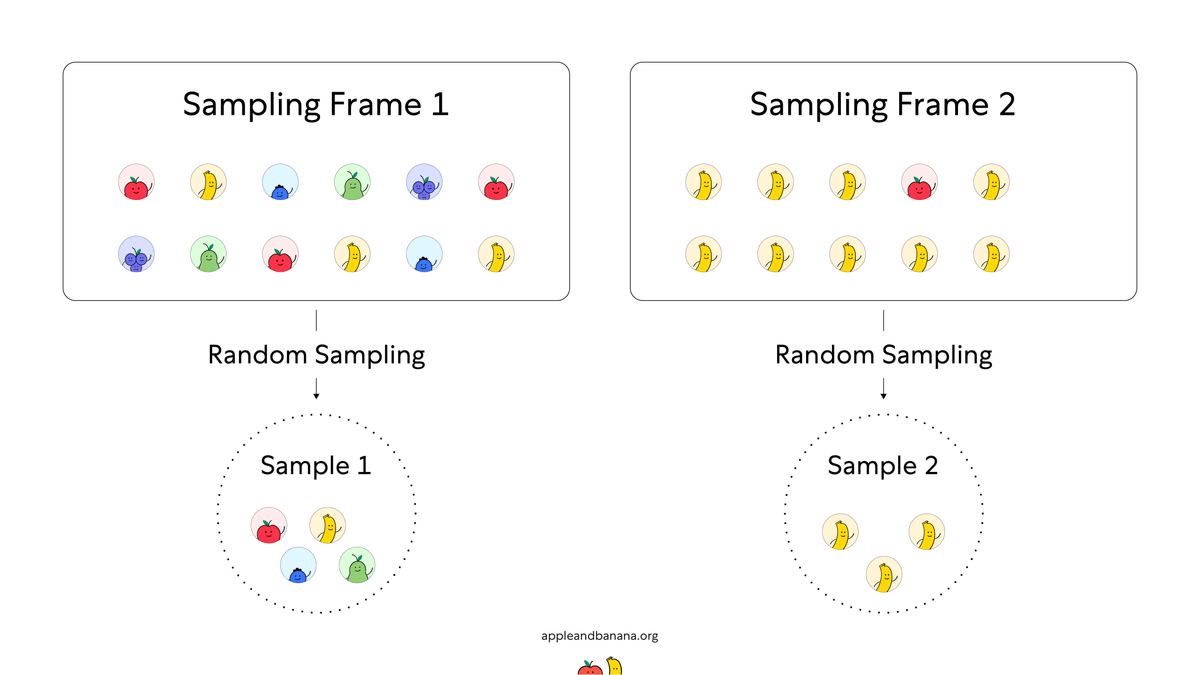
Another issue with random sampling is when your sampling frame, which should reflect your population, is very diverse.
Take a look at the diagram above.
Imagine if you had limited time (which you probably do) and only one chance to sample from the frame.
If your sampling frame – which should be reflective of your population – isn’t diverse (like on the right), then your sample should roughly capture that limited diversity.
If your sampling frame (and population) has a lot of small, minority groups, then your random sample might never include anyone from these groups.
This means using a more purposeful, non-random approach (see Chapter 5) to make sure you hear from unique voices.
So HOW do you get ahead of some of these concerns when you randomly sample?
^more on the pitfalls and opportunities with random sampling:
appleandbanana.org/bookwaitlist

Apple & Banana 🍎🍌
@AppleBananaUX
Explore our UXR knowledge base, used by 100s of research teams | Cofounded by ex-Facebook, SeatGeek, Techstars, Best Buy researchers 🍎🍌✌🏽