90% of YouTube analytics (especially CTR & AVD) are poison to understanding virality.
Most YT gurus love these metrics since you can always tell a coherent story without contradiction.
A book written in 2001 (4 years before YT's birth) provides a clear explanation of why.
👇
Fooled by Randomness, a book by Nassim Taleb is by far the greatest book ever written to help you differentiate information & noise.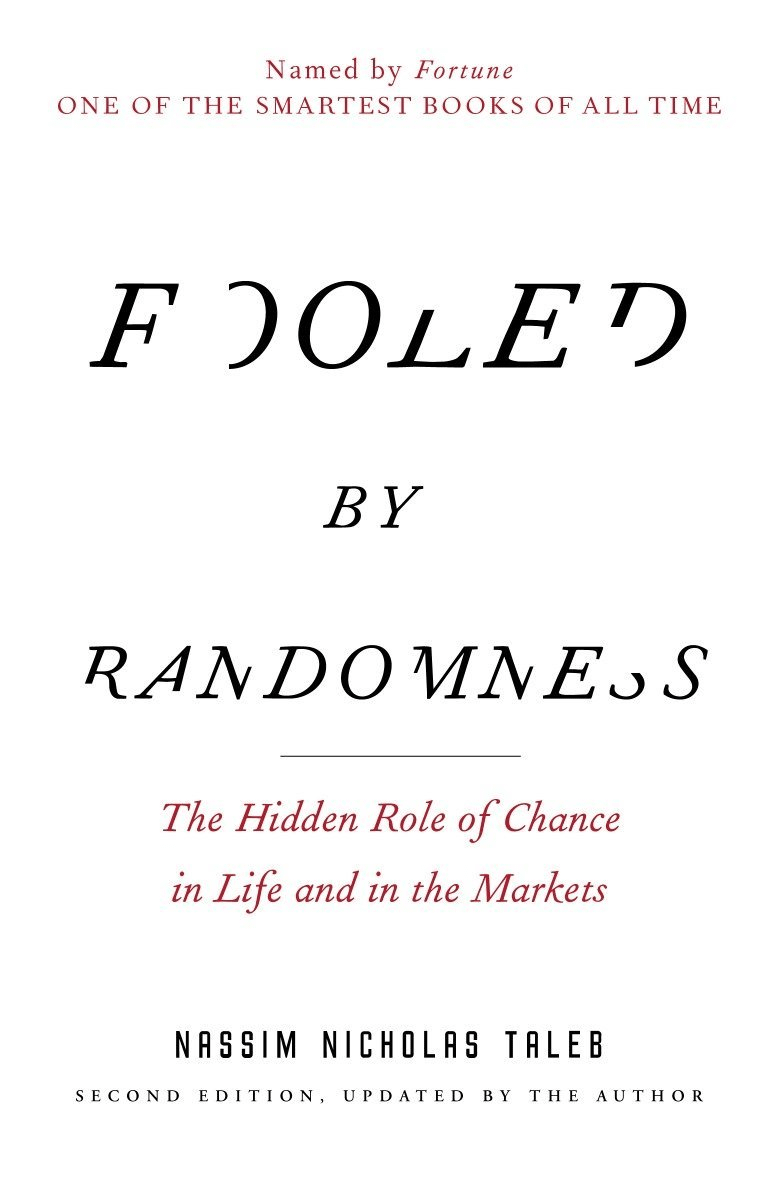
Taleb explains how we create reasons and patterns for wild success even though it is essentially random.
Mild success can be explained by skills and hard work, but wild success is usually attributable to variance and luck.
Let's take CTR, for instance.
What you will usually hear is you need to increase your CTR to increase your views, If the CTR is low, change the thumbnail & title.
While this seems perfectly logical, it's absolutely wrong.
Here is an example with two videos of mine.
If I hid the views, most YouTube gurus would argue that the thumbnail of the second is better. And it would've been perfectly logical.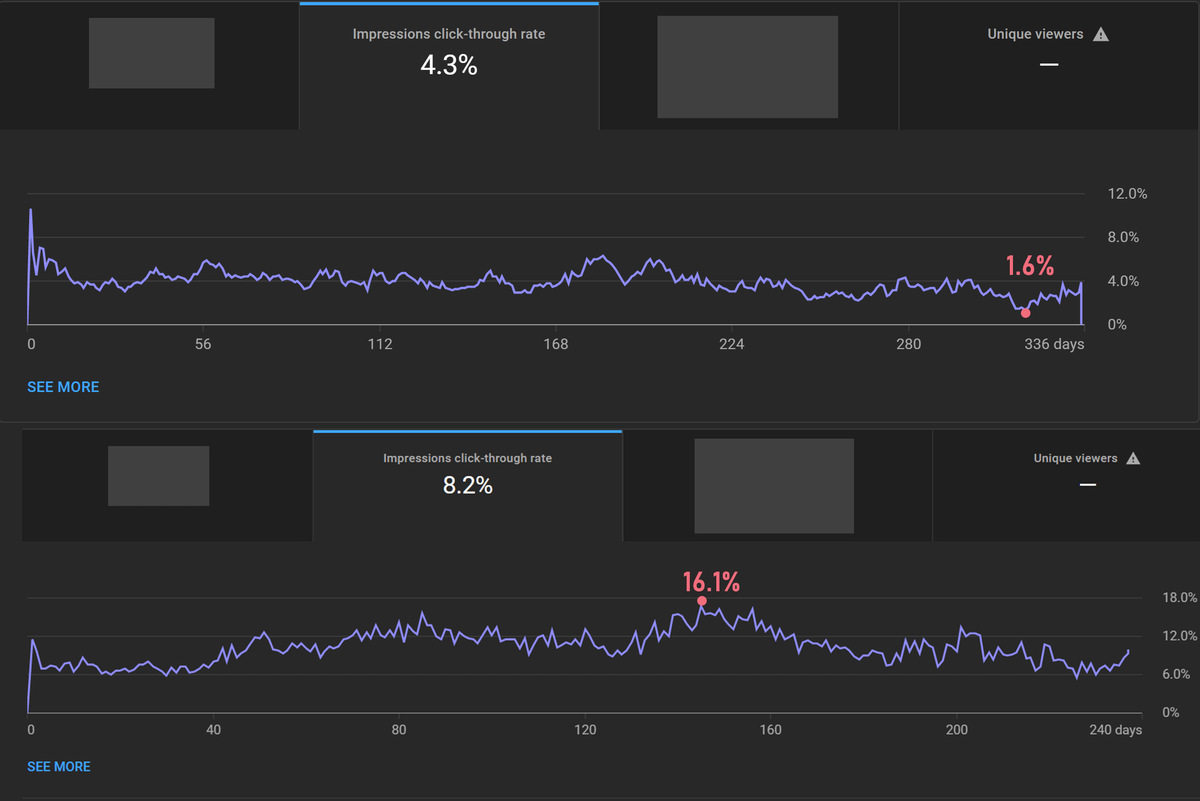
The problem is that reality is far more complex to fathom.
If I didn't reach 1M+ viral videos and reverse-engineer them, I wouldn't have the data to comprehend this phenomenon.
What I observed is quite the opposite, the more viral the video, the lower the CTR.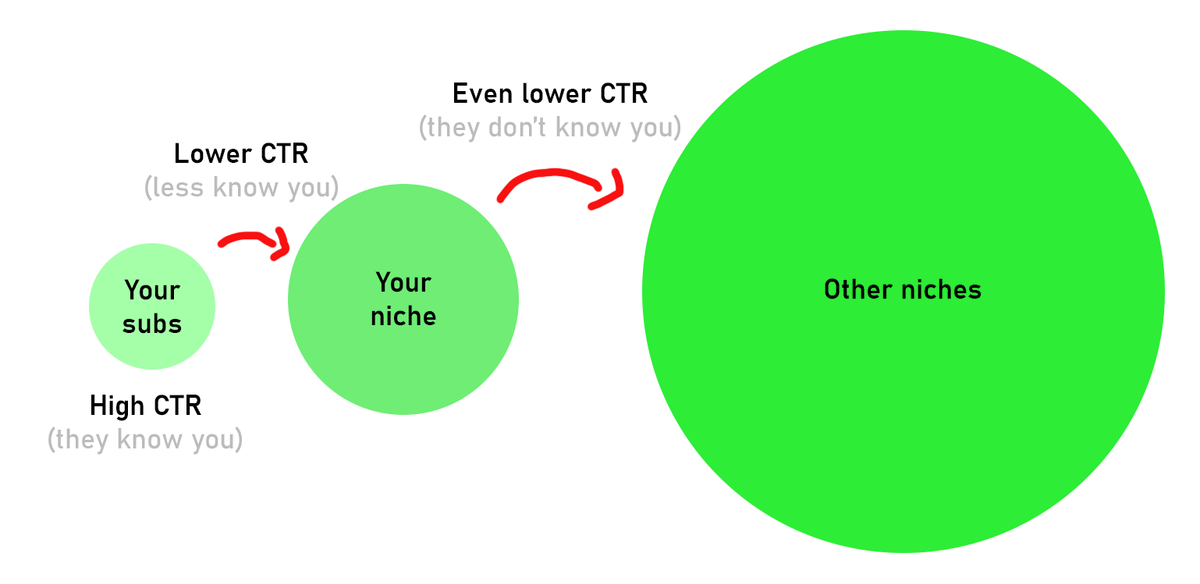
When the algorithm finds a "viral-worthy" video, it will try to push it to new audiences outside your initial circle.
Throughout this test process, the click-through rate will be significantly lower as people are less likely to click (and vice-versa).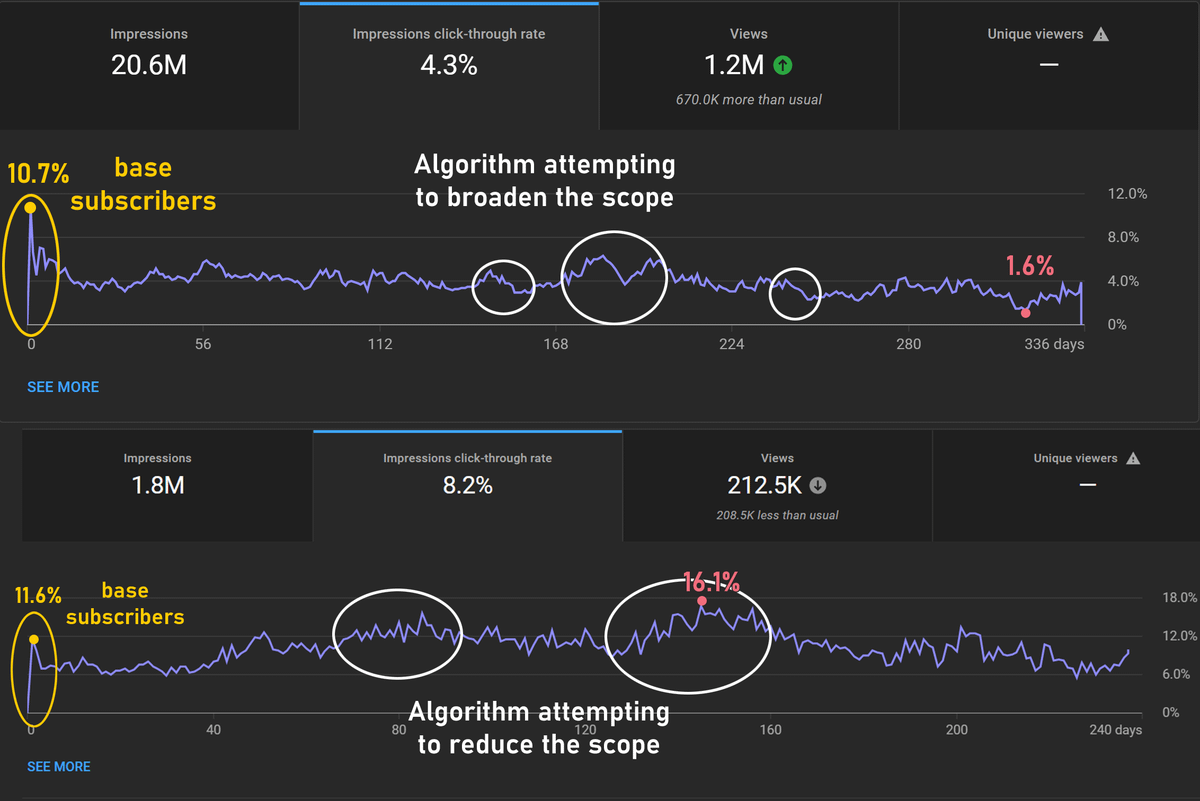
Keep in mind there are many more pieces to the puzzle, I can't go into too much detail here, this is just a simplification.
Numerous other elements come into play that make metrics alone insufficient to fully understand the outcome.
Taleb calls it the "Hindsight Bias."
When we look back at past events, we see them as less random than they actually were.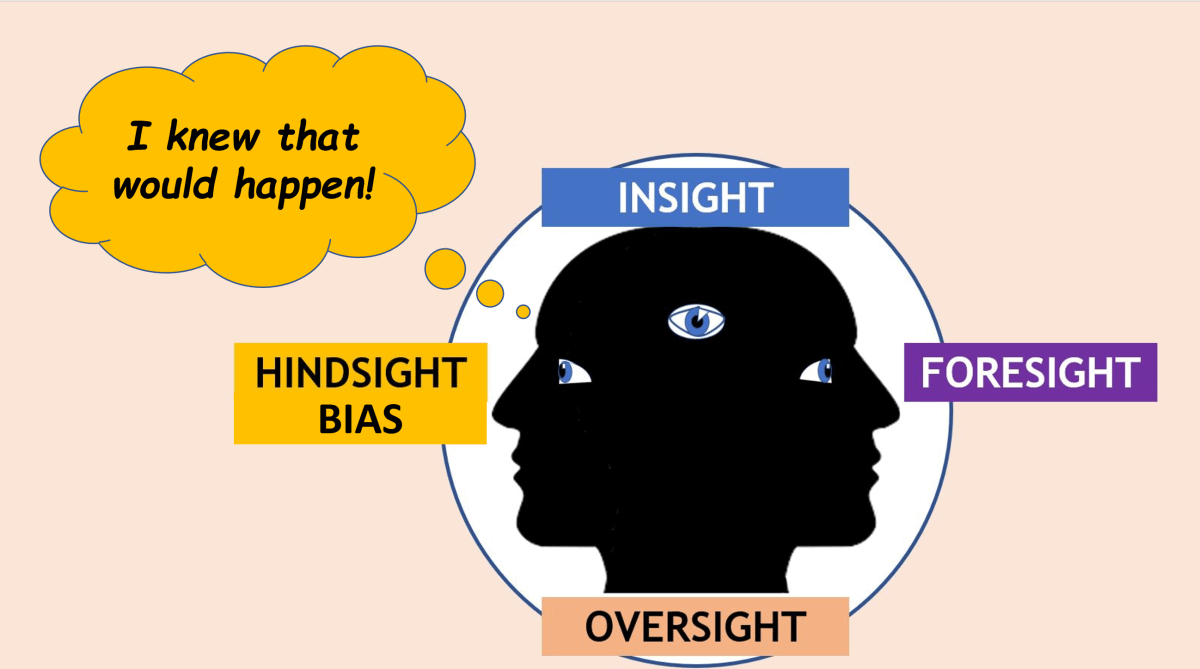
The problem with YouTube gurus is that the majority of people are unable to present the contradiction since it requires 2 things:
• A long experience with several viral videos
• Study them without being fooled by randomness
This leaves very few people on the table.
Here is another example (I could go like this all day long).
These two videos are about the same duration.
• Video A has 44% retention in the first 30 seconds
• Video B, 63%.
Result: Video A outperforms B by 246k views.
In that case, video A started right away with a sponsored ad, which is why the starting retention was lower.
The algorithm is really good at tracking if people loved a video or not through hundreds of different factors.
This leads us to another takeaway from the book:
• Silent evidence prevents us from having an accurate understanding of past events.
As the creator of these videos, I knew the first video would perform better because I know my audience very well through non-analytics analysis.
If I was obsessed with analytics, trust me, I would've turned insane by now.
After 12 years, I've seen everything and its opposite.
As a creator, you want to improve these:
• Human behavior understanding
• Content crafting (storytelling, good editing...)
• Conveying emotions
• Providing unique value
Not these:
• CTR
• AVD
• Retention
• etc
As they are mostly noise, not signal.
The more data, the more noise.
Hold on tight to the fundamentals.

wono
@wono_strategy
The highest level of youtube strategy. YouTube since 2011 & former trader. Micro-economics of attention. Anonymous.