The 2023 Crypto Crime Report by @chainalysis
I read the 100-page report, and here's a breakdown of the most interesting facts in 20 tweets.
A short🧵:
Despite a market downturn, the volume of illicit transactions in the cryptocurrency industry has risen for the second year in a row, reaching an all-time high of $20.6 billion.
Last year's estimate of $14 billion in illicit activity has been revised to $18 billion.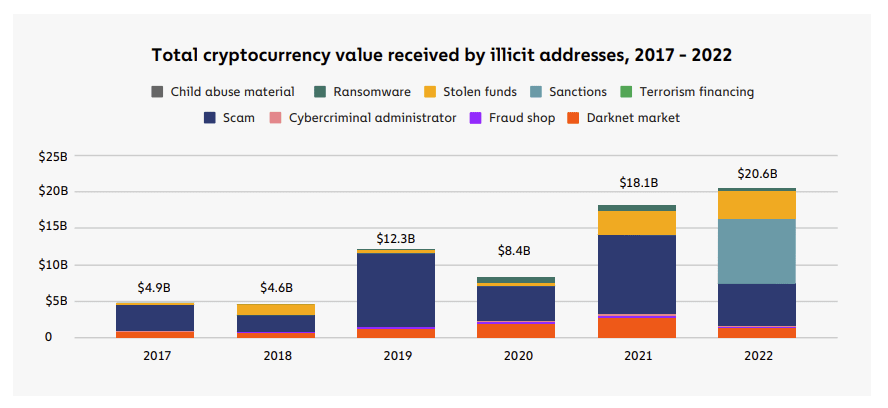
Transaction volumes for all other categories of cryptocurrency-related crime, except for stolen funds (+7%), have decreased. The rise in stolen funds is attributed to the market downturn, as users are more pessimistic and less likely to invest in scams.
However...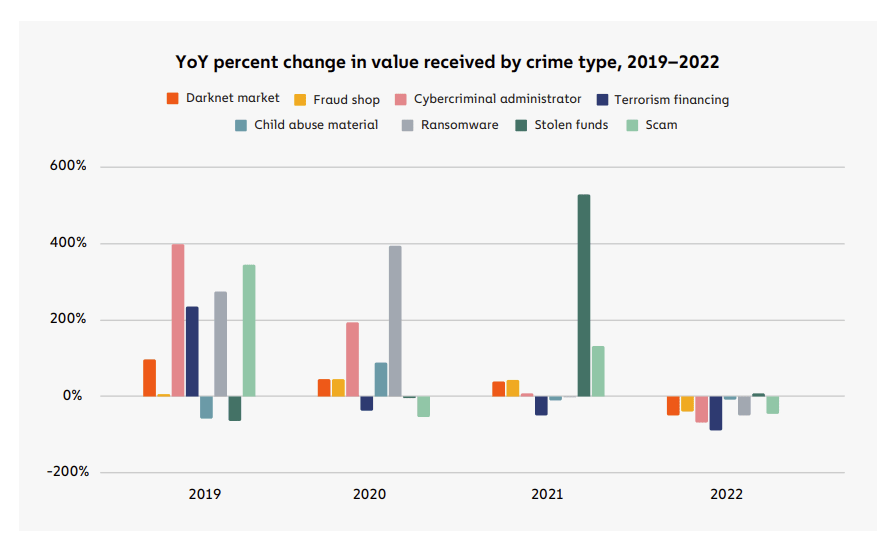
...the share of all cryptocurrency activity associated with illicit activity has risen for the first time since 2019, from 0.12% in 2021 to 0.24% in 2022
This shouldn’t come as a huge surprise. As one might expect, total transaction volume fell with the onset of the bear market.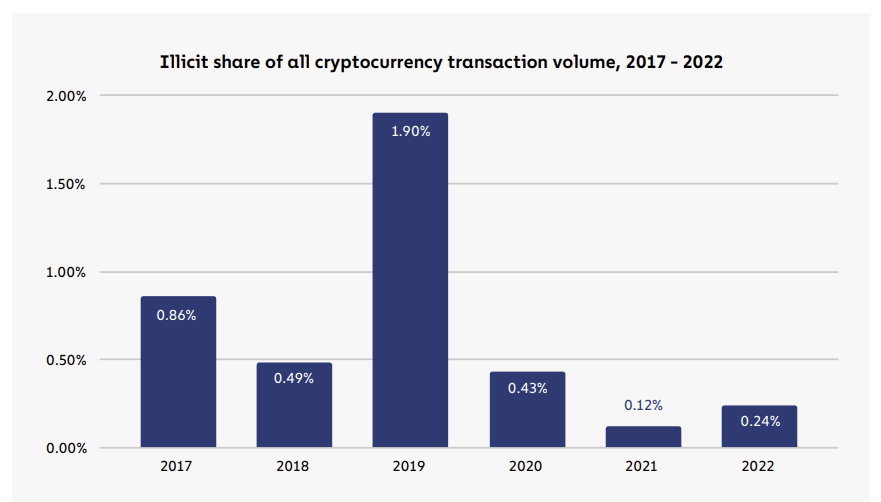
-- Sanctions
The U.S. government's crypto-related sanctions strategy has evolved. In 2018, OFAC designated two Iranian nationals associated with the SamSam ransomware strain and included Bitcoin addresses linked to the individuals as identifiers on their (SDN) List entries.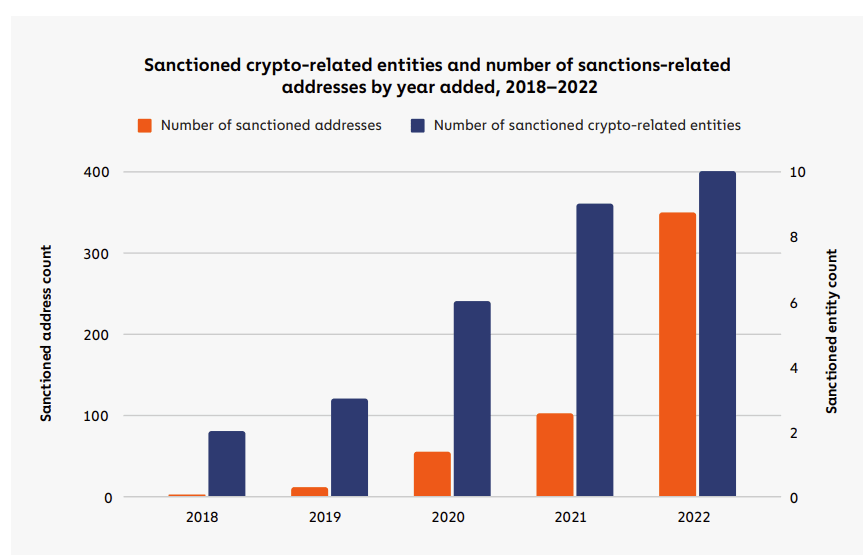
Here’s the breakdown of the individuals and entities with cryptocurrency nexuses sanctioned in the U.S. in 2022, along with the reason OFAC sanctioned them.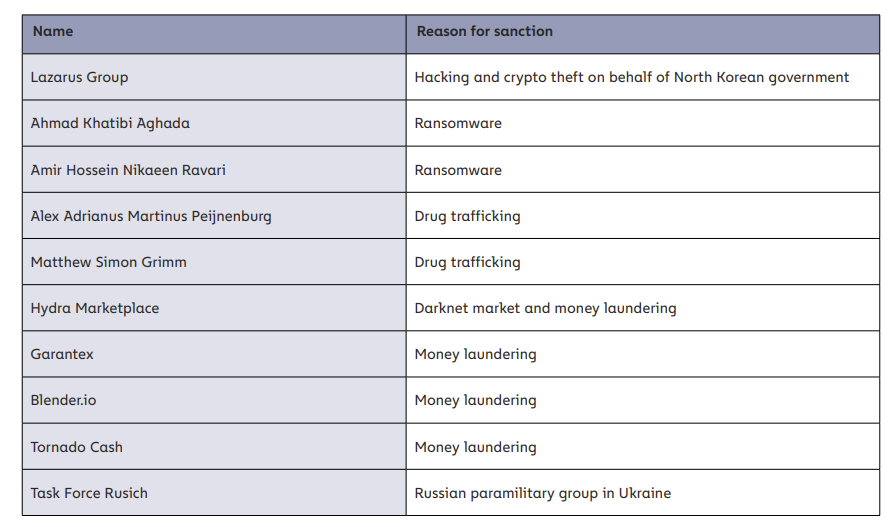
The report details how the sanctions on the three most notable entities changed their usage.
• Hydra was the largest darknet market in the world.
• Garantex is a high-risk crypto exchange based in Russia.
• Tornado Cash is a decentralized mixing service on Ethereum.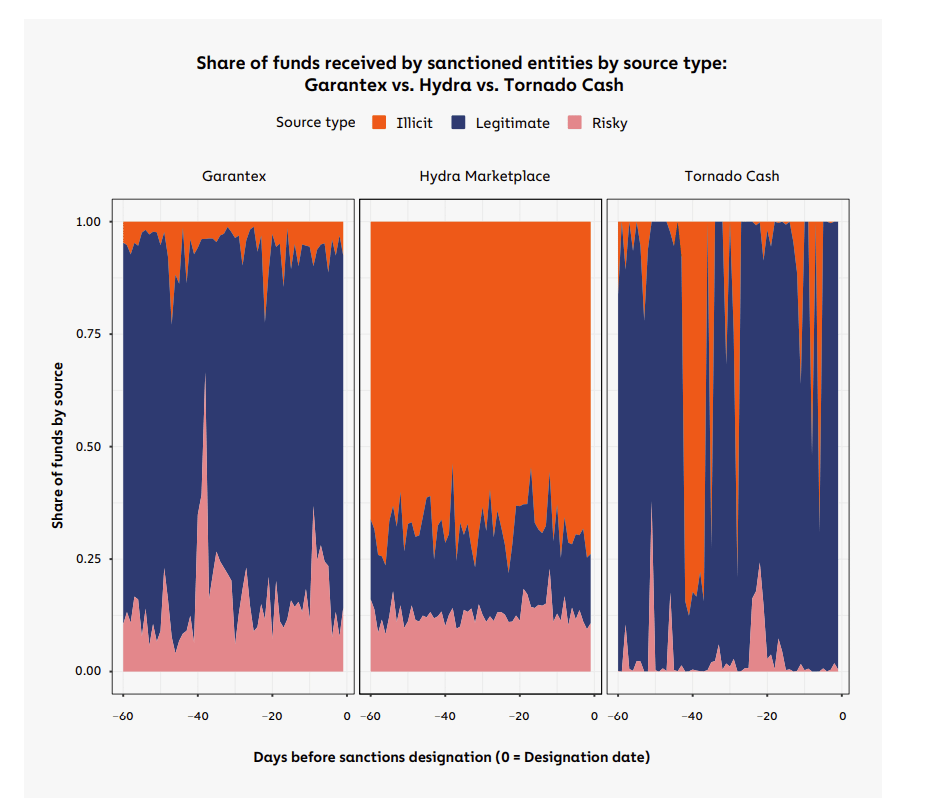
Sanctions affected the services very differently:
• Hydra: Inflows dropped to zero. (Also because of seizure).
• Garantex: No seizure and transaction volume increases post-designation. ($620.8 million to y $1.3 billion in monthly inflows)
• Tornado Cash: Lower but not dead.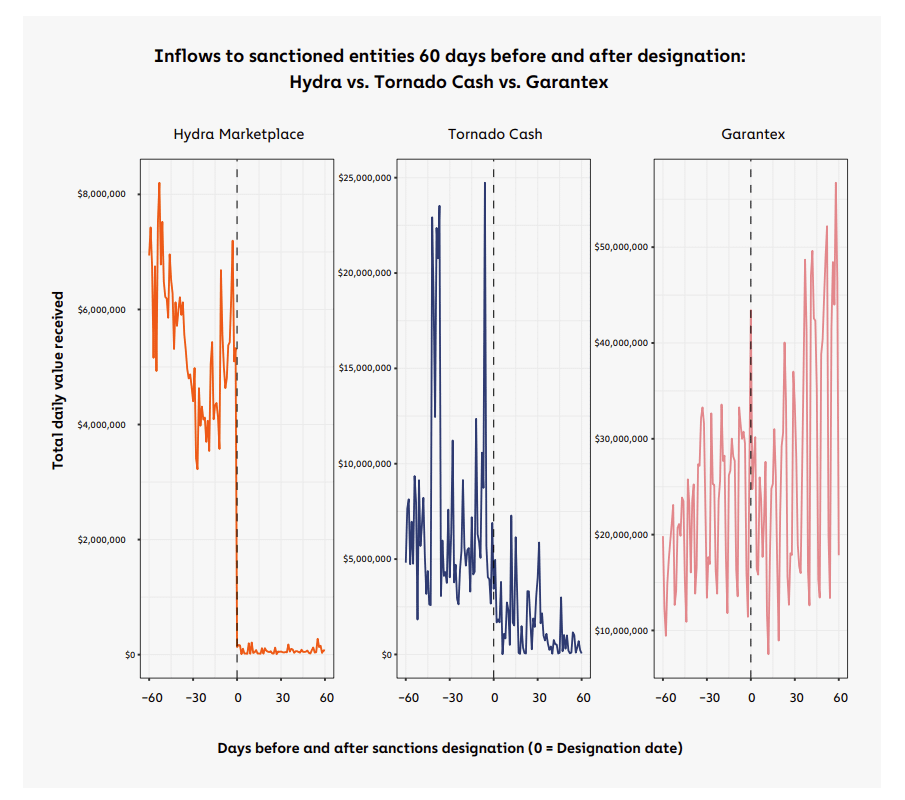
- Key takeaways: The impact of crypto sanctions depends on the jurisdiction and technical constraints.
The Hydra case demonstrates the effectiveness of sanctions, as the darknet market was dealt a fatal blow when its servers in Germany were seized.
In contrast, the case of Garantex highlights the challenge of sanctioning entities in the absence of international cooperation, as the cryptocurrency service continues to operate unencumbered in Russia despite being largely cut off from the compliant exchange ecosystem.
Ransomware Revenue Down As More Victims Refuse to Pay
2022 was an impactful year in the fight against ransomware. Ransomware attackers extorted at least $456.8 million from victims in 2022, down from $765.6 million the year before.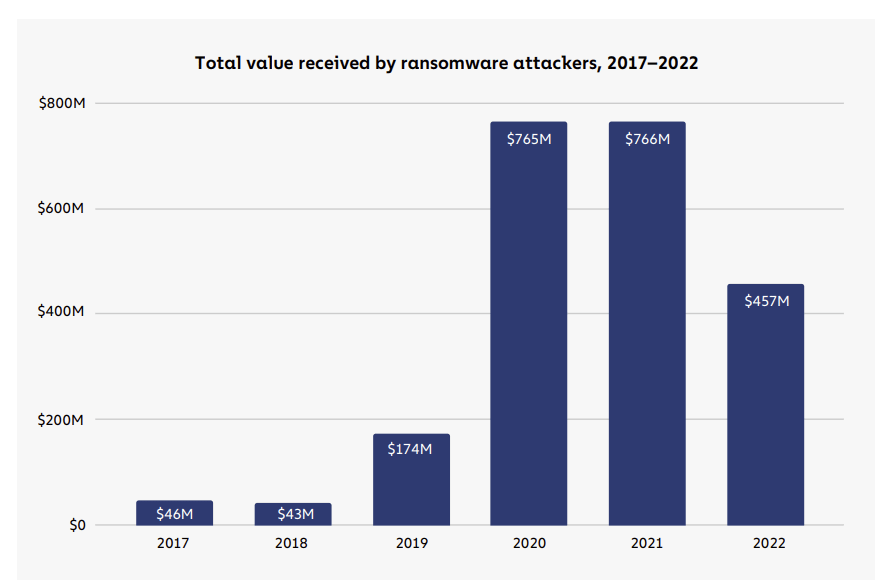
There were over 10,000 unique ransomware strains in operation in the first half of 2022 despite a drop in revenue. On-chain data supports this growth in active strains, although most ransomware revenue is concentrated among a few top-grossing strains.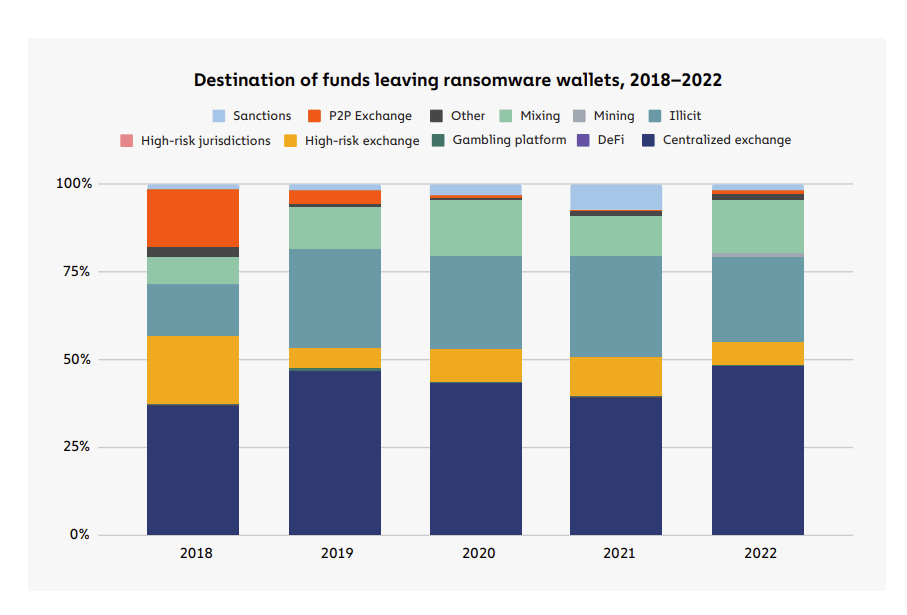
-- Money Laundering
Overall, illicit addresses sent nearly $23.8 billion worth of cryptocurrency in 2022, a 68.0% increase over 2021. As is usually the case, mainstream centralized exchanges were the biggest recipient of illicit cryptocurrency.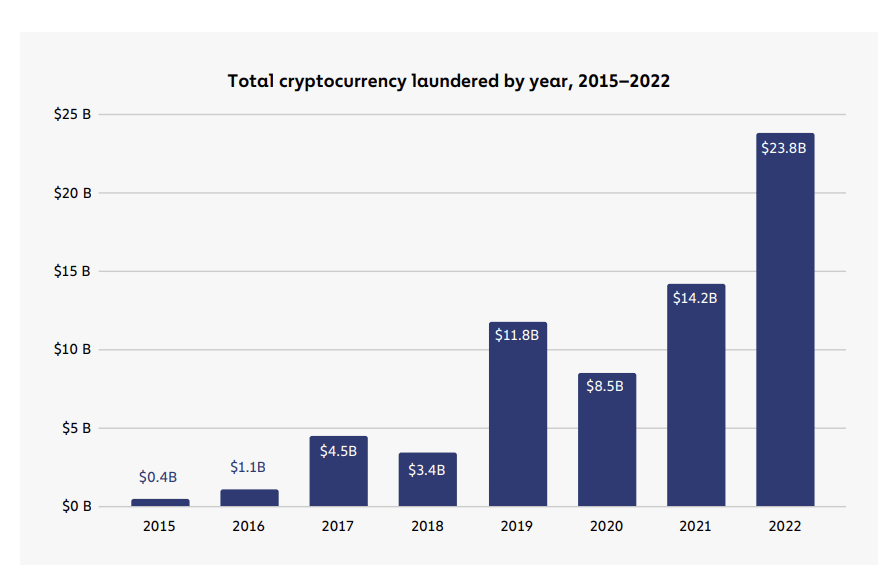
Hackers holding stolen cryptocurrency are responsible for 57.0% of the funds sent to DeFi protocols, making them the largest group involved in DeFi-based money laundering. The surge in hacking in 2022 allowed them to drive the increase in the use of DeFi protocols.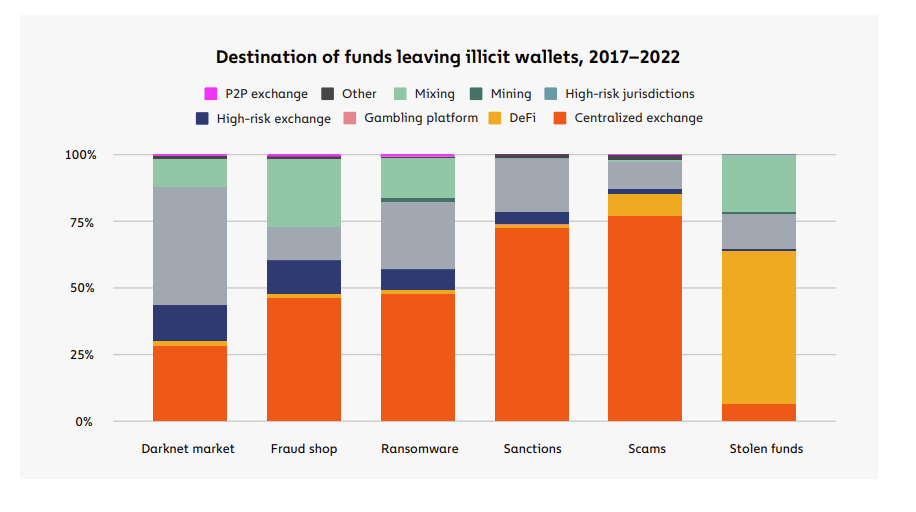
Mixer usage fell in 2022, but illegal use hit an all-time high.
Mixers processed a total of $7.8 billion in 2022, 24% of which came from illicit addresses, whereas in 2021, they processed $11.5 billion, only 10% of which came from illicit addresses.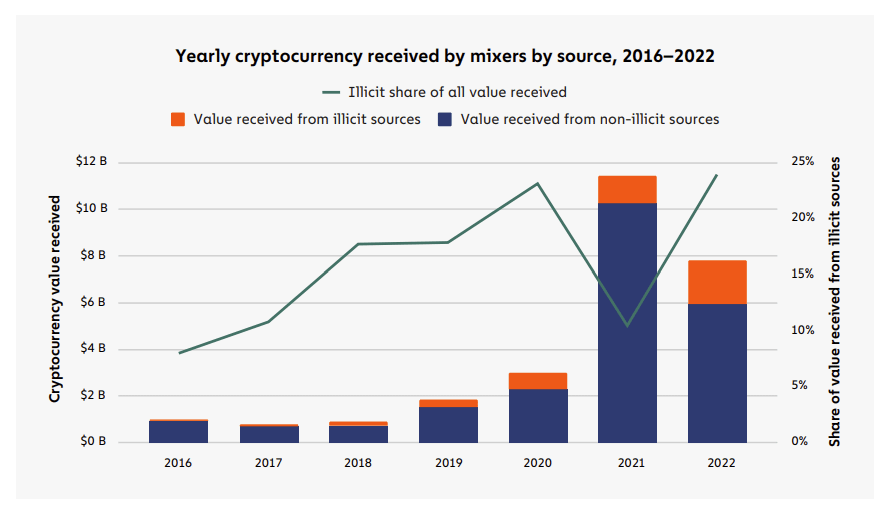
-- Stolen Funds
In 2022, cryptocurrency hacking reached a new all-time high, with a total of $3.8 billion stolen. Most of these thefts were from DeFi protocols, and North Korean-linked attackers were responsible for a significant portion of the attacks.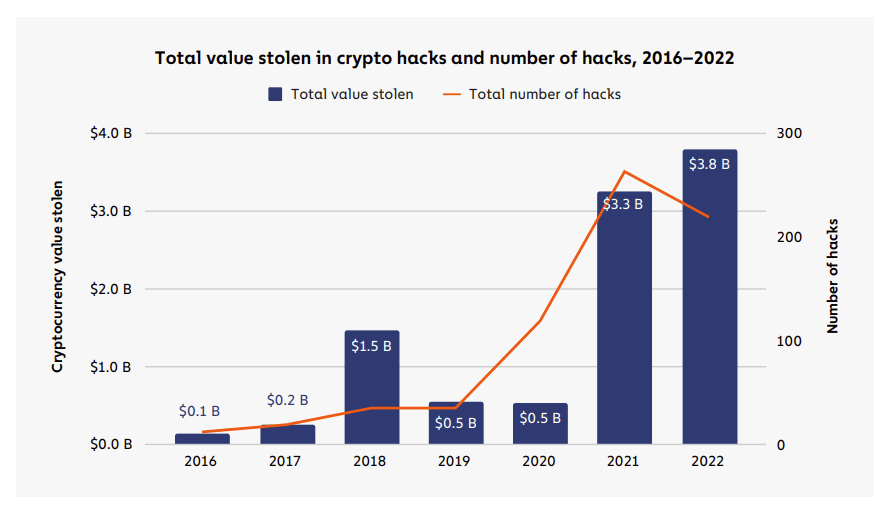
In 2022, DeFi protocols were the primary target of hackers, accounting for 82.1% of all cryptocurrency stolen, amounting to $3.1 billion. This is an increase from 73.3% in 2021. Of the $3.1 billion stolen from DeFi protocols, 64% came from cross-chain bridge protocols.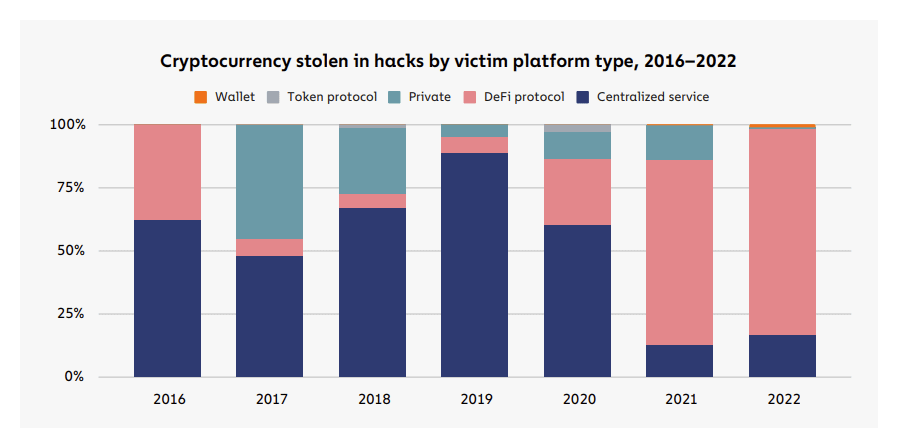
-- Scams
In 2022, revenue from cryptocurrency scams dropped by 46% from the previous year, amounting to $5.9 billion. However, blockchain analysis revealed connections between different scams. Crypto scams are still the biggest form of cryptocurrency-based crime.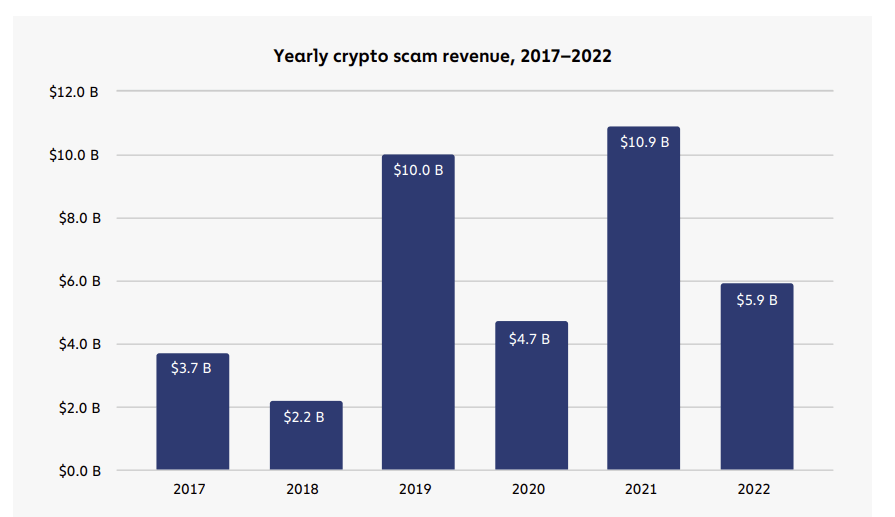
While scam revenue dropped overall, we still saw several highly successful scams, the top being Hyperverse, which pulled in nearly $1.3 billion in revenue.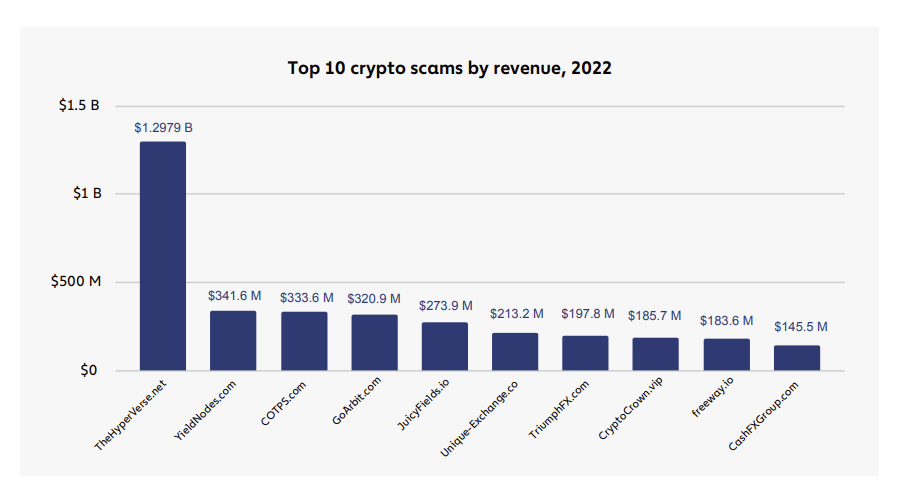
-- Pump and Dump Tokens
According to the report, 24% of new tokens launched in 2022 displayed on-chain characteristics of pump and dump schemes, a type of investment scam where an asset's price is artificially inflated, only to be sold off at a profit once the price peaks.
In 2022, out of the 40,521 new tokens that gained enough traction to be analyzed, 24% or 9,902 tokens displayed a price drop in the first week that suggested they might be involved in pump-and-dump schemes.
-- Summary
I tried to highlight the most interesting facts, but the whole report is fascinating, and I highly recommend reading it.
It's available for free: go.chainalysis.com/2023-crypto-crime-report.html
All graphics & stats (c) by @chainalysis.

W3nzel.eth
@thisiswenzel
Creator of TMZ CRYPTO. A weekly roundup of the dark side of crypto. 🥷 Working on wagmi.fi | Part of @thehashmasks team.