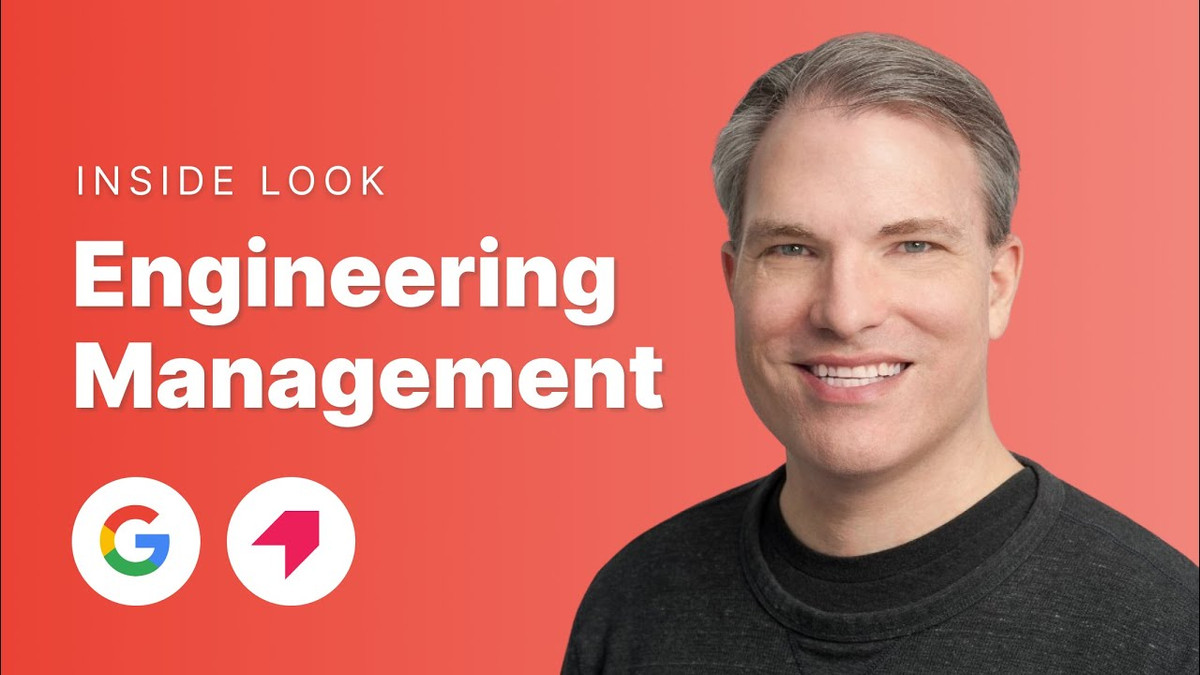
This interview with former Google's Sr. Eng. Director (ex-Amazon) on How Google Hires Engineering Managers is a goldmine!
Many insights in so many areas: 1:1s, Delegation, Growing People, Questions he asks & how he assesses EM candidates…
Here are my 7️⃣ favorite learnings:
🧵
1️⃣ When an engineer comes to me and says:
> “Hey, I think maybe i want to try management"
I only really have one question: Why?
I'm looking for one answer and only one answer and it should be something very close to it:
I want to hear that the engineer gets a great deal of personal satisfaction from growing other people.
That they get the same satisfaction from growing a person they do from like shipping a great product.
They need to have a real enjoyment of mentoring because managing is hard.
2️⃣ What do you look for, what questions do you ask when you are interviewing an external candidate for an Engineering Manager position?
1. Tell me the person you're most proud to have ever managed?
2. How did you grow them and why you're proud?
3. Tell me about how do you deal with jerk employees?
4. Tell me how you managed it and how you resolved it? How long did you have to wait before you finally figured out this person wasn't going to be worth and wasn't worth the friction?
5. Tell me a story about how you resolved a conflicting business goals
6. Every engineering manager should be prepared to talk about a time when they couldn't deliver on a promise and what they did about it
7. Everyone who interviews should be ready to talk about their biggest personal or professional failure as a manager. Where have you failed most in your career and and what did you learn from it?
We want to know if this is someone we can trust with other people.
3️⃣ On 1:1s:
I have weekly one-on-ones with my directs and at least bi-weekly one-on-ones with my skips no matter how big my orgs are.
I don't want to hear about project updates (unless if there's some really burning thing), but that time is about: How are we doing growing that person?
4️⃣ On Delegation:
As a manager, If there are things you don't like to do, there's actually a pretty good bet that that's a growth opportunity for someone else on your team.
You should just ask like: I have this thing I have to do which I don't really love doing: Is there anyone here who would like to learn how to do it and can benefit from it?
Very often you'll find a volunteer.
5️⃣ On Meetings:
The biggest mistake managers make is that they're too quick to schedule meetings.
I tell my teams: "meetings are a bug, not a feature"
The only legitimate purpose for a group meeting is:
1. To make a decision or,
2. To resolve a dispute.
Everything else should be in a written doc.
Reasons:
1. It's durable
2. It's searchable
3. It's editable
4. It's remixable
You have to recognize that the majority of people who are going to have to live with the consequence of your decision aren't going to be in a meeting and probably won't even be at the company right now.
People should really be more aggressive about slashing meetings from their calendar.
6️⃣ On Technical Competence as an EM:
Every manager in an engineering organization has to maintain some level of technical competence.
In my opinion I can't be a good leader if i can't have a conversation with my teams about some architecture they're proposing.
Or, If I can't stand in front of my CEO or our VCs or whoever and explain in pretty simple language how what we do works and then how it connects to the user value, what it costs to do those kinds of things.
If I can't do that, then I'm just pushing paper at that point.
Every really good Engineering Manager that I admire, or have looked up to in my career at some point has stepped back and stopped managing for six months or a year to just go be an IC on some really complicated thing because they just needed to flush out their brain and reset.
7️⃣ On Preparing for Interviews:
Prepare ahead of time for things we talked about earlier (point 2 above) like: Growing People, Failures, Dealing with Jerk Employees.
Tell me about a time you failed, what did you learn and those things
You should have five or six examples you have thought of ahead of time.
You should not recycle them during the interviews.
Nothing looks worse in an interview for a manager than when they lean on the same one or two examples for everyone on the on-site panel.
Even if the two examples are applicable for all the scenarios, it will show up in the written feedback and they will not look great on them.
🤯 Finally, probably my favorite passage:
“The really good managers are the ones who are spending a lot of time thinking about how to work themselves out of a job.”
It seems so easy to do, but it isn’t...
Once you are on your intense day to day as an EM, it’s pretty hard to slow down and:
1- Find time & energy
2- Detach yourself from the situations at hand
3- Think systematically & strategically about the future of your team and the roadmap years ahead of time.

Thiago Ghisi
@thiagoghisi
🤹♂️Director of Engineering @Nubank. Ex-Apple. Ex-TW. 🇧🇷in🗽. 🎙Co-Host @EngAdvicePod. 📚🐛. 💡Sharing Tech Career Growth Tips & Eng. Leadership Insights👇