Fundamental analysis: The only guide you will ever need ↓
❯ Supply and demand mechanics
❯ Financial performance
❯ Valuation
❯ Tokenomics
❯ Stakeholder engagement
Don't chase after tokens.
Chase after efficient business models.
While narratives can contribute to higher token prices when aping spirits are high, it is important to consider strong fundamentals for identifying long-term entry points that are resilient to hype and short-term shifts in sentiment.
If you fail to comprehend the adequacy of a protocol's valuation, you will either end up overpaying or missing out on undervalued tokens.
To understand valuation, you need a solid grasp of a company’s fundamentals, such as revenue, profitability, growth, and more.
❯ Supply and demand
In general, when there is higher demand for a protocol's service, its native tokens become more valuable.
Token holders benefit from the increasing value of their tokens, which appreciate as more fees are paid by users of the protocol.
Demand and supply dynamics exist at various levels within the ecosystem, not just at the protocol level.
One way to approach this is to take a top-down perspective ↓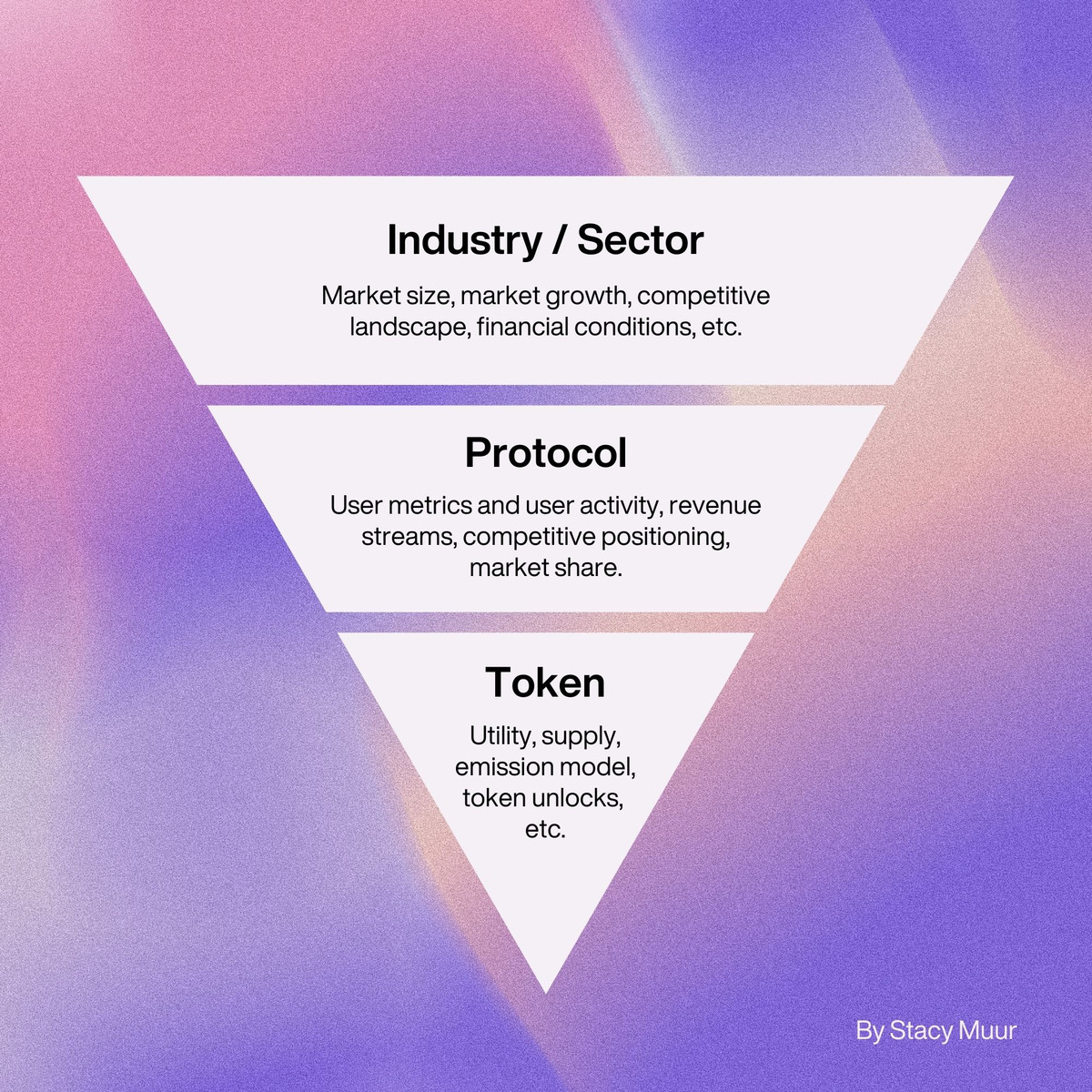
The crypto ecosystem is diverse, so it is necessary to apply different sets of metrics to various projects or sectors.
For instance, in PoW systems, the number of miners would be a crucial supply-side metric.
In PoS, this metric would pertain to stakers/validators instead.
❯ Financial performance
Projects need to cover operating expenses like salaries, infrastructure costs, marketing, etc.
In the initial stages of the project lifecycle, these costs are typically covered by external funding.
However, for a project to become self-sustaining, it must achieve profitability and generate consistent cash flow.
Factors to pay attention to:
• Fees growth
• Revenue growth
• Protocol margin (revenue to fees ratio)
• Net income margin
• Treasury growth
Where can you find this information?
All you need is @tokenterminal.
Go to the financial statements tab and enter the name of the protocol you're interested in into the search tab.
Here's an example of @maplefinance's financial statement ↓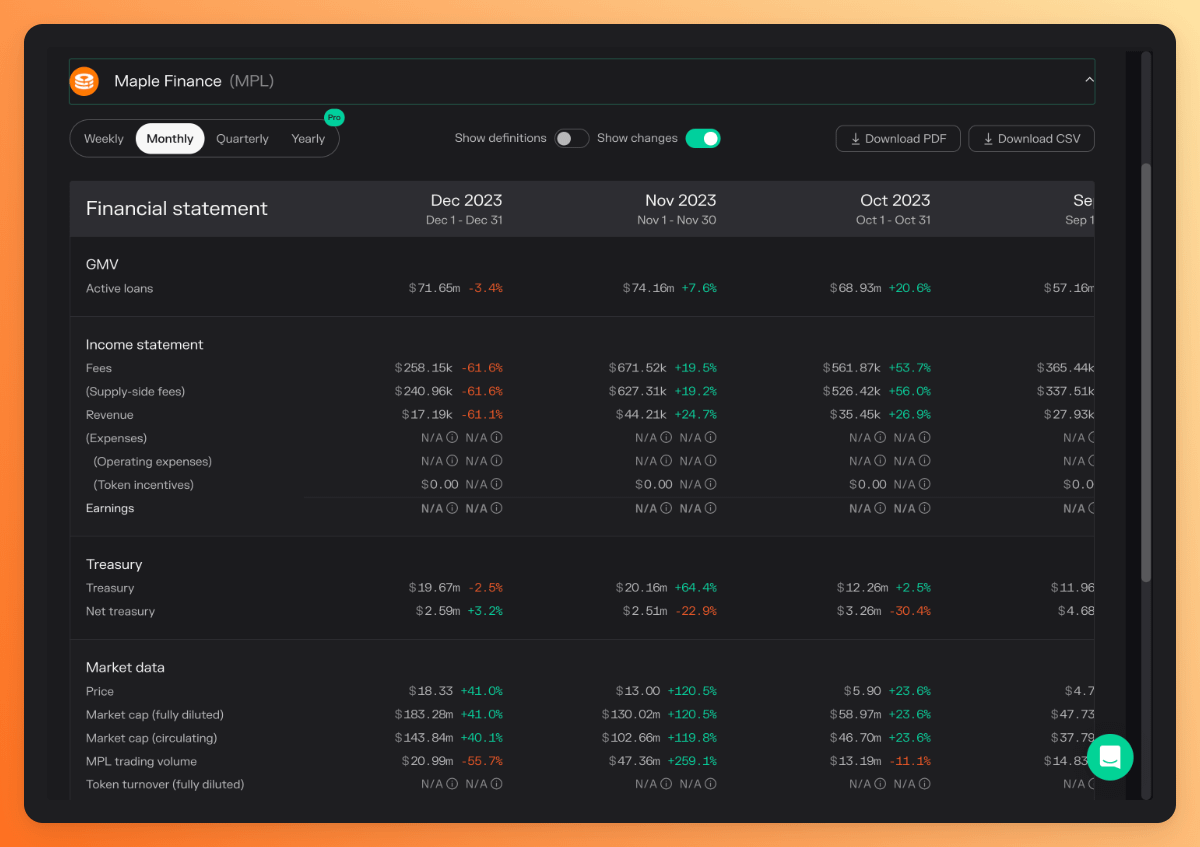
When analyzing financial statements, it's important to consider the maturity of a protocol.
It's not uncommon for projects in nascent industries to experience losses.
Therefore, investors should evaluate the estimated timeline and viability of projects to determine if they have the potential to achieve operating profit. This evaluation will help investors decide if the opportunity makes sense.
❯ Valuation
To determine if a token is overpriced or undervalued, one approach is to use relative valuation. This involves comparing the value of a project's tokens to those of its competitors.
Commonly used metrics for relative valuation are similar to those used to evaluate traditional companies:
• P/S ratio (price-to-sales)
• P/E ratio (price-to-earnings)
• Market cap/TVL
• FDV/TVL
@DefiLlama and @tokenterminal will be very helpful here.
Just as something being cheaper does not necessarily make it better, a token trading at a discount to its peers does not automatically make it a good buy.
Valuation multiples must be evaluated in conjunction with other aspects of fundamental analysis.
There is an excellent example that demonstrates how to apply this framework to evaluate DEXes by @BinanceResearch.
While the data in the example is outdated, the purpose is to grasp the principles and acquire the skills to act independently, isn't it?
research.binance.com/static/pdf/Decentralized-Exchanges.pdf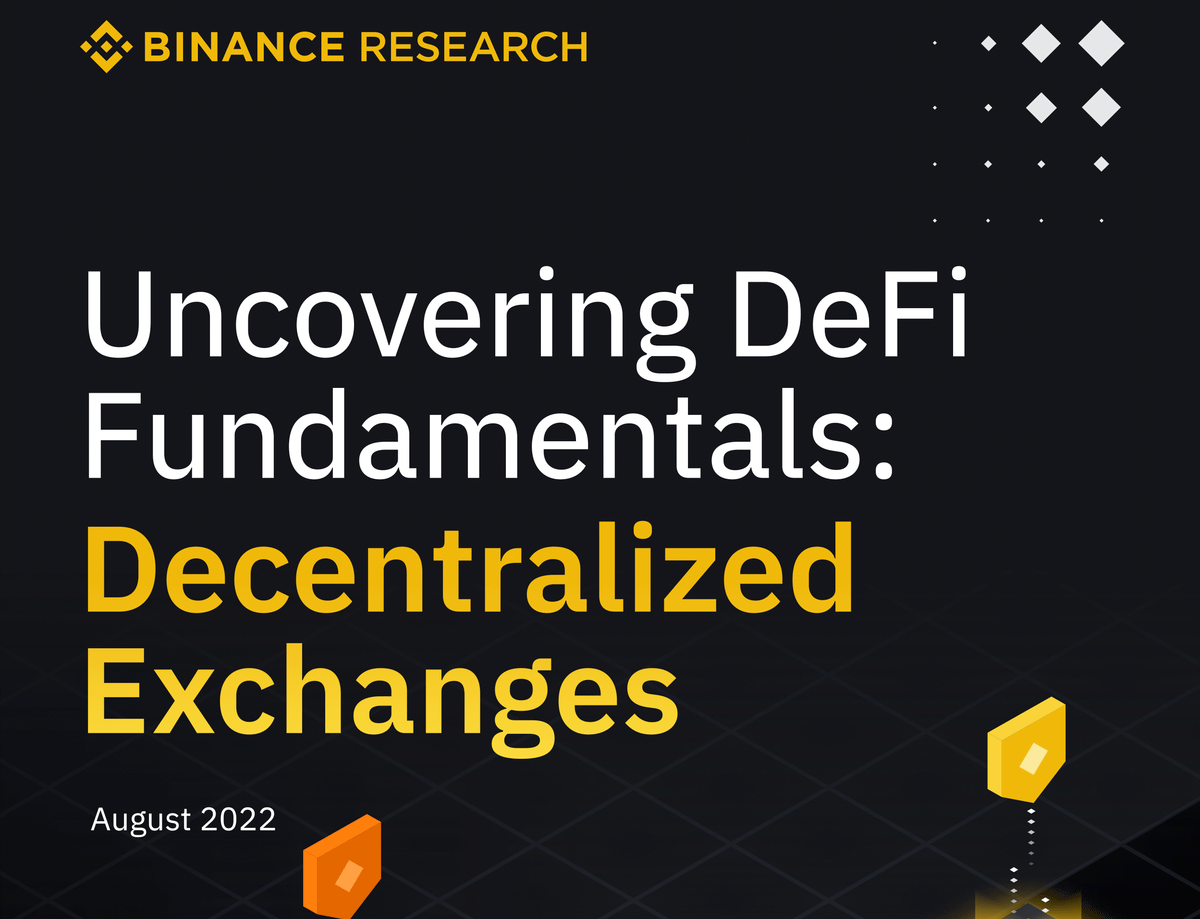
❯ Tokenomics
The objective is to comprehend how different incentives impact the supply and demand of a token, ultimately influencing its price.
Key factors that influence the supply include:
• Token allocation
• Cliffs and vestings
• Emission schedule
• Airdrops
Key factors that affect demand include:
• Value accrual utilities (staking, gas, etc.)
• Interest alignments (revenue sharing models, ve(3,3)
• Governance rights
More context on reading tokenomics ↓
twitter.com/stacy_muur/status/1707779215184048433
❯ Stakeholder Engagement
Monitoring stakeholder engagement is crucial for understanding the demand and progress of projects.
In this domain, it is important to focus on:
• User activity metrics
• Token holder metrics
• Active developers
• Trends in development activity
Don't underestimate the importance of community involvement. It plays a crucial role in the development, adoption, and overall success of a crypto ecosystem.
I hope the information I've shared above is helpful. Below, you'll find a few tools that will greatly assist you in your fundamental research:
• @tokenterminal
• @DefiLlama
• @Token_Unlocks
Make sure to join my Telegram channel for more content ↓
t.me/muur_posts

Stacy Muur
@stacy_muur
In Web3 since 2016. (Too) passionate about research & data. Contributor @CuratedCrypt0 Telegram channel: t.me/muur_posts