
Dymension’s failure to reach consensus on Mainnet is because 35% of staked DYM is delegated to a single validator.
This highlights the need for Decentralised Staking Infrastructure (DePIN).
Enter Validao, which fixes this problem by decentralizing the validator set 👇 twitter.com/i/web/status/1754869652985909440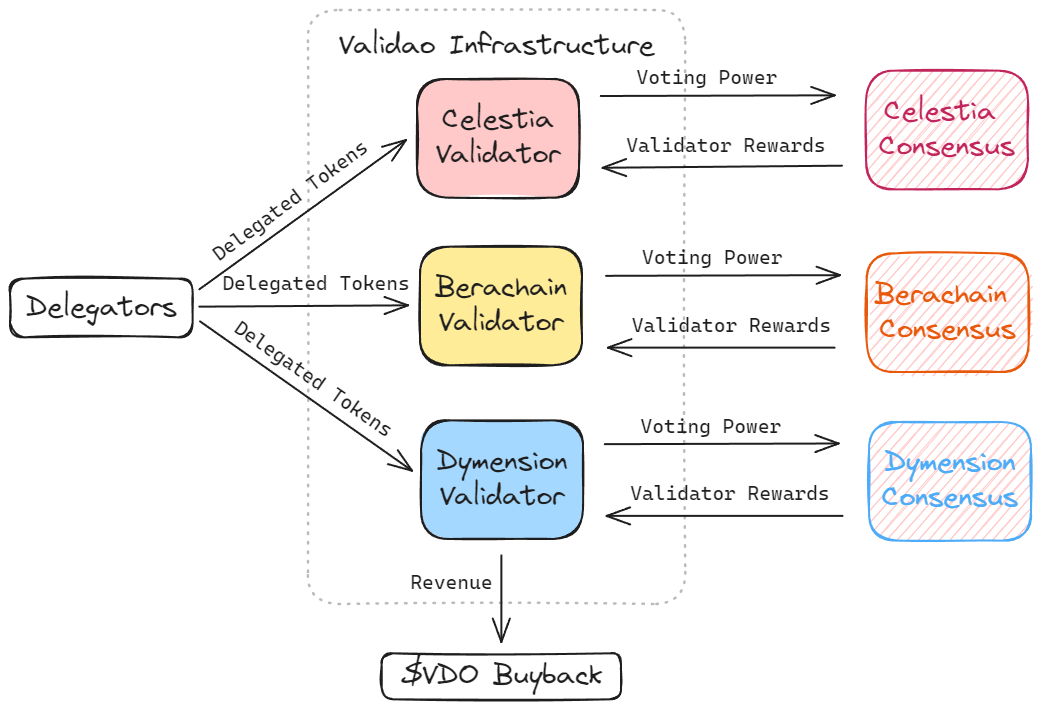
@validaoxyz is a DAO for validators. It deploys validators across emerging networks, accrues consensus rewards and distributes them back to the DAO treasury.
It also deploys validators in remote locations, on bare metal physical servers, helping to decentralize geographically:
Validators perform a key role in the decentralization of emerging networks by voting on new block confirmations, this voting power is given by delegators on the network who point their tokens at specific validators, in exchange for rewards.
Most validators deployed on the Ethereum network are deployed on AWS, resulting in a high concentration of the network in the hands of Amazon and other centralized entities.
Decentralizing this distribution to other providers helps to ensure that the network is anti-fragile: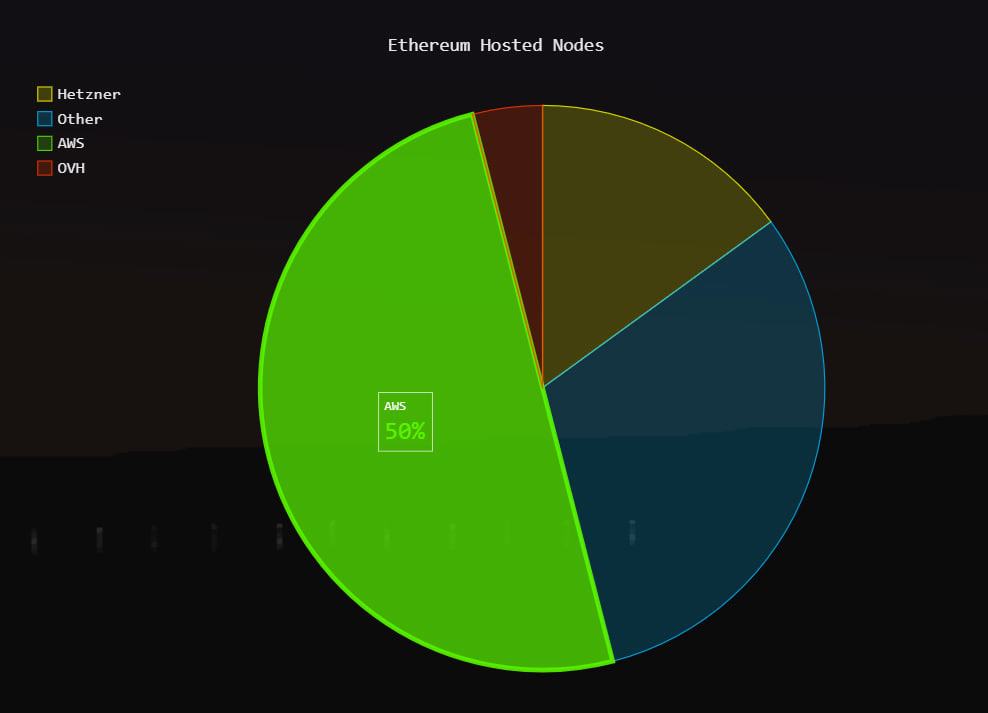
The value accrual of running a validator is that the operator is paid in token emission rewards, and accrues block rewards from block confirmations. The greater the voting power, the greater these accrued rewards over time.
The validators offering delegators highest rewards generally accrue most of the voting power, earning the most revenue on the network.
At the current time of writing, the top validator on @CelestiaOrg earns approximately $19m per year in revenue.
The following outlines approximate revenue projections per year for validators which capture between $0.5 - $2.5bn in Total Value Delegated.
These are in-line with the revenue from validators on larger networks within the Cosmos ecosystem: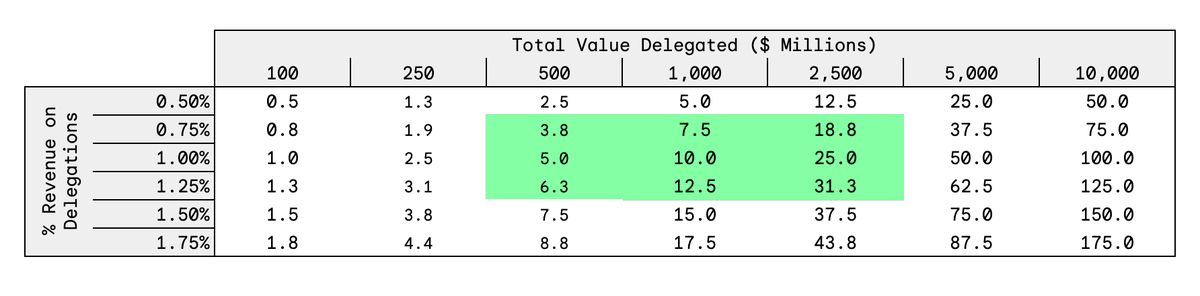
Validao is a DAO. It uses tokenization to attract delegations from users.
These users are paid the usual rewards from delegation, plus additional $VDO incentives directly from the treasury.
So far the DAO has bought back nearly 2% of the token supply.
These delegations are used Validao to participate on the active set for each network, in return, these validators accrue revenue and rewards for providing this service.
This revenue is used to buyback $VDO tokens and increase the value within the Validao ecosystem: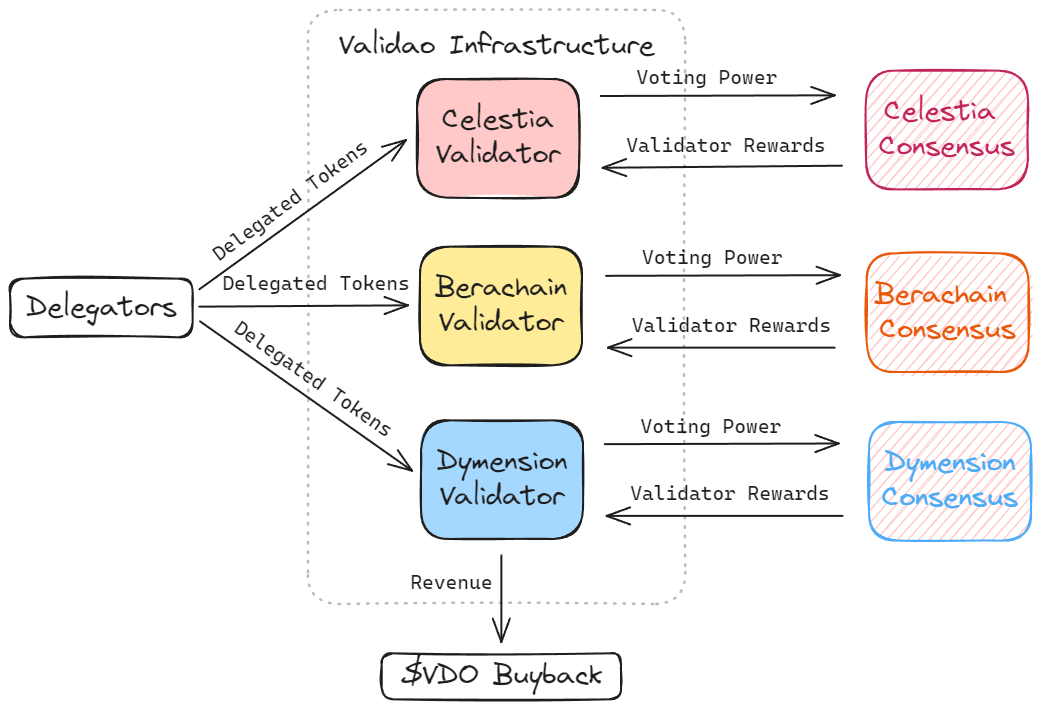
$VDO has fixed supply, and revenue from validators is used to buyback tokens.
The function of $VDO is to share in the network of validators, as the DAO grows, $VDO represents voting power on the actions of a growing treasury which holds a stake in many different networks.
Alongside decentralization as a benefit, the deployment methodologies of Validao are also highly security conscious.
The deployments shard signer keys using Multi-Party Computation, and also the servers exist in different Availability Zones for greater uptime and performance.
They use Multi-Party Computation (MPC) to secure signer keys using horcrux, an open-source signing service for private keys on Tendermint.
This protocol shards the keys, securing them during signing: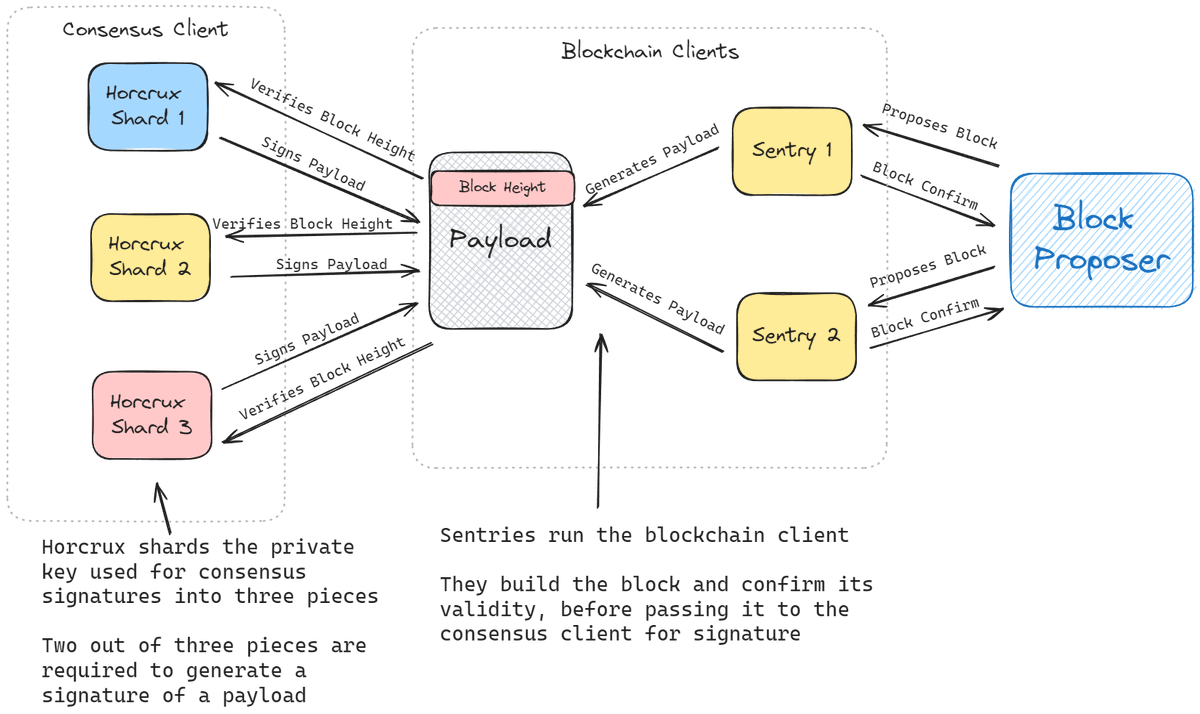
This works by splitting the private key used for consensus signatures into three separate pieces, two pieces are required to sign a block and confirm it.
These pieces exist on separate servers, in different geographical regions, making the signer very fault tolerant: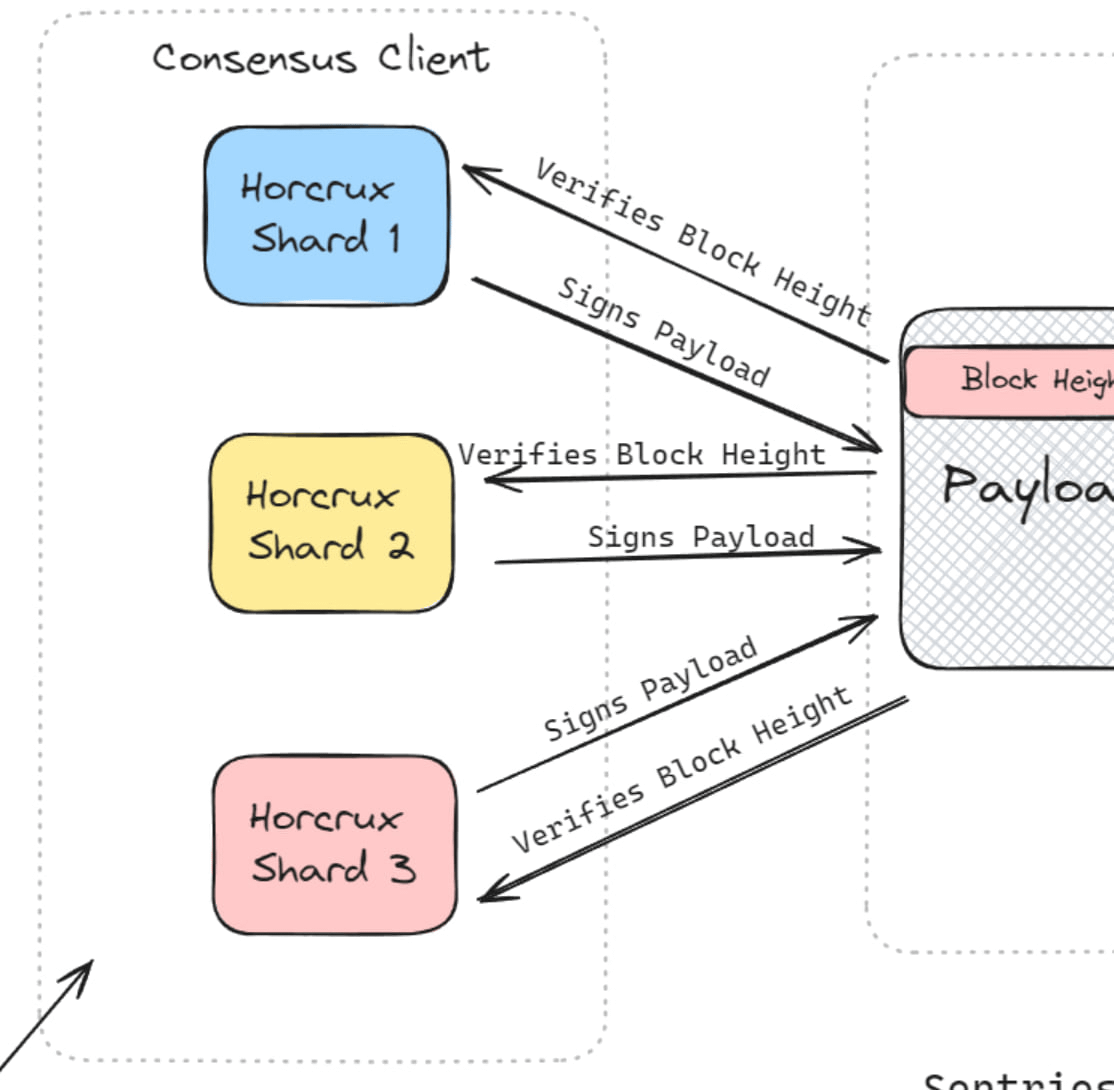
In order for the consensus signature to fail, it would require system outages in two different locations. This ensures that the system can remain online and does not experience downtime if one shard is offline.
The rewards given to the validator for participating in this process are given to a separate wallet, called the account wallet, which is stored securely offline to separate it from the rest of the system: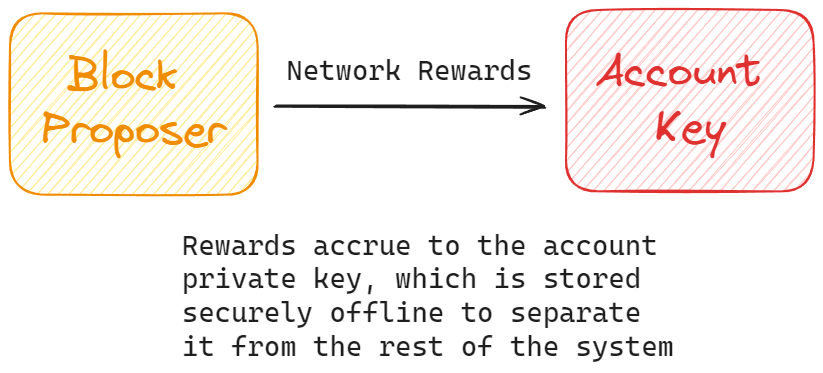
Currently, all of these keys are immutable, meaning they cannot be changed over time. It's possible that in the future these keys will me modifiable, allowing for the infrastructure to be more modifiable.
In addition to this, to ensure that the system has a lack of outages, the system runs more than one blockchain client, called a sentry.
These sentries are deployed in a different region to the consensus servers, ensuring that there are always clients running to validate blocks: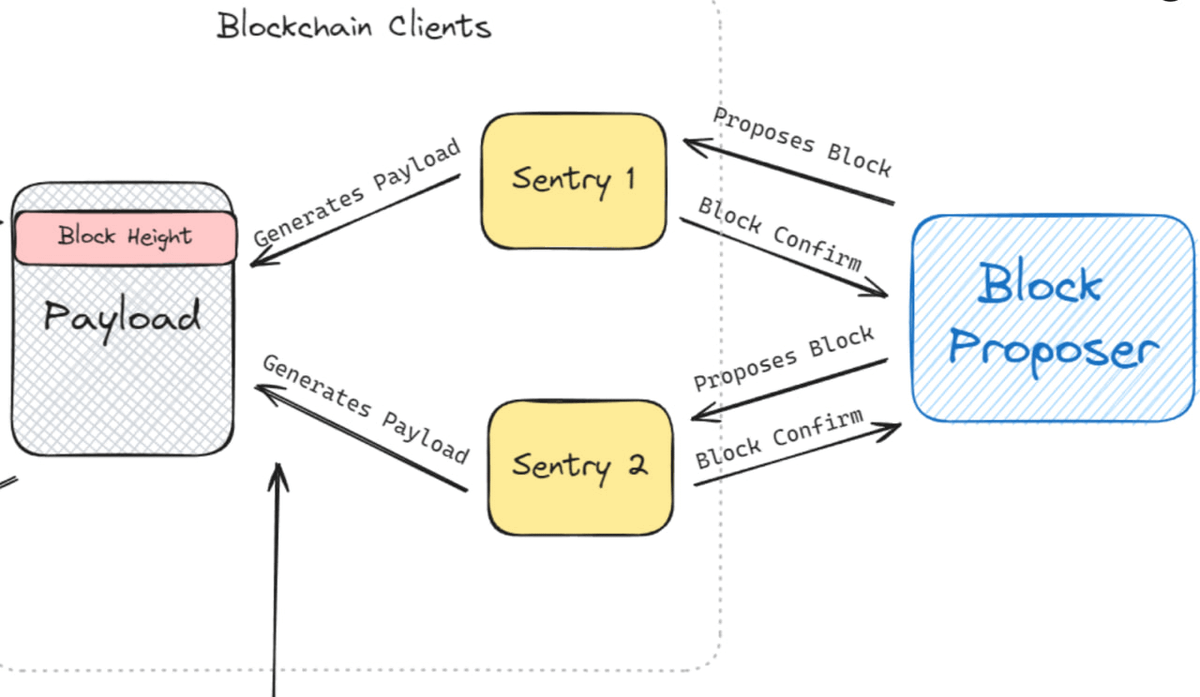
If the system does experience an outage, this can result in the validator delegation being "slashed". This means that delegators to the validator would lose a small percentage of their delegation.
Poorly performing validators are removed from consensus permanently also.
To ensure that slashing does not result in negative profitability, Validao keeps 0.05% of all AUM in a slashing insurance fund, allowing it to compensate delegators whenever slashing events occur.
This ensures that Validao delegators are consistently profitable.
In summary, @validaoxyz provides a stable, decentralized alternative to centralized staking providers.
It deploys in better locations, and with open source and highly security conscious methodologies, to ensure the performance of its validators is significantly better than…