🪐 Where the word "planet" comes from?
Yesterday I was wondering about this, and so I checked
👉 Ancient Greeks first used the word "planetes". But why?
A short story of wandering stars and heavenly spheres 👇
—
#physics #science #history
While looking up at the night sky, ancient Greeks observed that most of the objects in the sky were fixed.
Most, but not all, of them. A few luminous points appeared to move: they call them "planetes", that is, "the wanderers"...
The word "planetes", in fact, comes from the Greek word "planan", which means "wander"
So "planetes" was used for those "wandering stars" 💫
The “stars” that move in the night sky among the "fixed stars"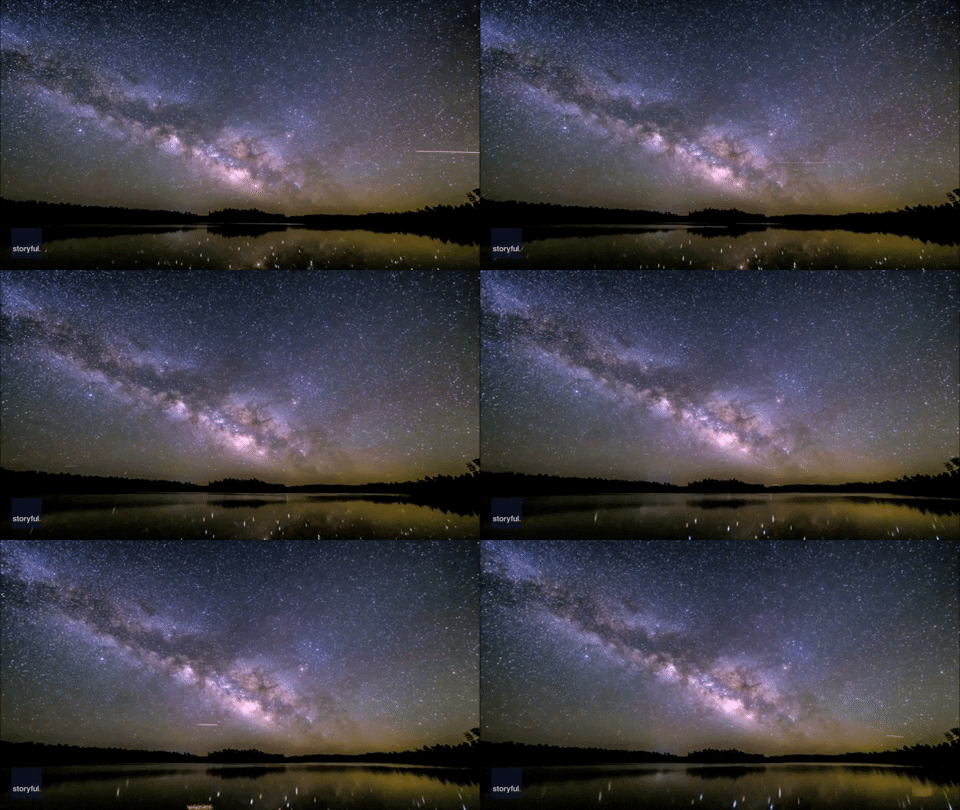
Only five planets are observable to the naked eye, and the ancient Greeks gave names to them:
• Hermes
• Aphrodite
• Ares
• Zeus
• Cronus
Today, we mostly use the Latin versions of those names:
• Mercury
• Venus
• Mars
• Jupiter
• Saturn
But in this picture, however, there are two characters that we would not expect to see there...
• the Sun☀️
• the Moon 🌓
For the ancient Greeks,all bright objects in the sky were "stars"
So,the Sun and the Moon were considered part of the seven wandering "planetes", too
For their peculiar movement in what appeared to them a very fixed sky, ancient Greeks attributed to those few "wanderers" a divine character
as well as some sort of influence on natural events and human lives
The fixed and wanderer stars were part of the cosmological model of the "heavenly spheres", which comprised the whole universe:
• an outer sphere: unmoving celestial realm
• an inner sphere: Earth, the place of transition, which also hosted the "wanderer stars"
--
[📸LOC]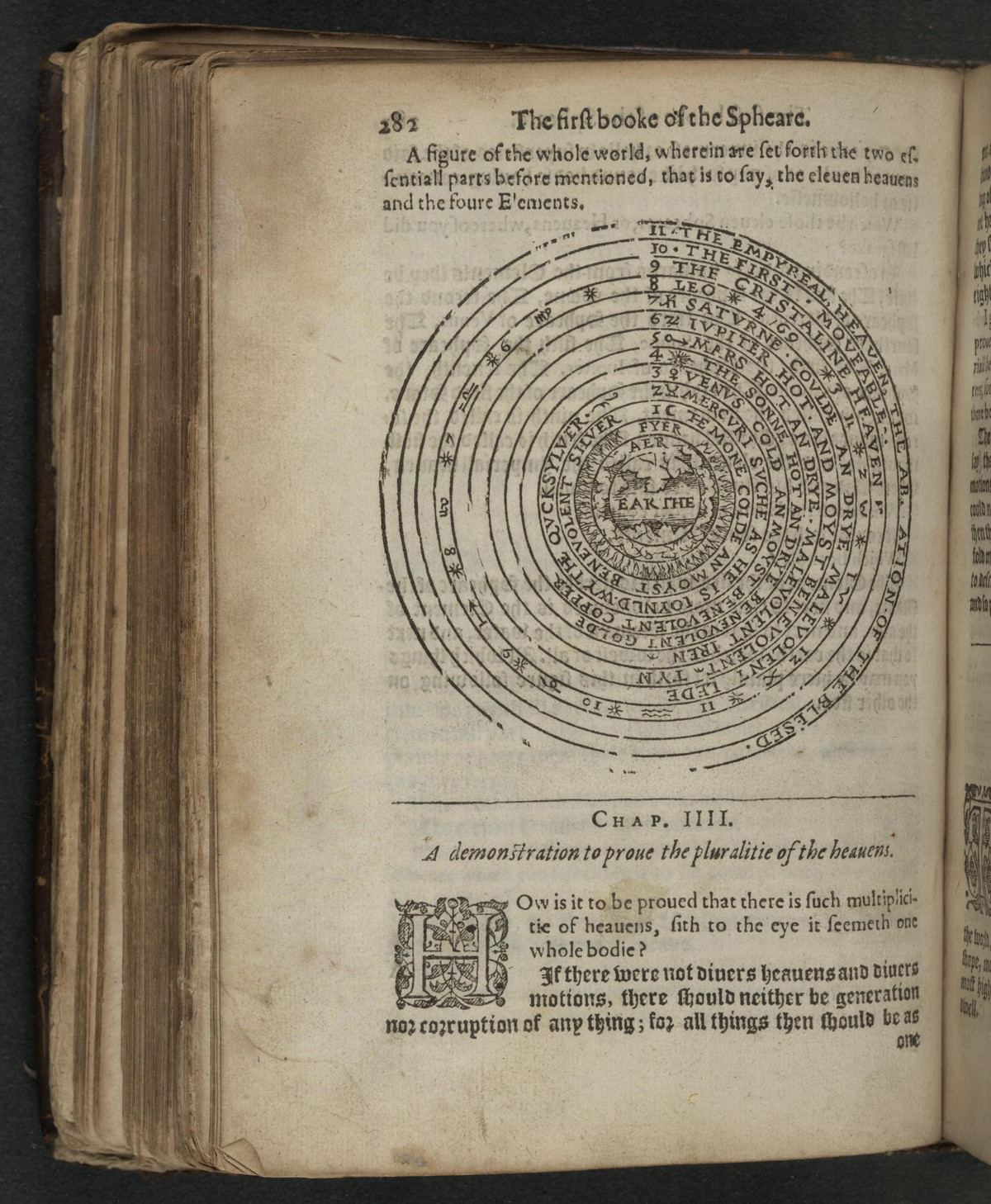
The "wanderer stars" also became part of the Medieval cosmology
In this wonderful picture, taken from the 1481 manuscript "Buch der Natur", the seven "wanderer stars" occupy a sphere each, between the Earth at the bottom and the Heavens at the top
----
[📸: LOC]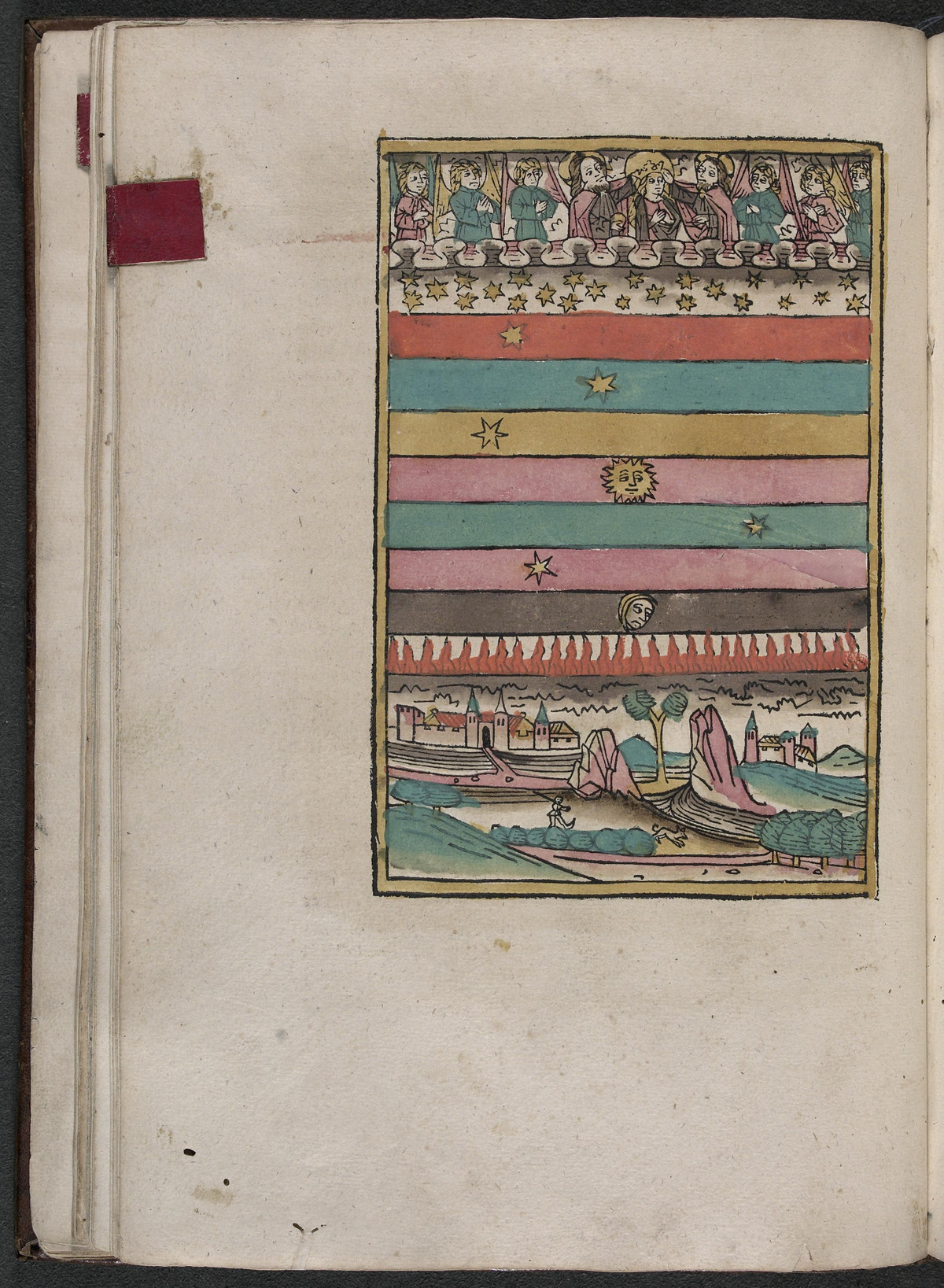
After humans found the "star" nature of the Sun, the use of the word "planet" was limited to designate the "non-star, wandering" celestial objects
And that use basically continued until today 🪐
—
[📸: Wiki]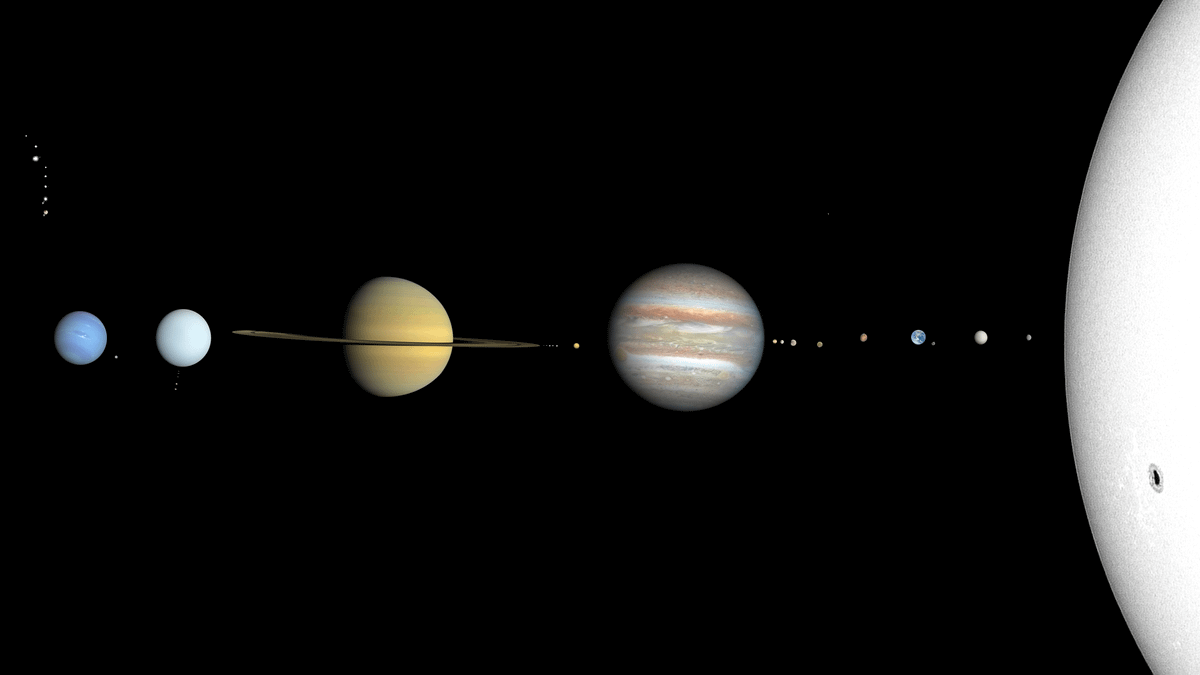
In 2006, the International Astronomical Union (IAU), published a scientific definition of what a “planet” is; it must:
- orbit around a star
- have a spherical shape
- be the dominant object in its orbit
So, the “wanderer” nature observed by Greeks is still there today! ☄️
For those interested, here are the wonderful pics I used:
• "Septem Planetae", British Museum: britishmuseum.org/collection/object/P_1983-1210-10
• "Heavenly spheres", Library of Congress (LOC): loc.gov/resource/rbcdrake.d036/?sp=301
• "Buch der Natur", LOC: loc.gov/resource/rbc0001.2008rosen0080/?sp=67
--
[📸Devon Divine/Unsplash]

Dr Riccardo M. Bianchi💥 Physicist at CERN
@drric_physics
PHYSICS here!☄️ …you know, I love that stuff! 😉 I’m a particle physicist at @CERN 💥where I work on the @ATLASExperiment. Here on Twitter, I write about CERN, new discoveries, and amazing science! 🙌 Follow me for a guided, well-explained tour to the most fundamental secrets of our beloved Universe! ✨ See you soon, and have a nice day! 👋 — He/Him