I've been wanting to thread this paper since the day I saw this post. Writing about two great papers on mutational constraint this week has finally inspired me to sit and write about this absolutely fascinating work from deCODE. 🧵
twitter.com/GudnyAnna/status/1489557160753344514?s=20&t=GDHImPuA-bijMtovOXxyIA
The current paper is one of the many that elegantly show why deCODE is one of the best places in the world to do human genetics.
twitter.com/kristjanmoore/status/1490269690953879552?s=20&t=qrq5iz9lodrkfD4CXOIOyg
Having genetic data for >40% of Icelanders linked to an extensive medical and population registries along with a near-complete genealogical information of the whole country for the last century makes deCODE truly "a global leader in human genetics".
decode.com/
I am sorry to share this picture AGAIN. But I find it impossible not to share this picture when talking about mutational constraint, particularly when talking about the current paper from deCODE.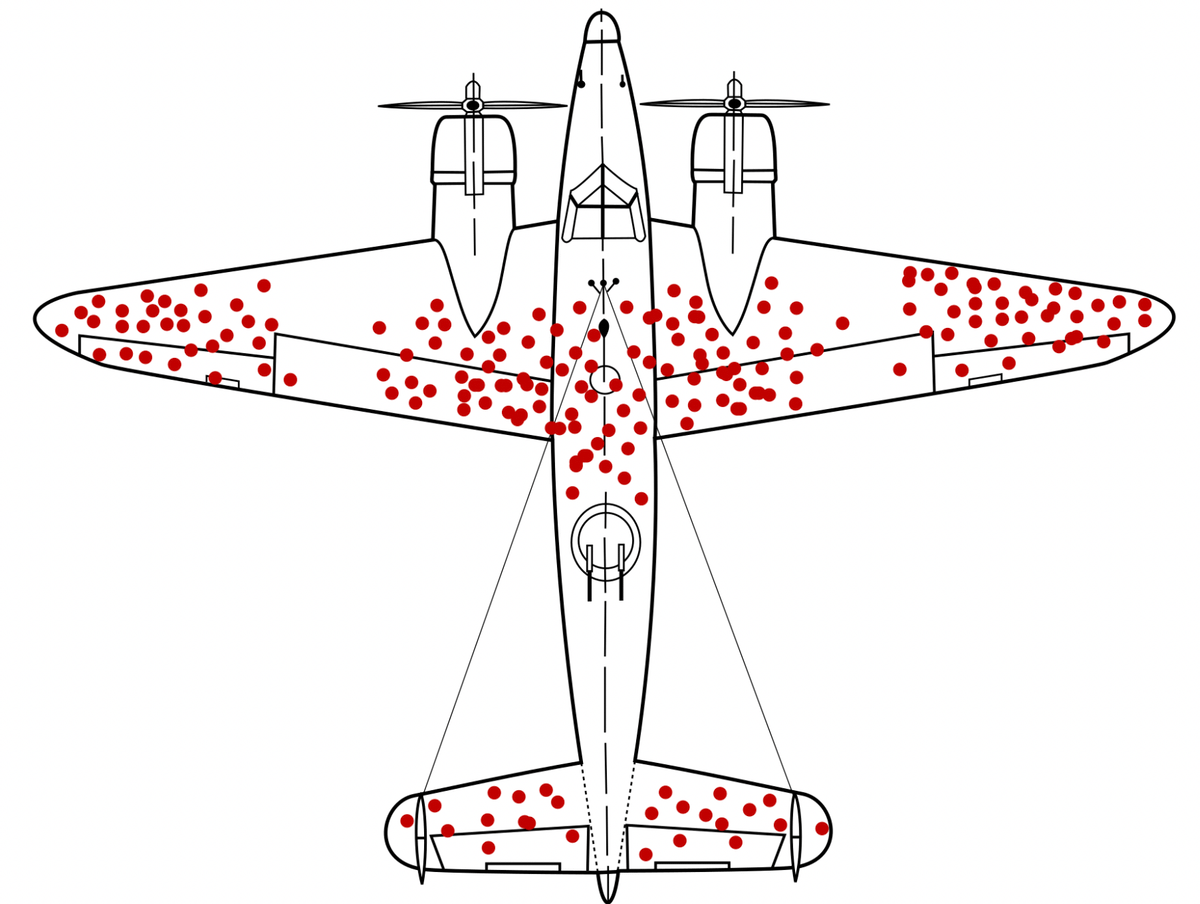
Abraham Wald's work during World War II has revolutionized many fields, including human genetics.
(This paper by @jim_havrilla et al is a great example how to captivate the reader with a powerful lead)
nature.com/articles/s41588-018-0294-6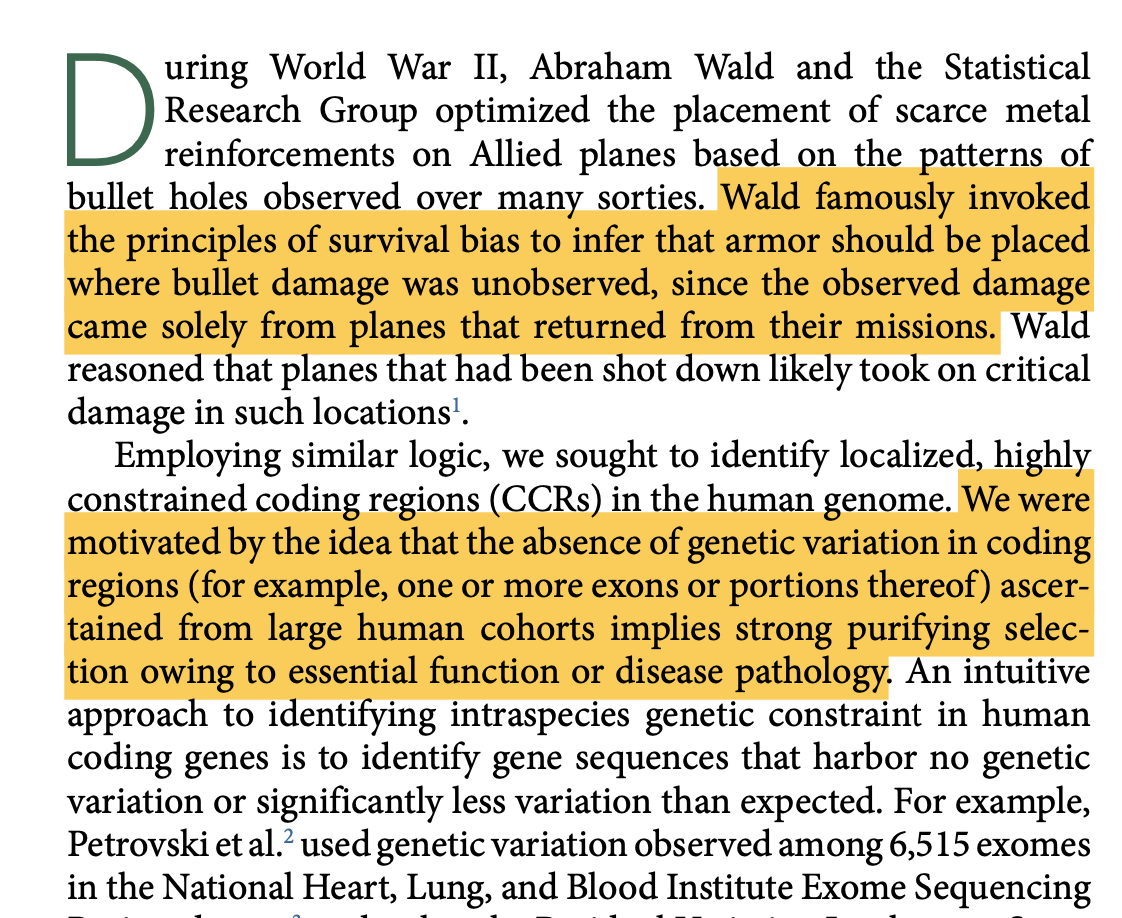
Wald predicted that the parts of the plane that are least damaged are the most critical. But, imagine, if Wald had the ability to go back into the war field and examine the debris of the shot down planes and confirm his predictions. That is exactly what this paper is about.
In the current paper, the authors focus on a specific set of genes that are depleted of homozygous mutations but not of heterozygous. Such genes typically cause recessive genetic conditions.
If you've attended genetics courses you might remember the Punnet square exercise where you calculate the probabilities of offspring genotypes given the parents' genotypes.
Here is an example showing genotype probabilities of a child born to parents who both carry one copy of an allele (A) that causes a severe recessive condition.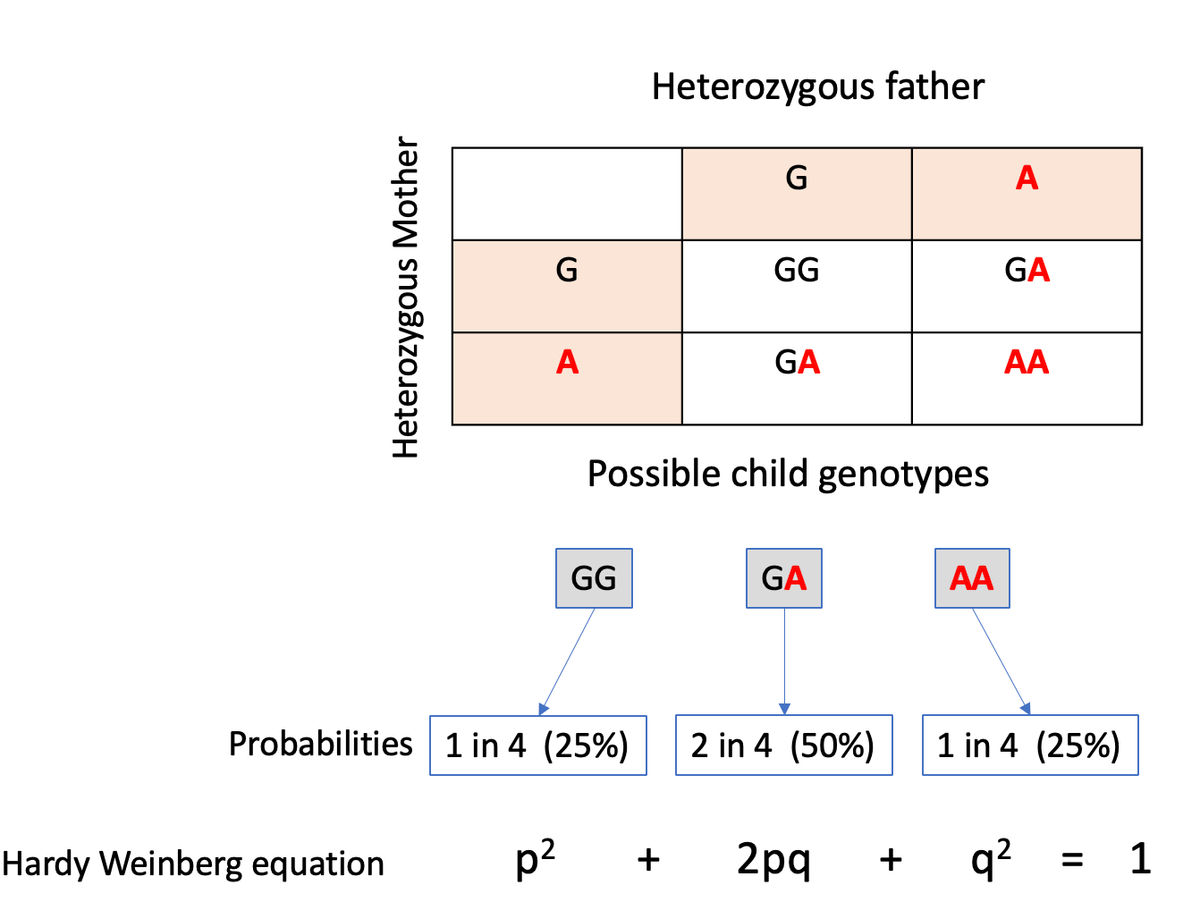
If you take all such carrier couples in a population, under Hardy-Weinberg equilibrium, you'd expect 25% of their offsprings to have the genotype AA. But as this genotype is lethal, in reality you'll see an extremely few or no AA homozygotes, suggesting a deviation from HWE.
Identifying genes that are depleted of homozygous loss of function variants (pLoF) in a population (relative to heterozygotes) is one way to discover recessive genes, which deCODE has demonstrated previously in their famous human knockout paper.
nature.com/articles/ng.3243
However doing the same for missense variants is challenging as their effects on proteins are not as clear as often it is for pLOFs. In the current paper, the authors take up this challenge to recessive disease causing missense variants.
Scanning through genotypes of ~150,000 Icelanders (adults, mean age 58.5), the authors were able to find 114 missense variants with high MAF ( >40%) but with ZERO homozygotes (under HWE, there should be at least 3).
34 of these missense variants are in genes known to cause Mendelian recessive diseases (cystic fibrosis, glycogen storage diseases, encephalopathies, nephrotic syndrome etc.)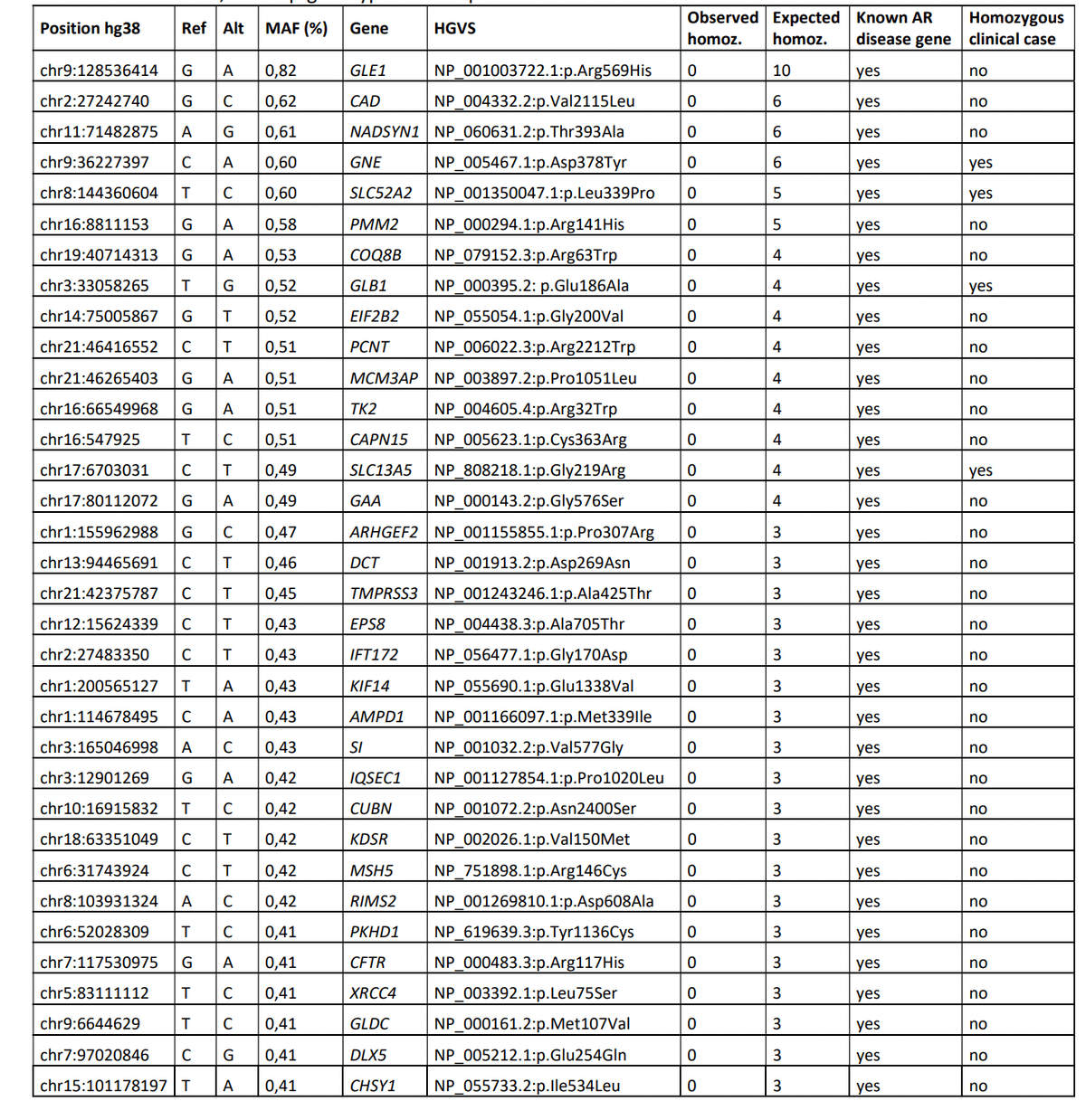
Interestingly, homozygous carriers for five of the 114 missense variants were seen in a separate clinical cohort of 764 individuals who underwent diagnostic whole genome sequencing, which gave the authors a unique opportunity to map these genotypes to their phenotypes.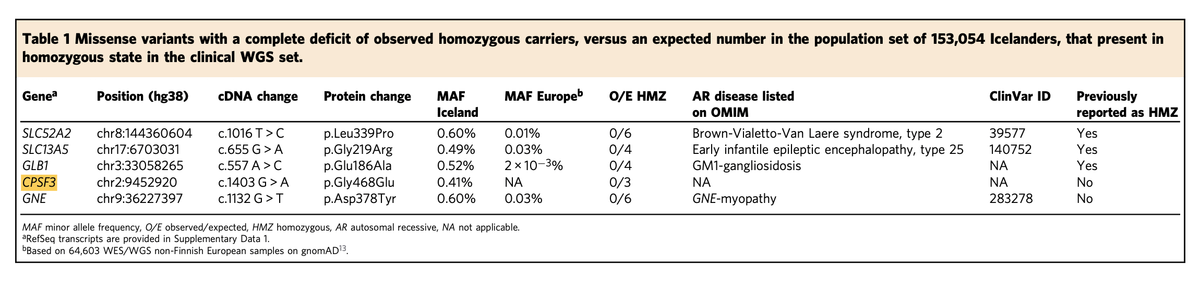
As you can see from the above table that four of these genes already have a known recessive disease linked in OMIM. The remaining one, CPSF3, had no disease conditions mapped so far, is star of the show.
In the clinical cohort, two children (A, B) were homozygotes for CPSF3 and had strikingly similar clinical features--intellectual disability, developmental delay, seizures, nystagmus. A genetic diagnosis was not established for both previously.
This is where things get more interesting. Inspired by the above finding, the authors went back to their original genetic dataset of ~150k Icelanders and identified 3 couples who were carriers of the CPSF3 Gly468Glu variant.
Using their genealogical database, they were able to identify all the offspring who were born to these couples. If we go back to our Punnet square again, there is 1/4 chance for any of the offspring born to these couple to be homozygous for Gly468Glu.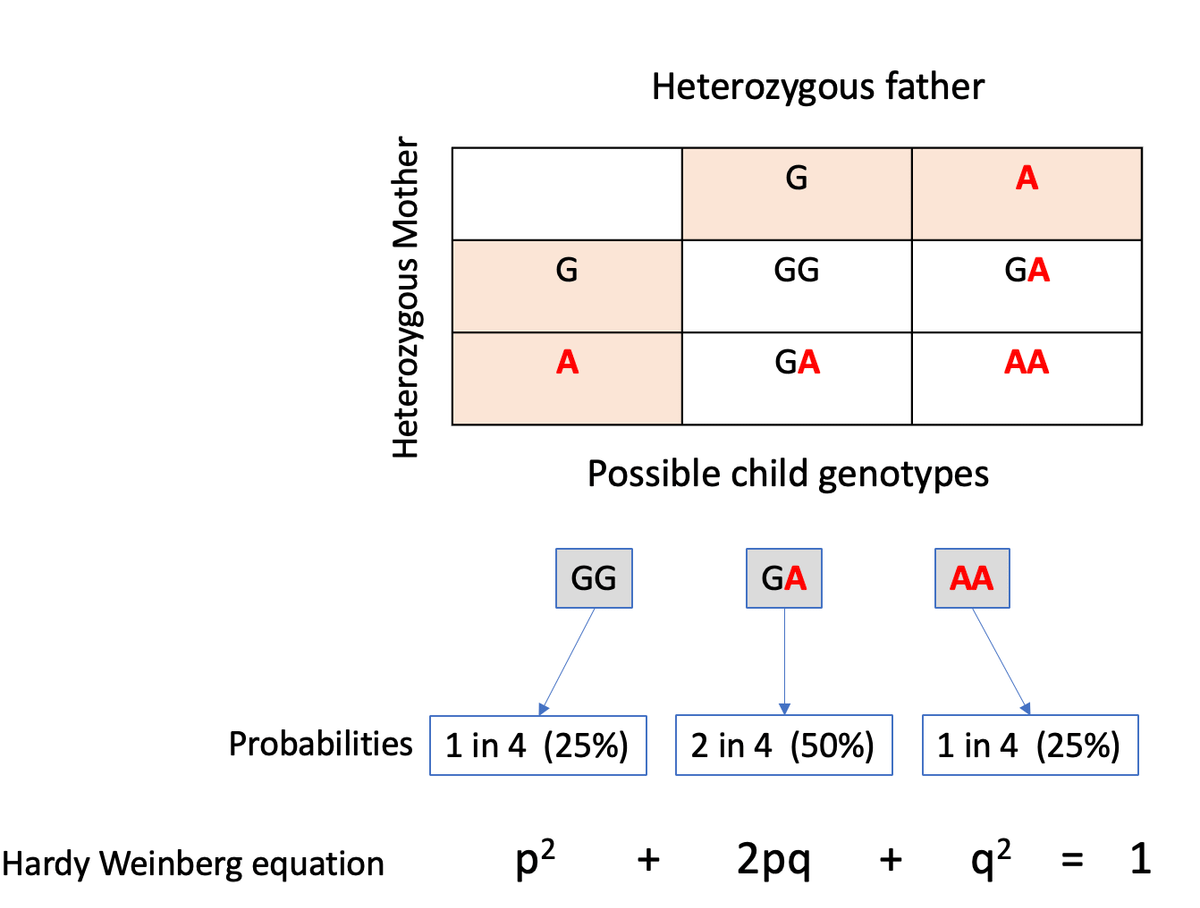
All combined there were 10 offspring, 4 of whom (C,D,E,F) died before 8 years of age. All 4 offspring's clinical features were fascinatingly similar to patients A and B's clinical features.
Wait, this gets even more interesting.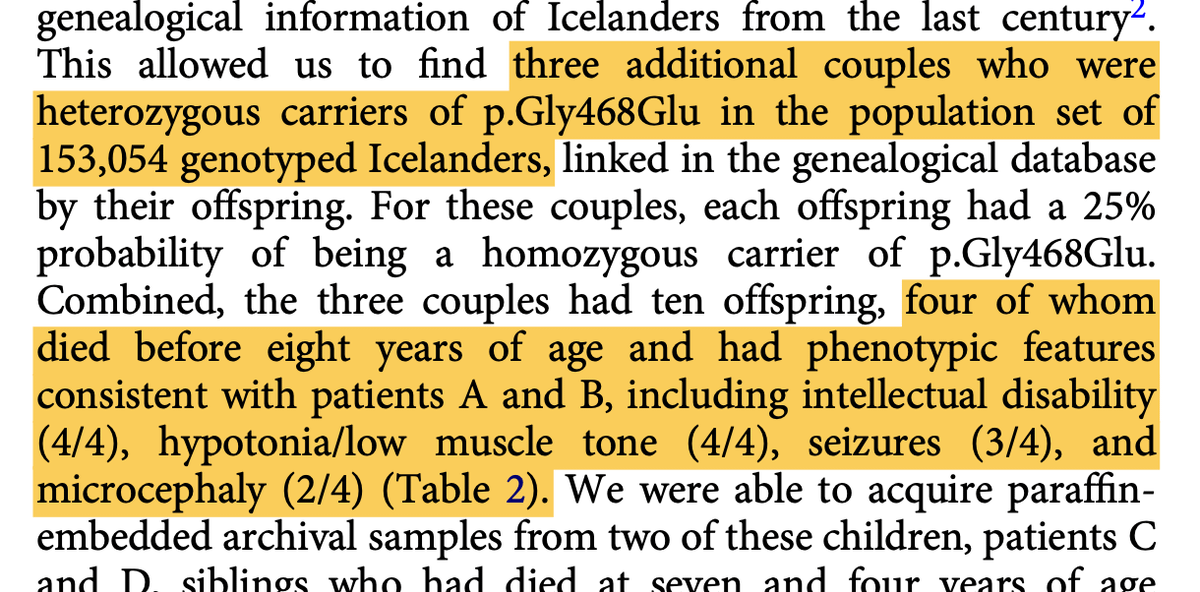
The authors were able to get paraffin embedded archival samples for two of the offspring--C, born 1960, died 1967 and D, born 1964, died 1968--and confirm the homozygous state of Gly468Glu using WGS and Sanger sequencing. WOW
Well, the story doesn't end there. Through GeneMatcher, the authors identified two more patients in the US who are homozygous for an another missense variant in CPSF3 but with same clinical presentation--ID, microcephaly, seizures.
genematcher.org/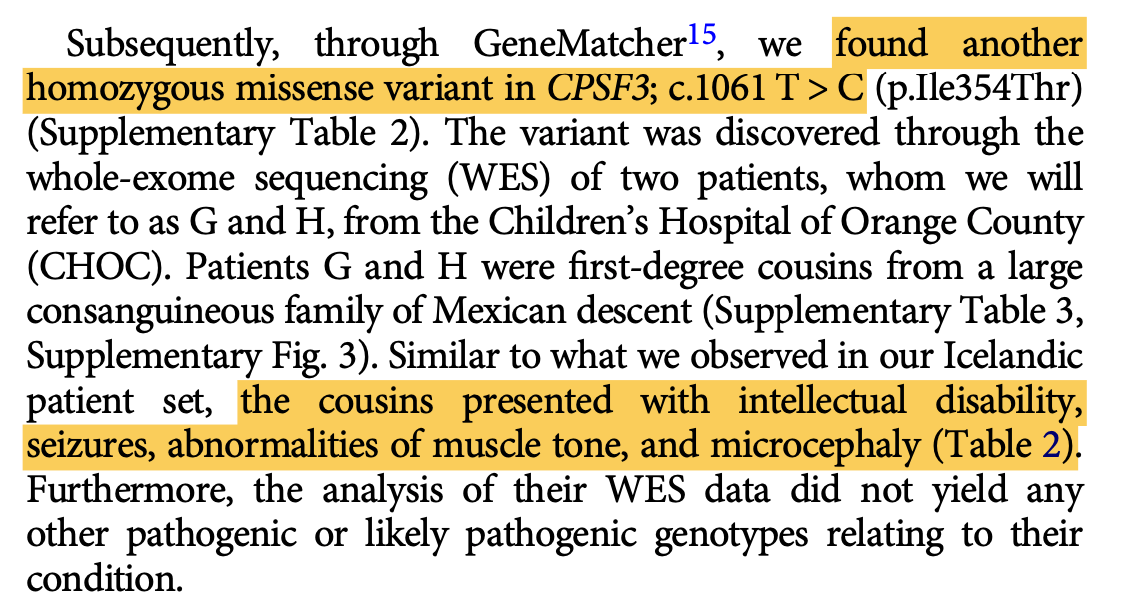
Altogether the authors were able to establish genetic diagnosis for 8 patients--three of them born in a different era (1950s and 60s) and two of them born in a different continent. That's truly amazing.
So what gene CPSF3 does?
CPSF3 codes for a subunit of the Cleavage and Polyadenylation Specificity Factor (CPSF) complex, which is essential for mRNA preprocessing (cleavage and polyadenylation) before they are exported out of the nucleus.
nature.com/articles/nrm2255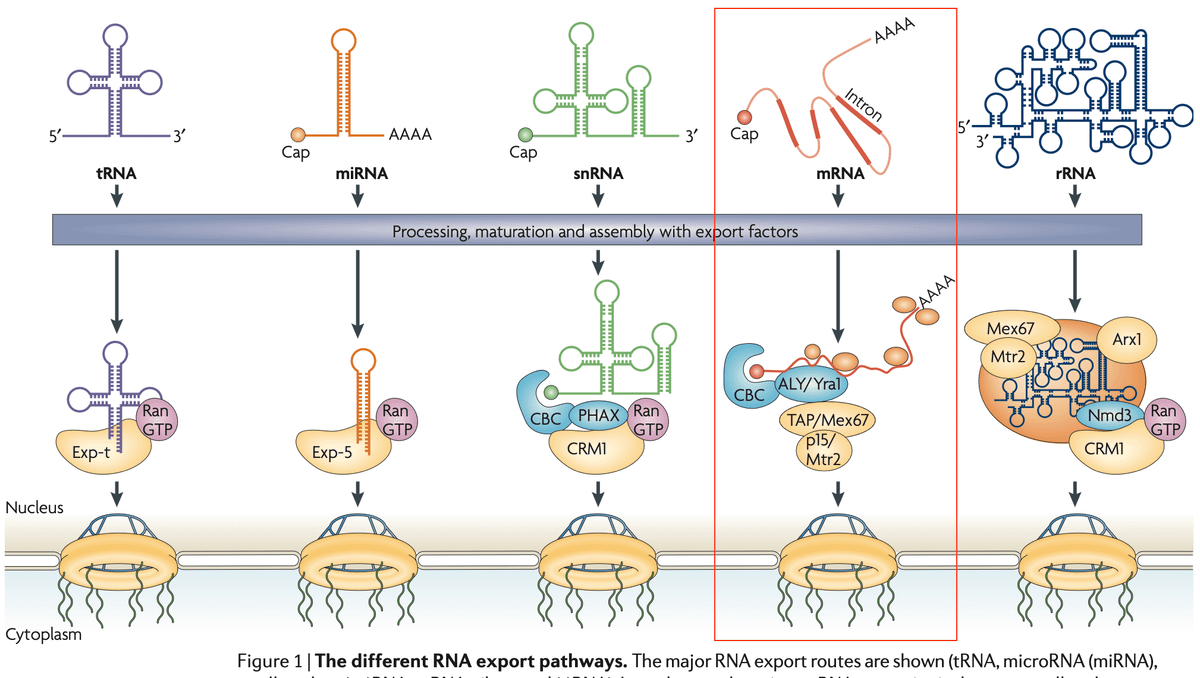
Discovery of this CPSF3 missense variants marks the first Mendelian disease linked to CPSF complex. Now we know what happens if the mRNA export from nucleus to cytoplasm is disrupted.
Interestingly, someone had already discovered an anti-leukemia drug that acts by inhibiting CPSF3 complex without even realizing it's mechanism of action (was realized only later)
pubmed.ncbi.nlm.nih.gov/31399191/
It turned out that the drug inhibits CPSF3 and blocks the mRNA export there by leading to cancer cell apoptosis. I love how the work of scientists from different fields converge on the same biology.
There is two another fascinating genetic investigations reported in this paper, but I'll stop here.
This is a truly a remarkable genetic paper and easily one of my favorites. Big congrats to the authors!
@GudnyAnna @asmundurhreinn @bryojen @BjornssonL @patsule

Veera Rajagopal
@doctorveera
🇮🇳 MBBS, MD, 🇩🇰 PhD | 🧬 Scientist @ 🇺🇸 Regeneron | Translating genetic insights into life-saving medicines | Weekly thoughts @ gwasstories.com