Cognitive biases are errors in reasoning that lead to distorted decision and are counter-productive.
Here are 11 to help you make less errors and better decisions. 🧵
Why do you need to learn about cognitive biases?
They can...
• completely blind you from what’s right in front of you
• deviate you from rationality
See our brains are used to shortcuts and rules of thumb which can lead to partially processed decisions.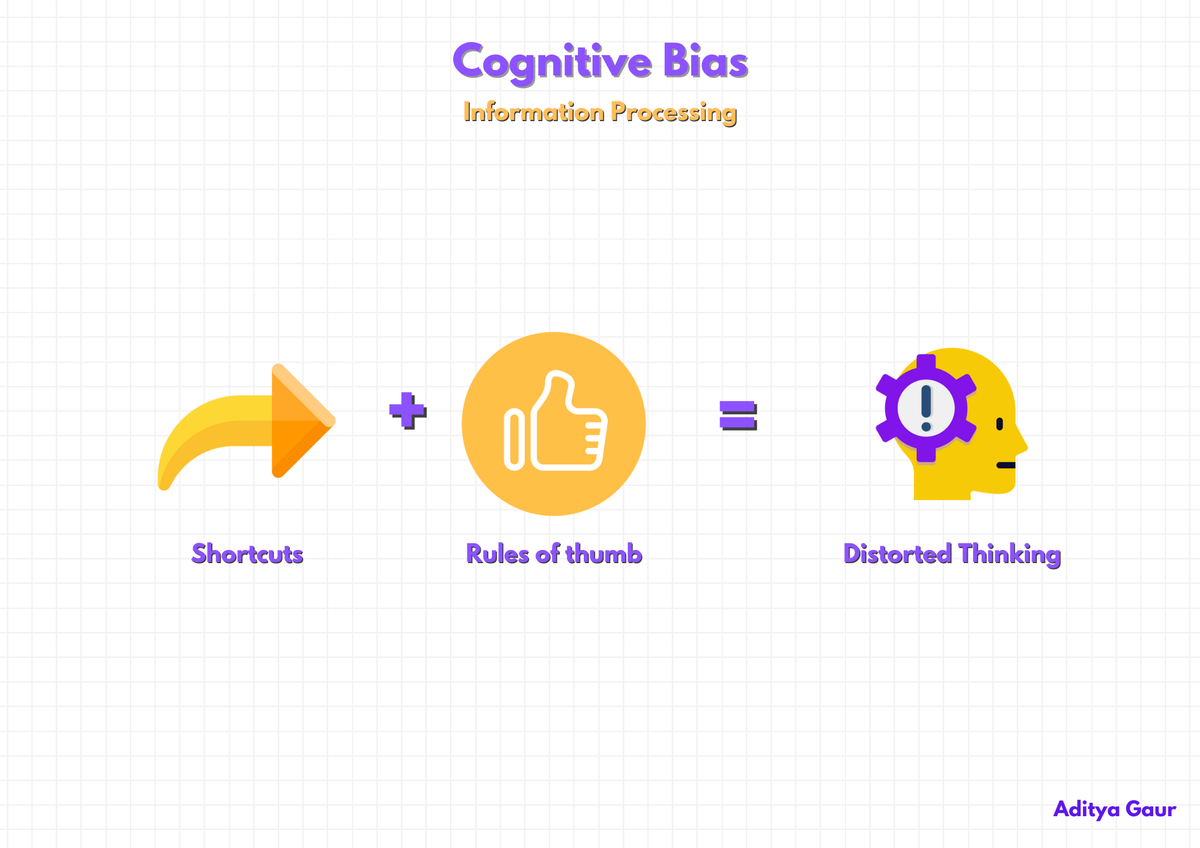
But all is not bad. Cognitive biases are also helpful.
They enable you to...
• React to new situations quickly
• Help process information faster i.e. chilling in information overload
This happens because you have pre-existing frameworks to deal with a variety of situations.
So, let's dive right in.
1/ Curse of Knowledge 📚
When you learn something, you tend to forget what it's like not knowing about it.
The real reason learning from experts is difficult.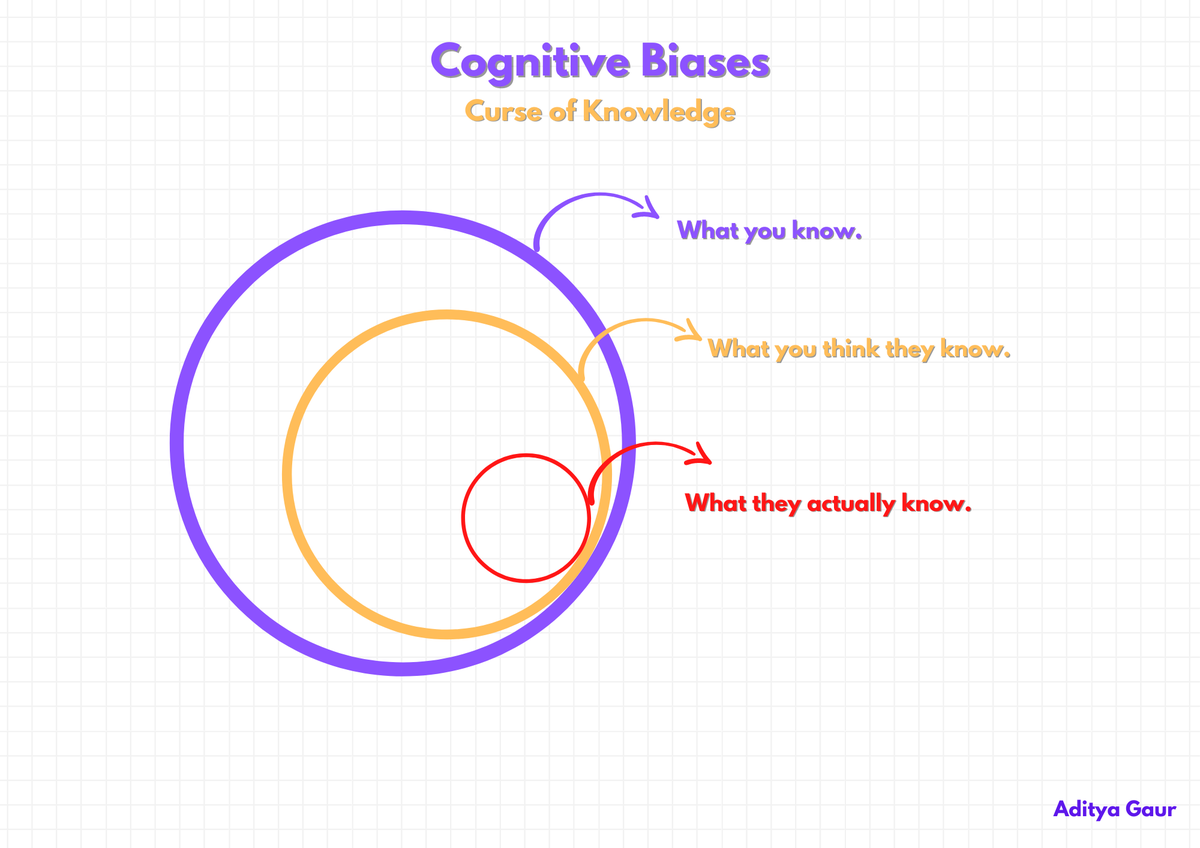
2/ Groupthink 🧑🤝🧑
Individuals often make irrational decisions to agree with their group's perspective.
Why? To maintain relationships and avoid conflict.
3/ Fundamental Attribution Error 📉
We often judge people on their character (not on situations).
But, we evaluate ourselves on situations (not on our character).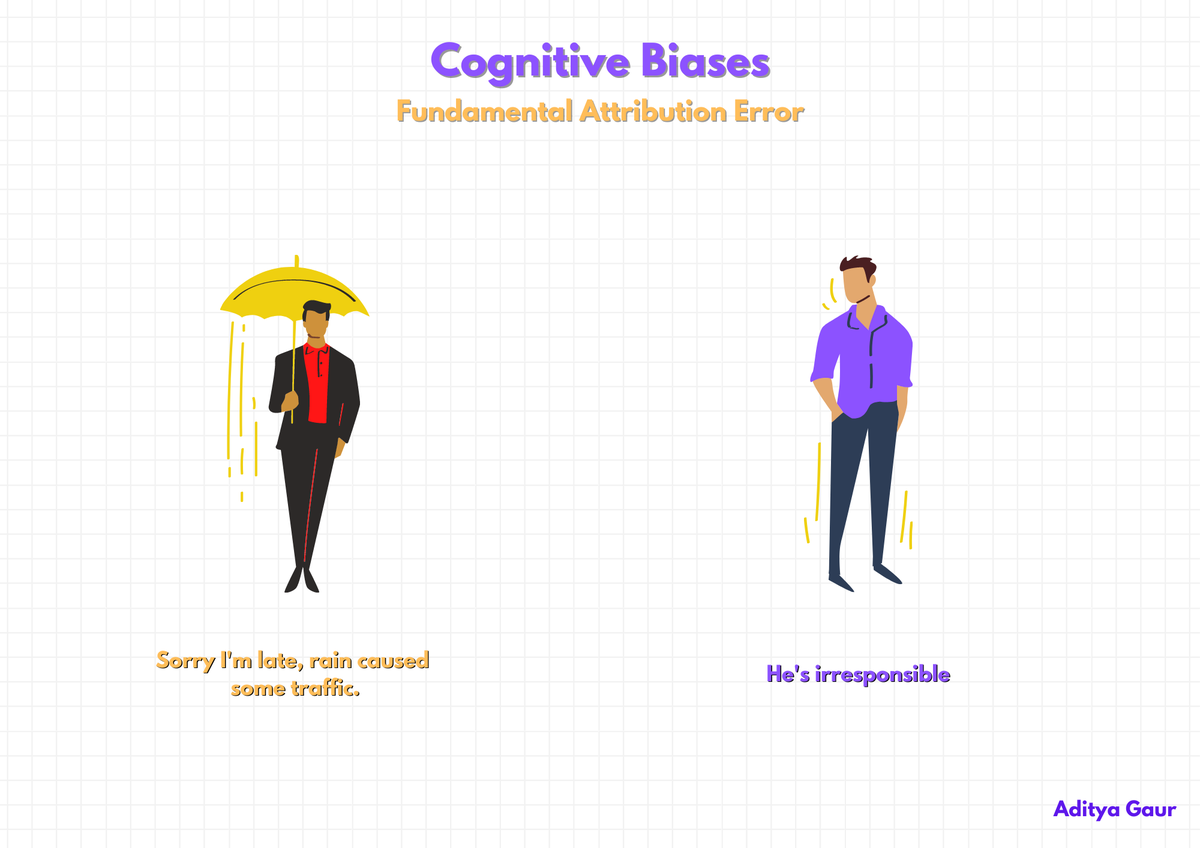
4/ Dunning-Kruger Effect 🧑🏫
The less you know, the more confident you are. And the more you know, the less confident you are.
twitter.com/SahilBloom/status/1350077522935832576
5/ Google Effect 🔎
We tend to forget information that can be easily looked up on the internet.
A product of the internet.
6/ Sunk Cost Fallacy 💸
We invest more in things that cost us something instead of modifying our investments even if we face losses.
twitter.com/DavidZabinsky/status/1487794934732439554
7/ Confirmation Bias ✓
We have a tendency to selectively understand the information that believes in.
💡 Always keep an open mind and look out for as much information as you can before developing an opinion.
8/ IKEA Effect 🛋
We place a higher value on things we make or partially make ourselves.
A psychological masterpiece in entrepreneurship.
twitter.com/finshots/status/1441026844489256973
9/ Zeigarnik Effect 🏋️♂️
We remember incomplete tasks more than complete tasks.
This results due to the lack of closure and actually drives people to complete objectives faster.
twitter.com/DanesaGlez/status/1487054122381717505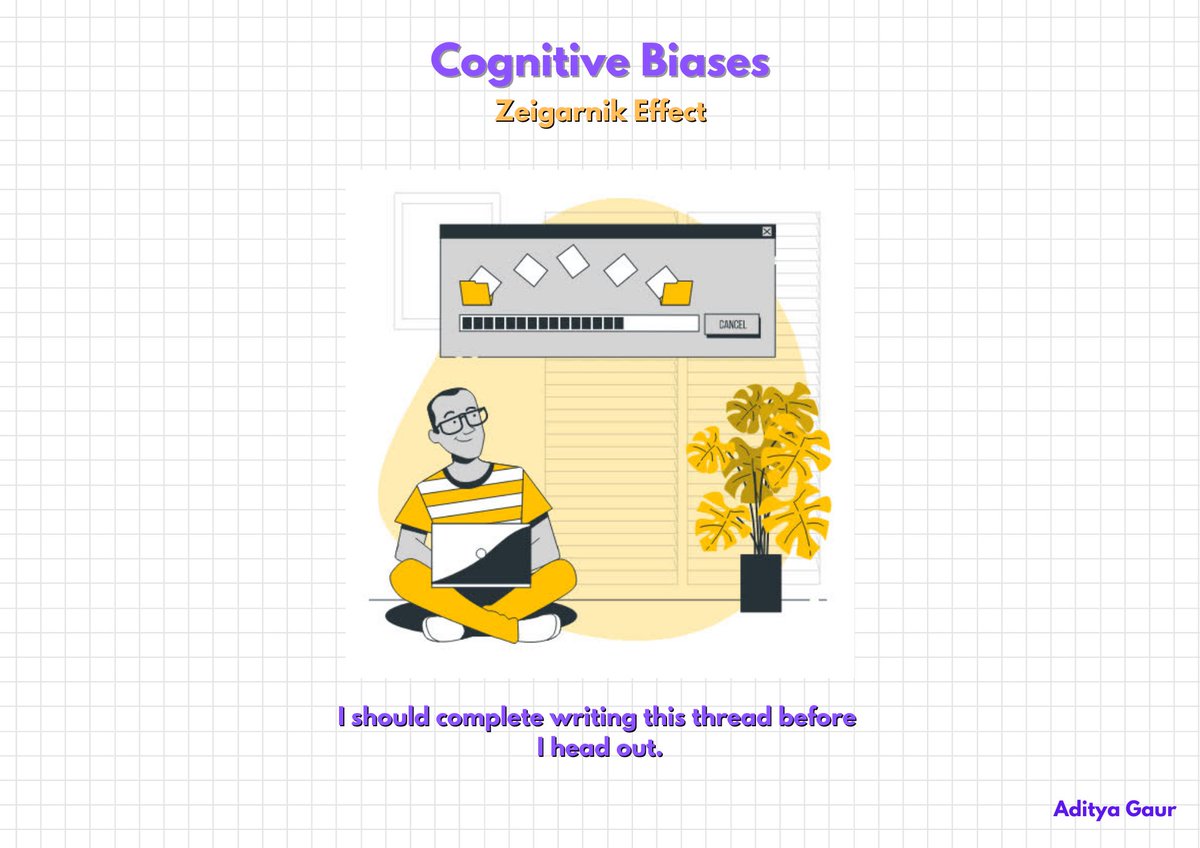
10/ Framing Effect
Depending on how an idea is presented we tend to draw different conclusions.
💡 This makes it important to whey the information presented to us wisely.
11/ Zero-risk bias
Humans are risk-averse.
So when we're choosing among options we tend to choose the one that eliminates a small risk completely.
Instead of an option, that reduces a big risk partially.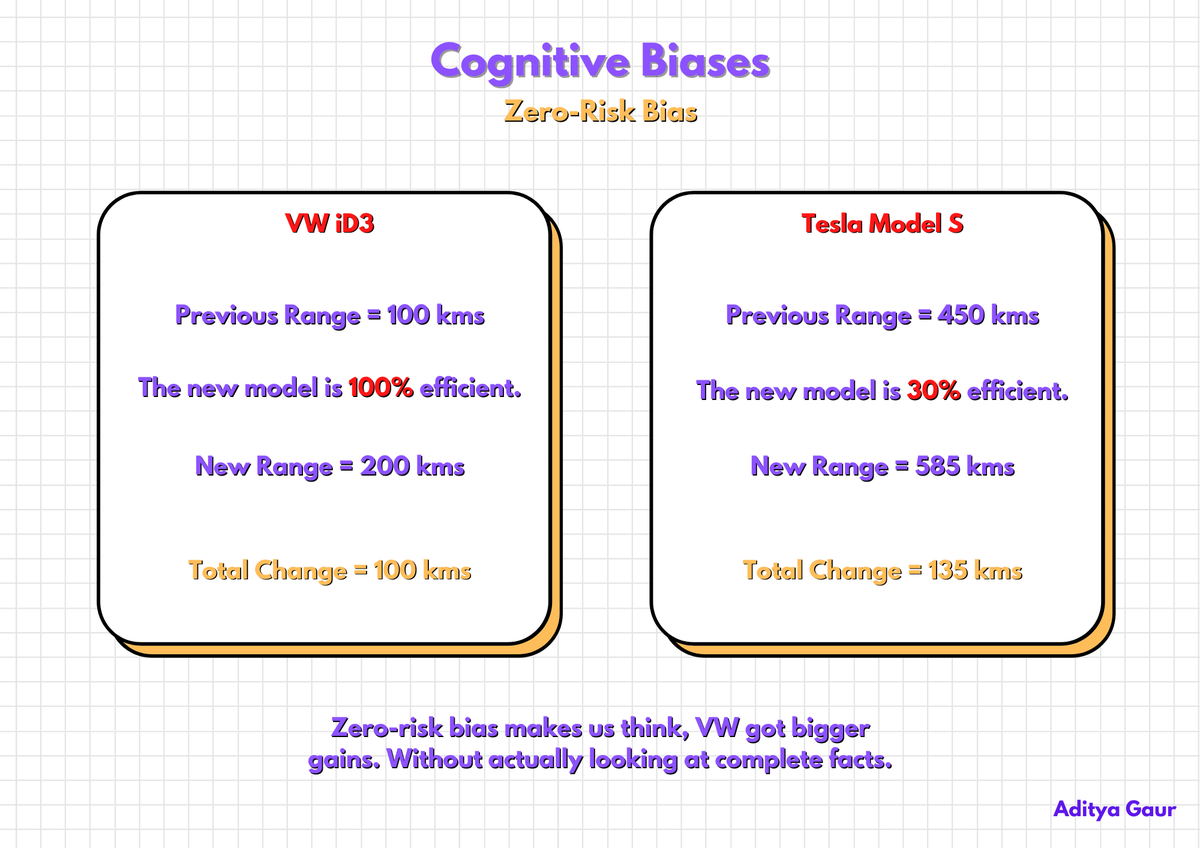
If you liked reading this thread, you'd like this one as well.
twitter.com/adltyagaur/status/1487473730922102789
Do join me @adltyagaur, I'll help you get
more insightful.
And, if you learned something new feel free to share the first tweet with your friends.
twitter.com/tibo_maker/status/1488860929508978689
Here's another master thread on cognitive biases from @SahilBloom
twitter.com/SahilBloom/status/1418910006557265932
@SahilBloom Bonus: 🎁
If you've made it here, you're one of the lucky few.
I'm curating a knowledge pool, in a bid to find and share great, readable content.
It's still very early but, go ahead take a look.
Would love to hear your feedback.
blog.adityagaur.xyz/

Aditya Gaur
@adltyagaur
Failed at one startup • Helped 20+ startups hire their “1st 10 leaders” • Ecosystem @Mindflow_io | 🎓@essec | VC Scout @_firstmomentum