Today @ProgressChamber we're launching a new campaign raising awareness on how the EU's Digital Markets act is harming European consumers, putting us being a "digital curtain" with more friction, less safety, and less innovation.
It's a far cry from the DMA that was promised 🧵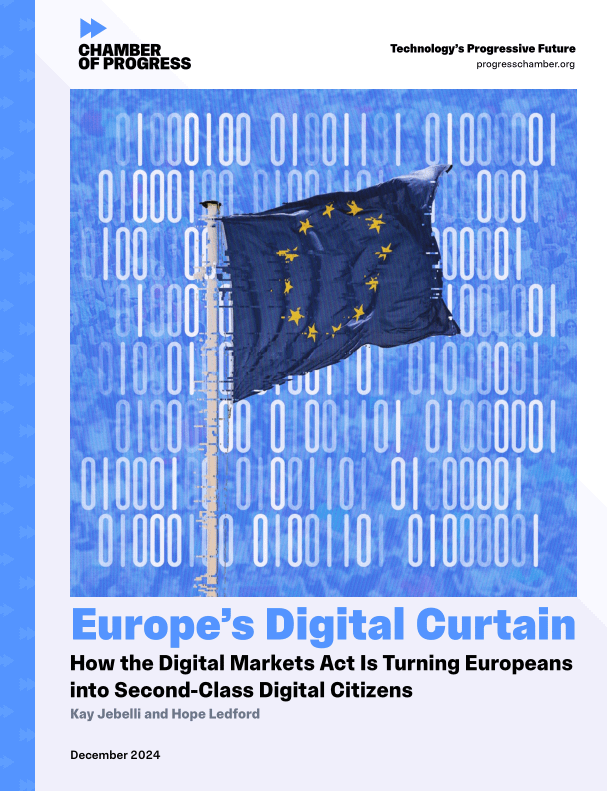
You may have seen in today's Politico Morning Tech US newsletter a brief highlight of what the report contains.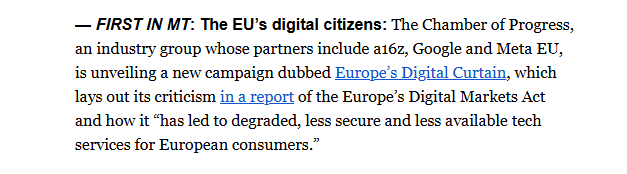
The report is filled with examples of how the DMA, not even 1 year into operation, is already making the internet worse for Europeans. It's a remarkable difference, and people outside the EU will now get some real insight into what DMA-style regulation entails.
Platform regulation can be good, we want platforms to be safe, to protect our rights, and to operate fairly and transparently. But the DMA isn't that kind of regulation. It's designed explicitly to help "business users" of platforms. This often means making things worse for us.
The report shows how. First, increased user friction. The DMA eliminates useful integrations that make internet browsing easier and faster for users.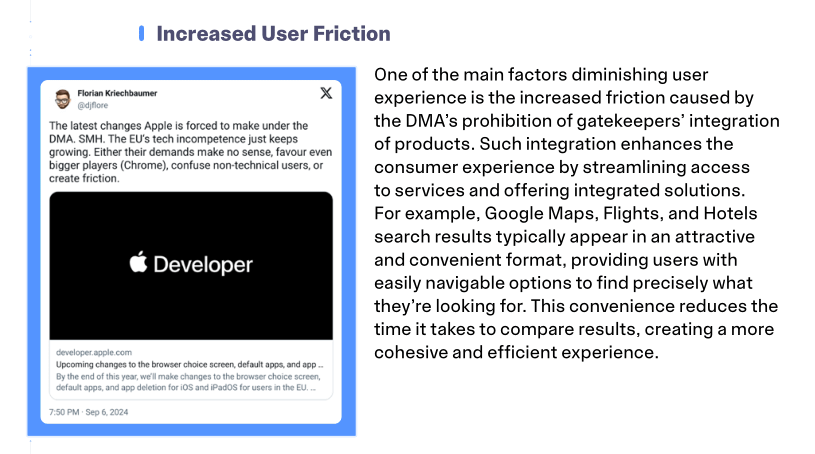
And users are noticing. Changes to Maps integrations have cost European users millions of euros, according to an independent report by Louis-Daniel Pape and Michelangelo Rossi x.com/KayJebelli/status/1831449729085141119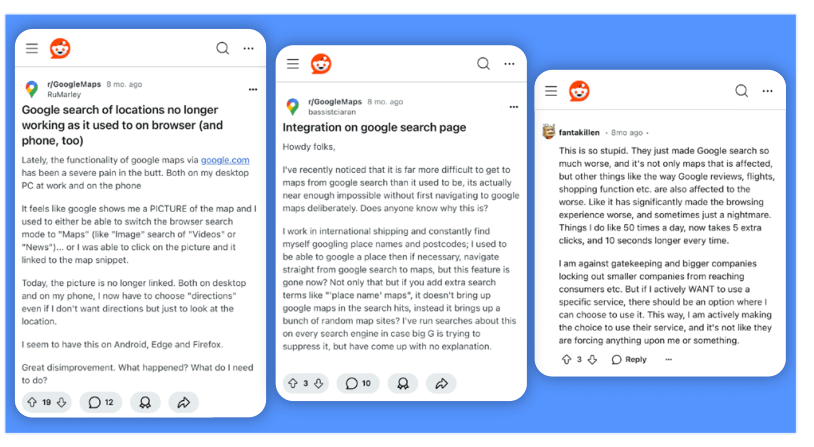
A number of other changes have been hostile to users, in efforts to give rivals a leg-up, or based on some academic and theoretical notion of what digital markets should look like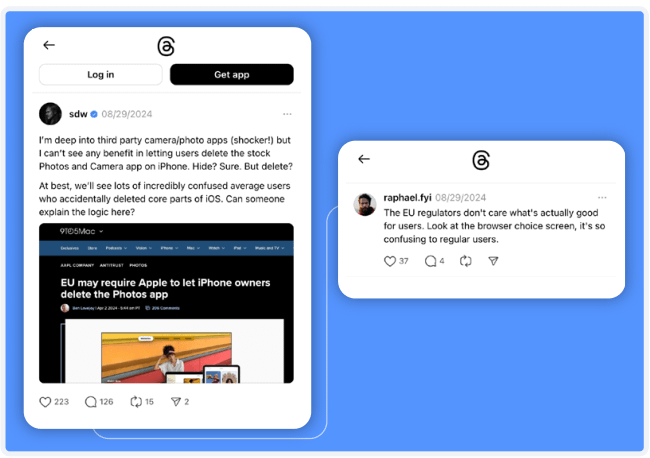
For example, Meta has been forced to offer a version of its social media services without personalised advertising. This has necessitated the inclusion of mandatory and intrusive ad-breaks, further wasting European users' time.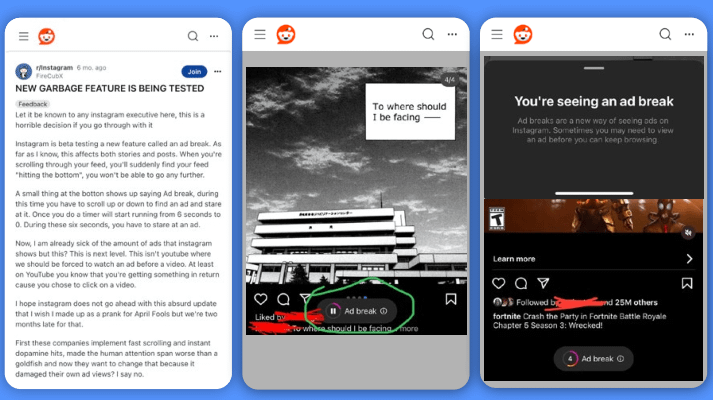
The DMA's focus on circumventing app store protections has meant less secure, less private, and less reliable mobile ecosystems. We're only starting to see the cybersecurity implications of this, but the benefits so far seem limited to piracy and porn. x.com/KayJebelli/status/1887524337839951901
Finally, and most worryingly, the DMA has meant a range of innovations that have been delayed or completely unavailable to European users. This is the case with several AI services, meaning Europe is falling behind on this rapidly evolving technology.
It used to be that everyone in Europe would get the same great products available to everyone else, but increasingly, since the DMA came into effect, European users are left behind x.com/sdw/status/1833245108420153632
It doesn't have to be this way. In fact, we were promised several times by prominent lawmakers that it wouldn't be this way, and we were shouted down for even raising these concerns, labelled as "myths" linkedin.com/pulse/dsadma-myths-what-eu-digital-regulation-really-thierry-breton/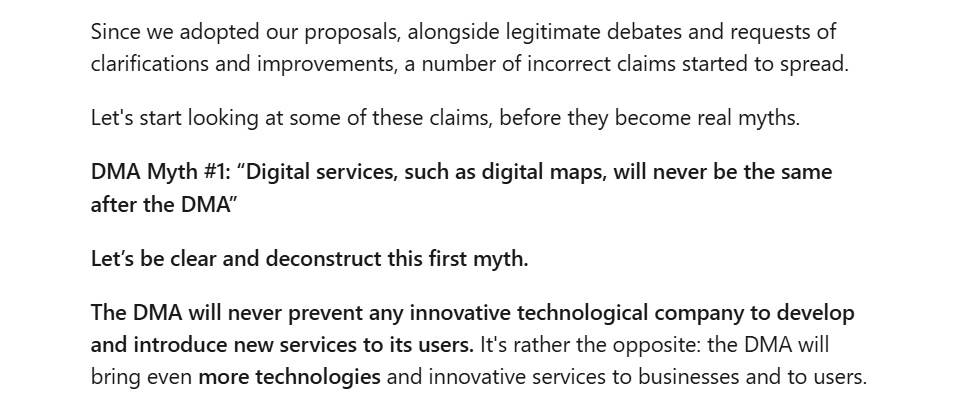
It's unfortunate that our fears have come true, but it doesn't have to be this way, and the worst can still be prevented. The responsibility now falls on the European Commission to enforce the DMA with European consumers' interests in mind, instead of just helping business users
The Commission feels it's stuck between a rock and a hard place, the law says what it says, and the Commission is bound to enforce it, but it has to find a way to gracefully grapple with the trade-offs and the consequences. x.com/KayJebelli/status/1783631151803871423
With this report, we want to raise awareness of these issues. We probably won't be able to change the law, but if more people put pressure on policymakers, maybe we can get to a workable balance sooner, rather than later.
Written by myself and my amazing colleague @hopelledford, the report is also being launched alongside a new website, where you can download the full report and find updates. thedigitalcurtain.eu/

Kay Jebelli 🇺🇦
@KayJebelli
Computer engineer/competition lawyer; TCK, European by choice; personal views expressed. Pro-abundance policy, with clients in the technology industry.