A single verse. Four cities. One rotating Earth.
Brahmagupta, 628 CE:
Sunrise in Lanka.
Sunset in Siddhapura.
Midday in Yavakoti.
Midnight in Romaka.
This only works if Earth is spherical, rotating, and time shifts with longitude.
Not poetry. Precision.
Now pause.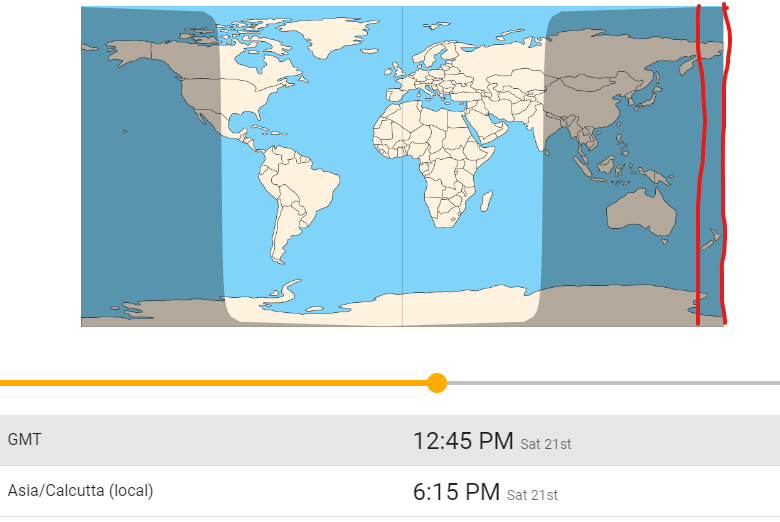
1884. International Meridian Conference. Washington DC.
25 nations gather to "establish" time zones.
Greenwich becomes prime meridian. The world gets divided into hourly segments.
History books call this the "invention of time zones."
Brahmagupta documented the same concept **1,256 years earlier**.
No conference. No clocks. Just observation and geometry.
Here's the trick:
Europe formalized it → gets called "discovery"
India documented it → gets called "interesting trivia"
Formalization became the standard for credit.
Mastery without European frameworks? Doesn't count.
So Brahmagupta's verse - which required understanding spherical geometry, rotation, and longitudinal variance - gets treated as... what? Lucky guesswork?
Let's be clear about what he compressed into one line:
→ Earth rotates on axis
→ Different longitudes = different solar positions = different local times
→ Four reference cities forming a global grid
→ Simultaneous time mapping
This isn't casual observation. This is systematic astronomical knowledge.
The kind that requires:
- Coordinated observers across distances
- Mathematical frameworks
- Institutional transmission
Not one genius. Infrastructure.
Now watch the inversion:
When Europe standardizes time zones in 1884:
→ Brilliant innovation
→ Foundation of modern coordination
→ Milestone of scientific progress
When India documents the same understanding in 628 CE:
→ Curious artifact
→ Maybe he got lucky
→ Probably borrowed from Greeks
See the pattern?
Western historiography made a simple rule:
European formalization = invention
Non-European mastery = anomaly requiring explanation
So we're taught to be "surprised" that Brahmagupta knew this.
The surprise itself is the colonization.
Because if you accept he knew it, you have to ask: who else knew? How long? What else did they map?
Your own observation proves it:
Sunset in India → midday in Europe → midnight near Russia/GMT.
Same logic. Same grid. Same rotating frame.
Brahmagupta's verse works with modern time zones because he was describing the same planetary mechanics we "formalized" 13 centuries later.
He didn't need Greenwich to understand longitude.
So here's what really happened:
Indian astronomers mapped time across longitude. For centuries. Maybe millennia.
Europe standardized it with conferences and treaties in the 1800s.
Then history books called the standardization the "discovery."
And we accepted it.
We learned to be amazed that ancient India "somehow knew" what Europe "invented."
The real question isn't how did Brahmagupta know.
The real question is:
Who benefits when we treat Indian astronomical precision as "surprising trivia" instead of evidence of sustained scientific systems?
And why do we still let European formalization erase Eastern mastery?
GemsOfINDOLOGY
@GemsOfINDOLOGY
In Centre, busting both Raita and Lafda wingers coz they both hide truth. You can help me patreon.com/gemsofindology