
GameFi is set to be the next MASSIVE narrative in crypto
To crush it, you need to understand:
• Why Web3 + Games makes sense
• The current problems
• Game Tokenomics
Here's your guide to Web3 Games 🧵
This thread covers:
• The problem with traditional games & where crypto comes in
• The benefits and challenges w games & game designs
• Some Game Tokenomics & what to look out for
• Future outlook & a GameFi space that will be HOT
Let's dive in
This thread is adapted from my MUCH longer article on web3 games.
I recommend reading that for a better experience, this thread is more of a tl/dr
You can check it out here:
covduk.substack.com/p/crypto-games-the-past-the-present
Keep scrolling for the thread version:
Traditional Games:
Traditional games exploded in popularity: the space is now larger than Hollywood (~$200B) and still growing at ~13%.
But:
• Power & resources became concentrated with a few big publishers
• Games became more extractive
Games started off with a 1 time fee
Then came:
• Paid in-game items
• DLCs & upgrades
• Microtransactions
• Loot boxes & Battle passes
• Pay to Win
Studios started to squeeze every drop they could: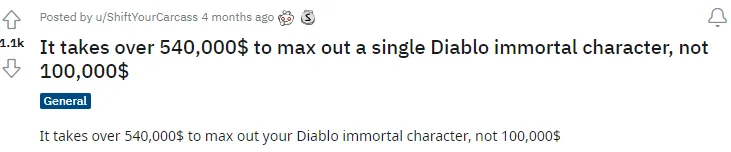
The Skewed Dev-Gamer Equation
The cost to play and fully experience a game has only been going up.
Some of this can be justified by the increasing production costs
But, what the players receive has stayed the same.
Studios are compensated for their time & resources spent.
Gamers are arguably the most participant. But they aren't compensated for their time.
Fundamentally, gamers aren’t fully compensated for all the resources they spend (their time).
In fact, they've been getting less.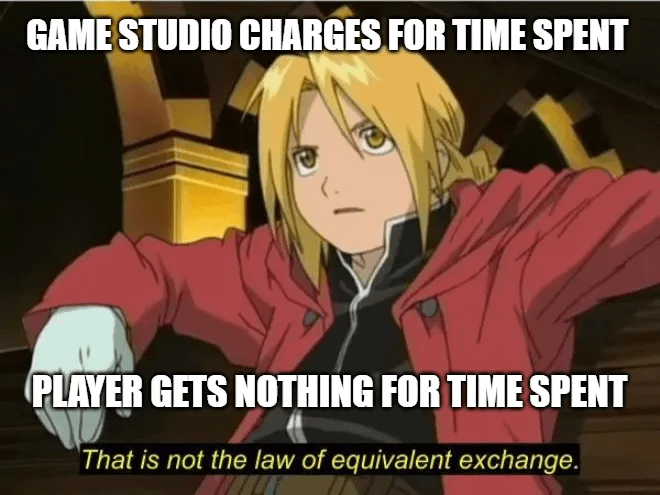
The core problem
The core problem is the extractive publisher monopolies, which leads to:
• Extractive monetization method
• Huge barriers against smaller builders.
• Not all key participants are rewarded for their contributions.
• Community Opinions don’t always matter
This isn't to say trad games bad, crypto good
There's a lot to learn & appreciate with traditional games. BUT there are problems that are getting increasing worse.
And crypto offers solutions to some of them.
Crypto's Promises
Crypto ethos of decentralization, community focus and interoperability works well some of these problems.
And tokens can (hope) to align the mismatched incentives between gamers and studios
Game Economies
Game economies have been a part of games forever: RuneScape CSGO, TF2
I spent so many hours trading items in this game called Arcane Legends.
But, typically, there's a BIG difference between traditional game economies & open economies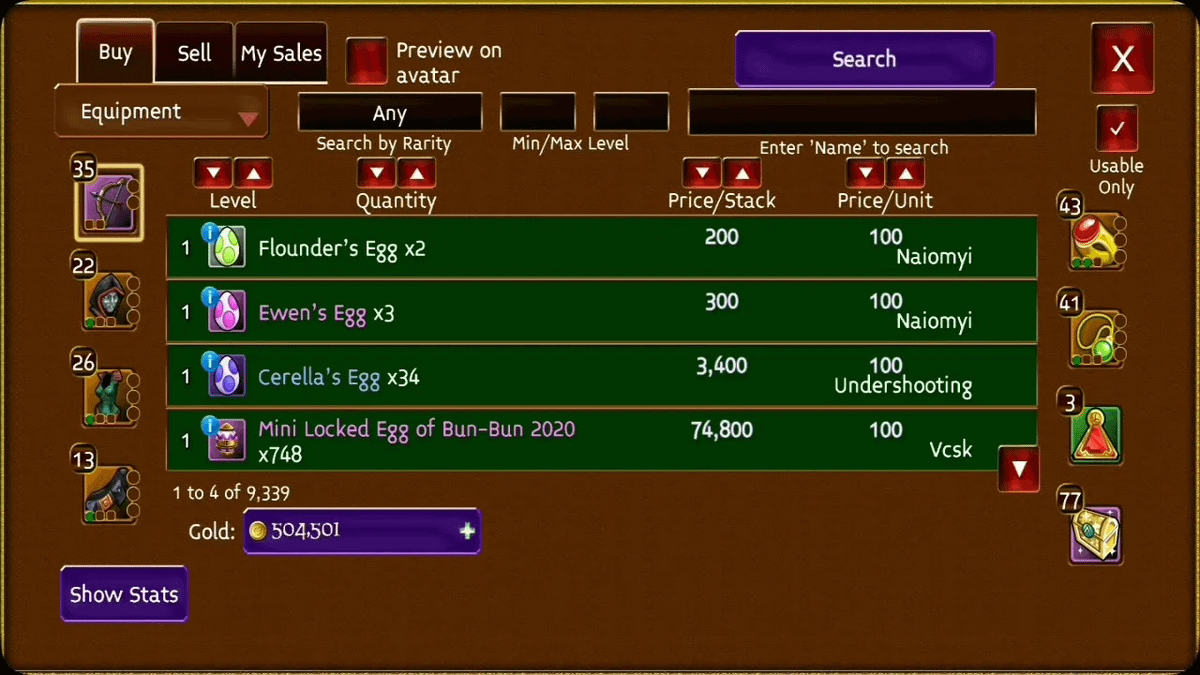
Spending money is a 1 way street
Once it’s in, you can’t take it out & the game maker sets the exchange rate & item prices: it’s always extractive.
Game makers can make their games open (money can flow in & out) w/o crypto.
But, w/o crypto they have no reason to
Crypto creates open economies
With crypto & tokens, games are incentivized to create economies where money flows in and out.
Players can exchange "real" money for in-game currency (& items) at the market-determined exchange rate.
And importantly, withdraw money from the game.
Gamers can monetize their time.
When they're done playing, they can sell their game assets for fiat/crypto
The items they earned playing the game & therefore their time spent can be traded for money.
Tokens can balance out the skewed equation.
Tokens incentivize game makers to create open economies
If money can flow in & out, game makers can charge a cut on transactions -> new revenue source
This alternate revenue source can replace existing extractive sources
However, game Tokenomics are HARD
In practice, this is way harder to execute correctly
Also, as @nateliason put it:
“The primary use of a token in a crypto game should be to improve the game economy in some way that is not possible without a token”
Tokens make sense when
• they are used to align incentives between studios & gamers
• create open, two wayed economies
Tokens are the bridge between real money & the game
Tokens cut both ways
Integrating sound tokenomics is very challenging:
• Being able to earn real money changes user mindset
• Game transforms from a game to an investment
• Promotes a player base that will leave as ROI drops
The case of Axie
Axie was the biggest web3 game.
It had two tokens: SLP (no supply cap) and AXS (fixed cap)
Holding Axies gave you SLP & SLP's only use was to create Axies, which would give you even more SLP.
Classic case of hyperinflation. And as ROI droppped, gamers left.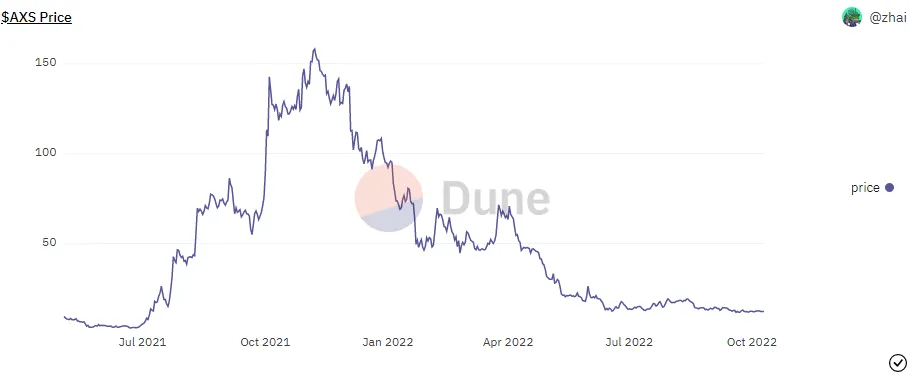
The key issues with Axie
• Most players were there to make money, they left as soon as price tanked
• Axie's model relied on growth of the user base outplacing inflation. Once growth slowed down, the loss of value due to inflation was too much
Game Token Models
Broadly, we've seen a couple of token models:
• No supply cap token model (RuneScape)
• 2 Token Models
@nateliason has a great piece on game tokenomics that dives into this deeper:
crypto.nateliason.com/p/one-vs-two-tokens
Burns & Sinks
Games need to incorporate ways to reduce inflation. When you're analyzing a game, make sure you look for these.
Some ways of doing this could be through :
• Utility costs
• Special event items
• Mechanisms like staking
@AlienWorlds does a good job at this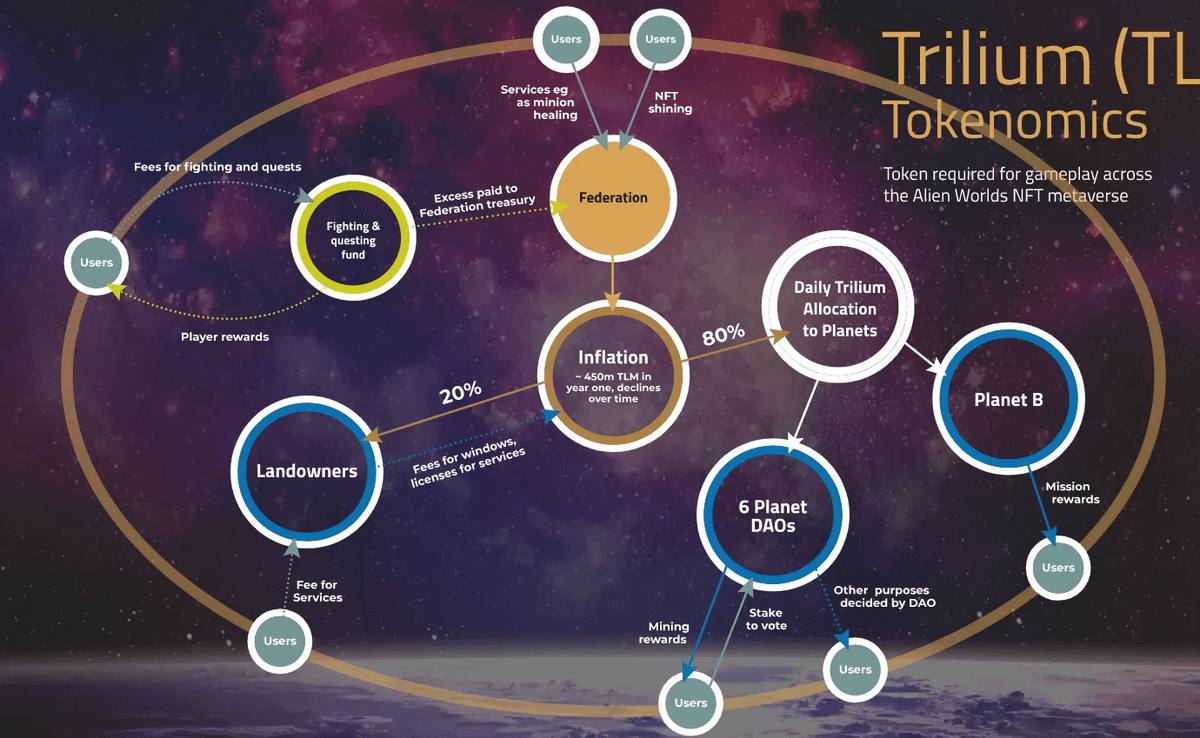
Gameplay focused rewards
Actions that reward users with tokens shouldn’t be too predictable. This leads to speculators & farmers.
Make sure rewards are contribution focused.
I was trying out @TheImmortalGame, they do a good job with this.
The more you play -> more you get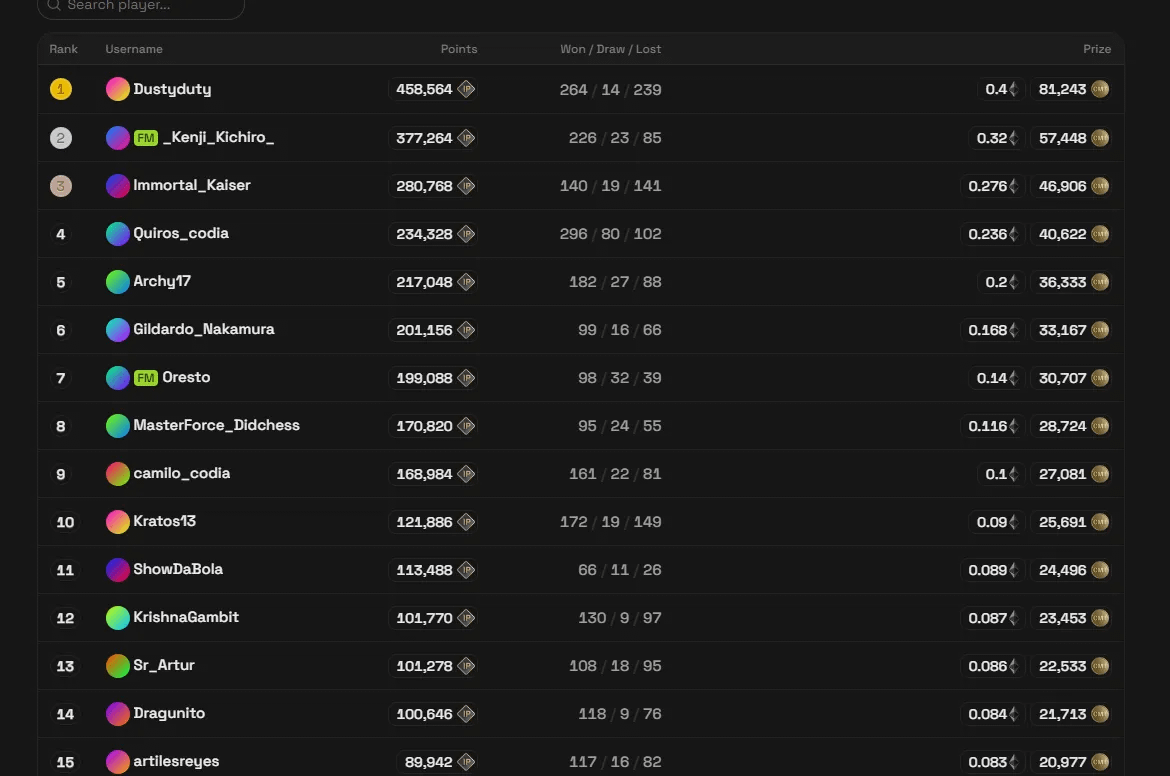
Different Genres have different affinities for economies/tokens
MMORPGs have always had economies at the center, they can have complex designs
FPS games could do w simple designs
Here's a good thread by @amytongwu
twitter.com/amytongwu/status/1445680600501796870
There's still a long way to go:
At the moment:
• Most games aren't fun
• Token models need to be improved
• The problem pure profit seekers needs to be addressed
• Retaining a player base has proved to be very tough
The list goes on
But there's good news
Player retention is slowly happening, even in the bear
@AlienWorlds is averaging ~250k active users
@splinterlands is currently at ~80k active users
In fact, AlienWorlds is experiencing growth in this market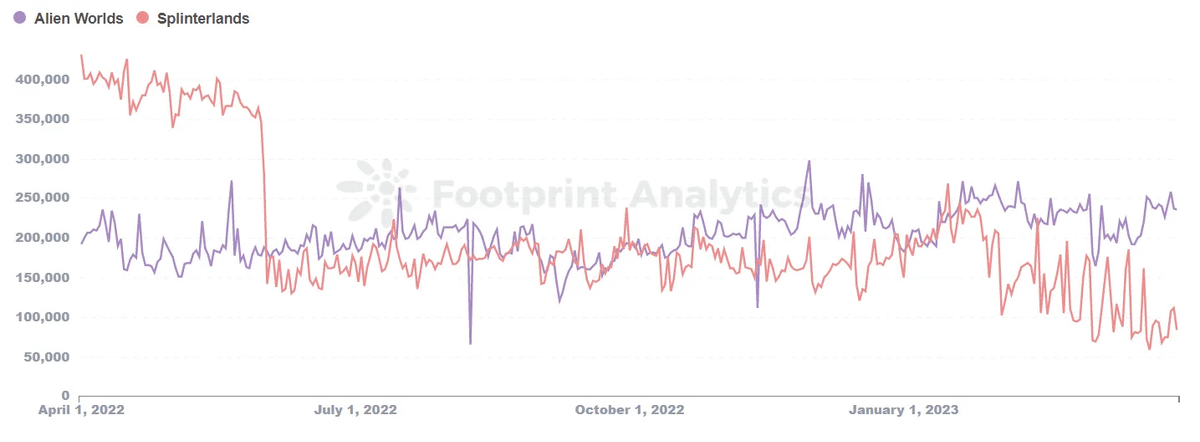
The reasons for their success
• Both games are simple to understand and play (low friction)
• The cost of entry is low
• Both games involve relatively robust economy designs.
• Leverage DAOs and communities to gamify crypto elements.
• A community that enjoys the game
Casual Games
Requiring a $5K NFT before you can even play the game is a losing strategy: and that's changing
I believe we'll eventually see a lot of freemium game add in elements of crypto and succeed.
Traditional Freemium games
are free to play. But super annoying. Paying gets rid of ads
Crypto will redefine this genre.
Free-to-play is best for user acquisition. Instead of annoying ads, studios can make money through cuts on in-game currency/NFTs/items.
To make it sustainable, I think we'll see changes to traditional freemium models
• Games may charge a fee/ require an NFT for the rewards part
• Users could earn premium benefits through gameplay
Freemium games & casual/ hyper casual games are insanely popular
And crypto allows for a less annoying gamer experience + an alternative monetization model
This is certainly a space to look out for
And that's it!
Despite the current issues, the future for web3 games is bright.
If you want to dive deeper into web3 games, I highly recommend @0xRyze's articles:
metaversus.substack.com/
Thanks for reading.
If you enjoyed this thread:
• Give this a retweet!
• Follow me @Cov_duk for more