CAR T cell based treatments have shown promise for many blood cancers, but have struggled against solid tumors. @deniswirtz and co. demonstrated a way to increase the tumor infiltration capabilities of CAR T cells using synthetic velocity receptors.
📄 doi.org/10.1101/2023.12.13.571595
These CAR TV (velociraptor) cells were tested against lung, ovarian, and pancreatic solid tumor models.
🔹 By varying velocity receptors, the researchers found a CAR TV type that infiltrated and inhibited each model (see pancreatic cancer model here).
Clever cells...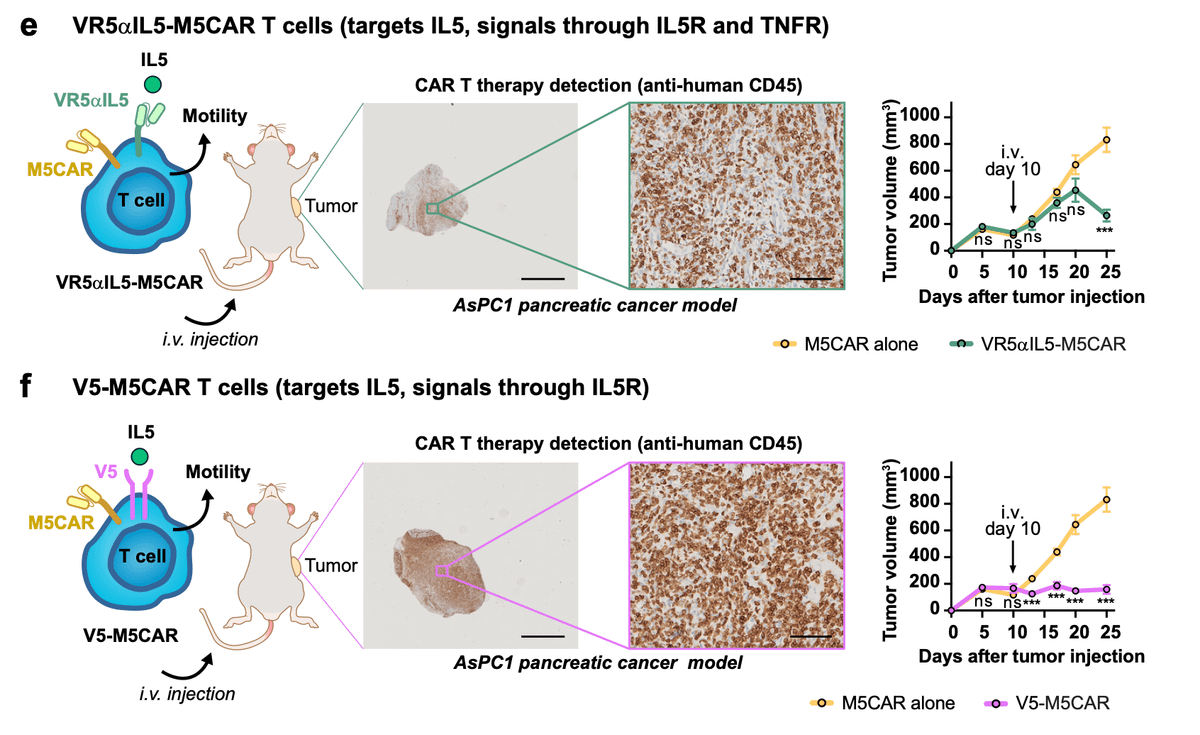
Not only do they show that the tumor volumes are markedly decreased, but also that survival is increased dramatically. In these charts you see 100% of mice surviving for the treatment length vs 0% controls. 🐭 💪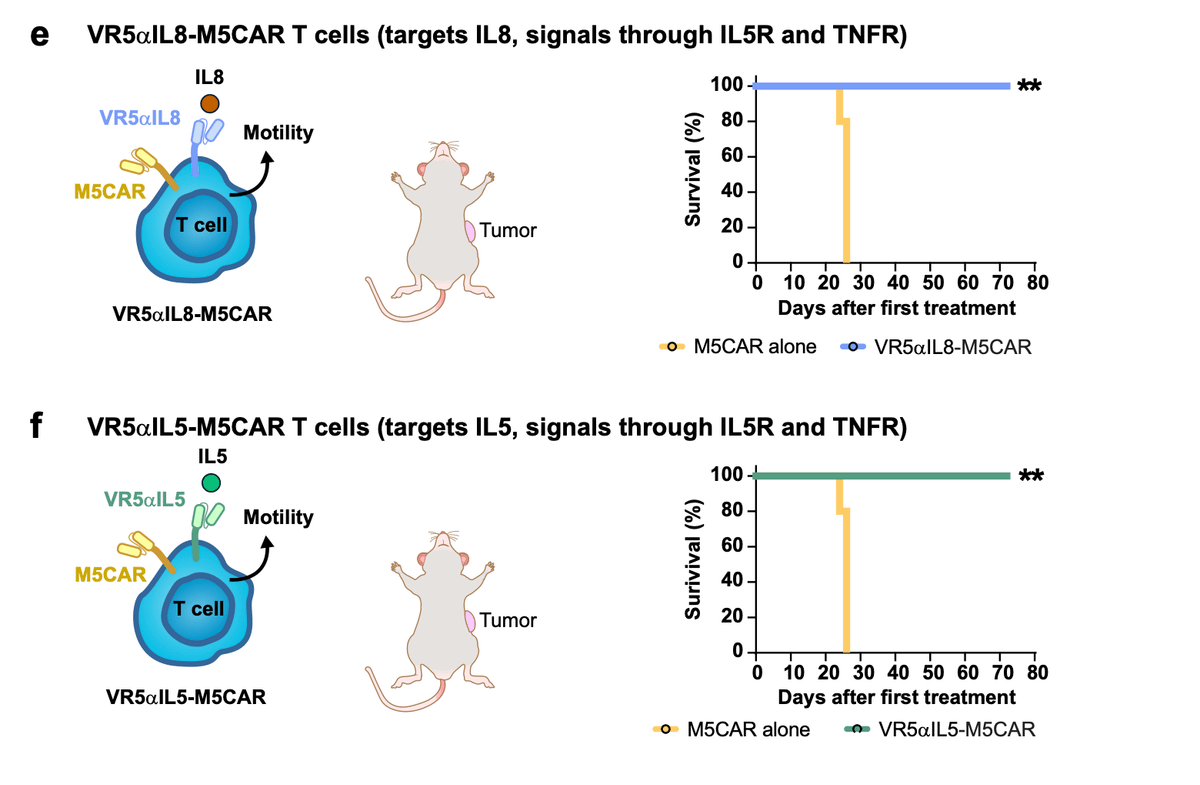
Other researchers are working in this domain as well – to extend CAR T to solid tumors by e.g., engineering them to secrete e.g., IL-10 to prevent exhaustion. This approach showed effectiveness against multiple tumor challenges, hinting at durability.
twitter.com/Tang_Lab_EPFL/status/1742919774647325103?s=20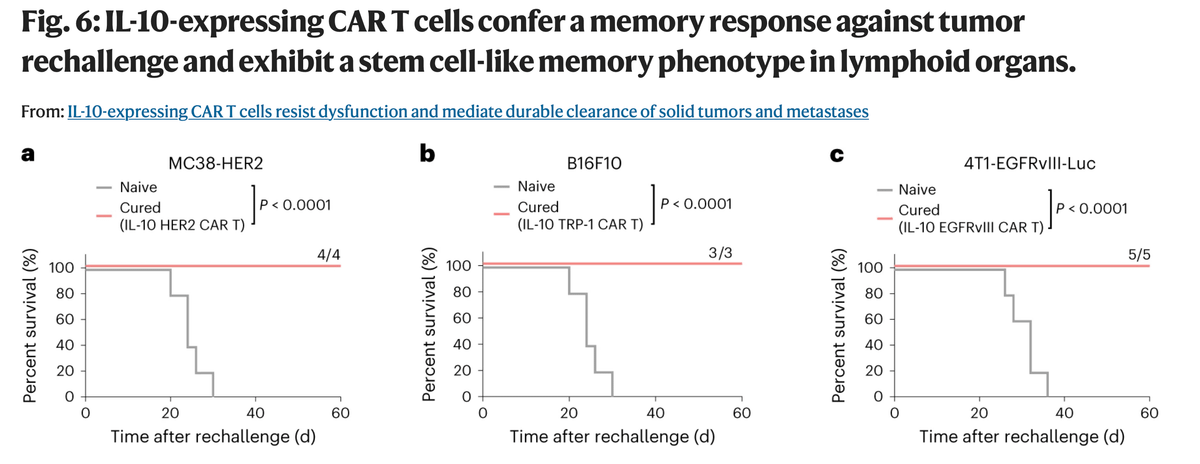
We're not done yet! Researchers are also exploring the use of CAR T cells for treatment of autoimmune and rheumatic diseases. x.com/MaxKonigMD/status/1744398691199222035?s=20
Let's give these researchers a hand, and a follow as a kudos for the work they are doing that is so important against these common scourges. We can't wait to see these various CAR T cells in trials and saving patients. @JohnsHopkins @EPFL_en
Also, don't forget to check out Denis' databases of postdoctoral fellowships, Ph.D. funding, and funding opportunities for early career researchers and faculty.
🔸Early Career: twitter.com/deniswirtz/status/1743743214098739514?s=46&t=VBaTbz9G2S8Magx9V8T52A
🔹 Ph.D. Fellow: x.com/deniswirtz/status/1744355909747286353?s=20
🔸Postdoc: x.com/deniswirtz/status/1744000600738877865?s=20

Ben Blaiszik
@BenBlaiszik
Group Leader - AI and data infrastructure for science at @uchicago/@argonne/@globus - @UofIllinois alum. materials, chemistry, physics. Opinions are my own.🤖🔬