We're dying, you're enjoying!
Ukraine has once again publicly attacked India over Russian oil imports. So, exactly which side is India on? Russia? West? Or there is a third side as well?
#russiaukraineconflict #indiaat75 #g20india #quad #geopolitics #foreignpolicy #ukrainewar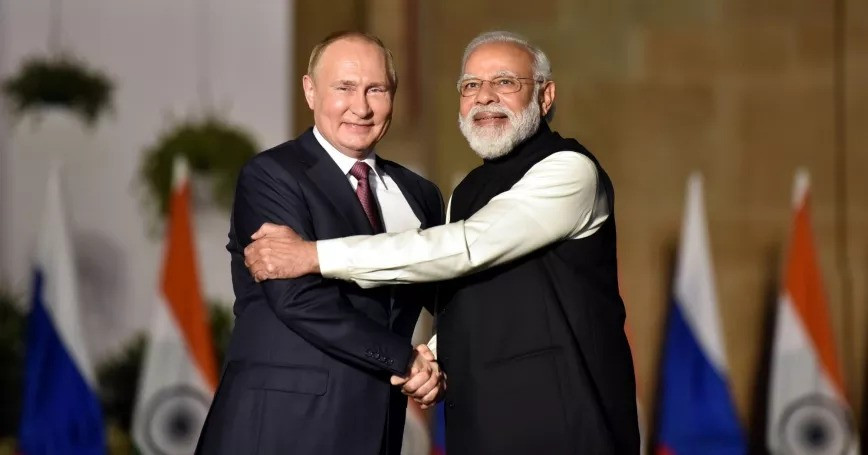
There is more to India's foreign policy than what meets the eye.
A thread 🧵
#India's constant ambiguity on #Russia's conflict in #Ukraine has irritated American policymakers. At the #UN, India has abstained from nearly every resolution condemning Russian aggression.
In other multilateral venues, such as the #Quad, New Delhi refuses to even mention Moscow, let alone criticize it. Nor has India signed on to economic and financial sanctions on Russia.
India's behaviour has been frustrating. But the reality is that New Delhi is not abandoning the liberal international order to save its relations with Russia. For example, the recent @SCO_RBLX in September.
Mr Modi rebuked Russian aggression when he told President Putin, “I know that today's era is not an era of war, and I have spoken to you on the phone about this.”
Also, last month, it appeared that the @g20org group would not agree on a joint statement because of differing views on the war in Ukraine. New Delhi, then, reportedly stepped up and helped build the consensus to issue a language mostly condemning Moscow.
Modi is also skipping an annual summit with Putin, reportedly over the latter's threats to use nuclear weapons in Ukraine.
Just because New Delhi supports the liberal international order does not, however, mean that it is entirely comfortable with the arrangement.
India still has its colonial overhang. And hence, it perpetually questions this order's utility. It also wonders if it is moving too close to rules that have, yet again, been set by outsiders.
Rather, India aspires to become a pillar of the newly emerging multipolar international landscape.
India seems to enter this new multipolar world by avoiding great-power competition entirely. Instead, it wants to forge its own, nonaligned path. Now, Washington may see this as fence-sitting.
But India's position may actually help stabilize today's international system.
With India in no one's camp, it diminishes each bloc's collective power and thereby reduces the chances of a conflict.
Assuming India reaches great-power status in the decades to come, it will be important to understand the extent to which it plans to continue upholding the liberal international order.
New Delhi's backing of Western objectives against Moscow suggests India will focus on the framework in the future. But, this strategy would be at odds with its ultra-realist tendencies on a bilateral level.
India wants to be independent of all other nations.
Hence it may decide to completely reject the liberal world system. The truth is that, if India does defend the order at all, it is unlikely to do so in the same manner as the West.
Future global events and the state of Indian domestic politics will determine a lot of this.
Link to the article here: linkedin.com/pulse/rules-based-liberal-international-order-indian-way-peeyush-jain
Peeyush Jain
@peeyushjain2020
Building @tata_neu Prev at @ShopeeSG and @BainIndia Alum @iimb_official and @iitroorkee Newsletter @ http://weeklyolio.substack.com Views are personal